
EMDR for Gender Dysphoria in Arizona: A Path Toward Healing and Alignment

What if the path to feeling more at home in your body wasn't about meeting a medical checklist, but about finding a rhythm that finally feels like your own? You might feel exhausted by medical spaces that don't seem to see you, or perhaps the weight of past social rejection feels too heavy to carry alone. It's understandable to feel overwhelmed when body-based dysphoria becomes a constant, loud background noise in your daily life. Exploring emdr for gender dysphoria arizona offers a way to address these layers of distress in a space designed for your safety. We recognize that every person's relationship with their identity is distinct, and the effectiveness of any therapeutic approach depends on each individual's experience.
In this article, you'll discover how EMDR can be a flexible tool for processing gender-related trauma and dysphoria at your own pace. We believe you're the expert on your own life, so we'll explore how this therapy focuses on building internal safety rather than meeting external expectations. We will also look at how to connect with therapists in Phoenix and Tucson who truly understand gender-diverse lived experiences. Whether you're seeking to reduce emotional distress or find a sense of alignment, this guide provides a compassionate overview of how specialized support can meet you exactly where you are today.
Key Takeaways
- Understand how gender-related distress is often shaped by personal history and the local environment, acknowledging that each person's healing process is unique.
- Explore how emdr for gender dysphoria arizona can serve as a flexible method for processing distressing memories at a pace that feels safe for you.
- Learn how to identify a provider in Phoenix or Tucson who prioritizes your agency and understands the specific nuances of the gender-diverse community.
- Discover why building a secure internal environment is a foundational step in the therapeutic process, as outcomes depend on each individual's experience.
- Gain insight into how specialized therapy can act as a bridge toward internal alignment and a more resilient sense of self.
Understanding the Intersection of Trauma and Gender Dysphoria in Arizona
Living in Arizona means navigating a social environment that is currently undergoing significant change. With laws prohibiting certain procedures for minors and new regulations scheduled for 2027, many individuals feel a heightened sense of uncertainty regarding their future and their safety. Trauma isn't always a single, explosive event. Often, it's a personal, subjective response to persistent environmental stressors, systemic exclusion, or the feeling of being misunderstood by the systems meant to protect you. This is where exploring emdr for gender dysphoria arizona can become a meaningful part of your journey toward healing. How you experience these pressures depends on each individual's experience. Gender dysphoria itself can be a significant source of emotional distress, and it's important to recognize that your feelings are a valid response to your lived reality.
The Fluid Nature of Dysphoria and Euphoria
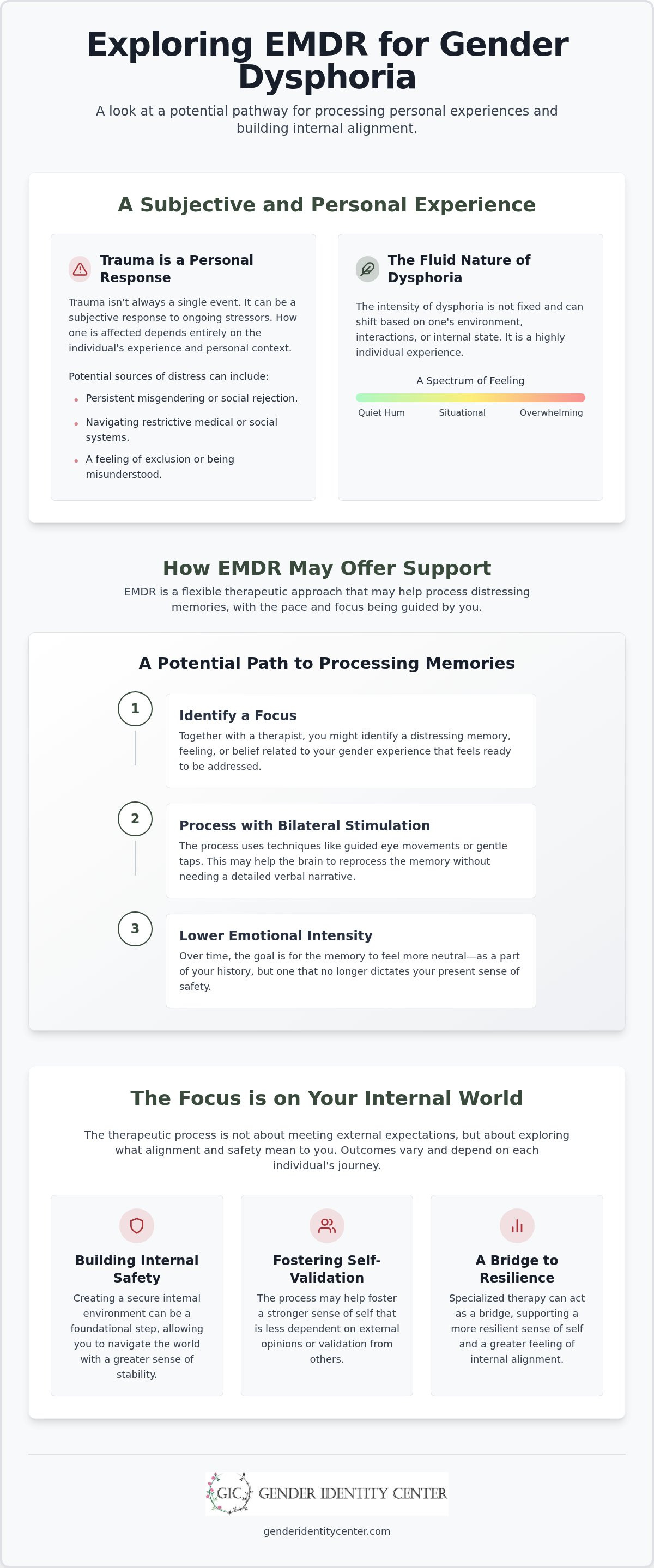
The intensity of dysphoria isn't a fixed point on a map. For some, it might feel like a quiet hum that stays in the background of daily life. For others, it's a loud, overwhelming presence that demands immediate attention. This intensity can shift depending on your environment, the people you interact with, or your own internal state at any given moment. Just as dysphoria varies, so does gender euphoria. Feeling a sense of joy, alignment, or peace in your identity is a vital part of the self-discovery process. Therapy isn't necessarily about reaching a predetermined destination or meeting someone else's standards for transition. Instead, it's a way to explore these shifting states with curiosity and a steady hand, allowing you to define what alignment looks like for you.
Trauma as a Subjective Experience
Traditional definitions of trauma often fail to capture the specific nuances of gender-diverse lives. Experiences of being misgendered, facing social rejection, or navigating restrictive medical systems can leave lasting imprints on your nervous system. Eye Movement Desensitization and Reprocessing (EMDR) is a therapeutic tool that acknowledges these unique impacts. It creates a non-judgmental space to process past misunderstandings and build a sense of internal safety. Using emdr for gender dysphoria arizona allows you to address specific, distressing memories without having to find the perfect words for them right away. By validating that trauma is a subjective experience, we move away from clinical coldness and toward a more human connection. Your history belongs to you, and your healing process should reflect your specific personal context and needs.
How EMDR for Gender Dysphoria in Arizona May Support Your Journey
EMDR is often viewed as a structured path, but it's actually a deeply flexible partnership between you and your therapist. When exploring emdr for gender dysphoria arizona, we focus on lowering the emotional intensity of memories that might still feel sharp or heavy. This approach isn't about changing who you are; it's about helping your brain process experiences so they no longer dictate your current sense of safety. The effectiveness of this approach depends on each individual's experience and readiness, as everyone's history with their identity is unique. By using Gender-Affirming EMDR Therapy, we can create a bridge between past distress and a more resilient future.
Targeting Gender-Related Distressing Memories
Social friction often leaves invisible marks. These might be moments of being misgendered in a public space, facing rejection from a loved one, or navigating a system that didn't acknowledge your true self. Through bilateral stimulation, such as guided eye movements or taps, your brain can begin to re-file these events in a way that feels more neutral and less like an active threat. EMDR reprocesses the emotional impact of past events without requiring you to provide a detailed verbal narrative of every distressing moment. This can be particularly helpful if finding the words for your experience feels too daunting or exhausting right now. Over time, this process may foster a stronger sense of self-validation that isn't as easily shaken by external opinions.
Processing Body-Based Dysphoria with Sensitivity
Body-based dysphoria often carries a strong physical and emotional charge. You might experience specific sensations in your chest, stomach, or throat when thinking about your physical self or how others perceive you. A trauma-informed approach to emdr for gender dysphoria arizona treats these sensations with the utmost care, prioritizing your comfort above all else. The goal is to help you develop a sense of internal distance from distressing self-perceptions, allowing you to observe them without being consumed by them. This process involves:
- Establishing a foundation of internal safety and grounding techniques before addressing difficult sensations.
- Moving at a pace that respects your personal boundaries and avoids re-traumatization.
- Reframing the relationship you have with your body to center your own agency and comfort.
Every step of this exploration is guided by your needs. As you consider these possibilities, you might find it helpful to look at our specialized clinicians in Phoenix and Tucson who are ready to walk this path with you at a speed that feels right for your life.
Choosing a Gender-Affirming EMDR Therapist in Phoenix or Tucson
Selecting a therapist is more than just checking a box for clinical credentials. It's about finding a steady, guiding hand who understands the specific nuances of being gender-diverse in the Southwest. When you look for emdr for gender dysphoria arizona, you're searching for a space where your identity isn't a problem to be solved, but a reality to be respected. The effectiveness of this work depends on each individual's experience and the strength of the partnership you build with your clinician. In Phoenix and Tucson, the community faces unique challenges, and a therapist who is active in these local spaces can offer a level of insight that goes beyond traditional medical prose.
Your therapist should prioritize your agency, ensuring that you remain the expert on your own life while they provide the clinical tools to help you process past hardships. Successful EMDR work is built on a foundation of internal safety, which can only be established when you feel truly seen and acknowledged. This partnership is a collaborative journey where your goals, whether they involve social transition, medical alignment, or simply finding peace within yourself, are the primary focus.
The Role of WPATH Standards in Therapy
Ethical and affirming care is often guided by a commitment to established frameworks. Following WPATH standards helps ensure that your therapist is using evidence-based practices that center your well-being. A provider who understands these guidelines can act as a supportive advocate rather than a gatekeeper, especially if you choose to pursue medical transition goals. They can help you navigate the complexities of the healthcare system in Arizona with a focus on your autonomy and self-determination.
Lived Experience and Clinical Expertise
Many individuals feel a deeper sense of security when working with therapists who possess a profound understanding of identity, whether through professional specialization or shared community history. When evaluating a potential partner for your healing, it's helpful to consider how they integrate EMDR International Association guidelines with gender-affirming care. You might consider asking a potential therapist:
- How do you adapt the EMDR process to respect the sensory experiences of dysphoria?
- What is your approach to building a secure environment for gender-diverse clients in Arizona?
- How do you handle the intersection of trauma processing and active identity exploration?
Trusting your intuition is a vital part of this process. The "right" fit is subjective and depends on each individual's experience, so it's okay to take your time finding a clinician who feels like a resilient and soft place to land.
What to Expect: The EMDR Process for Gender-Diverse Individuals
The journey through EMDR is a deeply personal one, and it's essential to understand that there is no "one size fits all" approach. When you begin exploring emdr for gender dysphoria arizona, the process is designed to be as unique as your own history and identity. We view this as a collaborative partnership where you remain the expert on your lived experience. Your therapist acts as a steady guide, helping you move through different phases at a pace that feels right for you. Progress is often non-linear; some days may feel like significant leaps forward, while others involve quiet reflection and stabilization. This rhythm depends on each individual's experience and their specific needs at the time.
A central part of this work involves selecting "targets" for processing. These targets might be specific memories of social rejection, moments of intense body-based distress, or systemic hurdles you've faced. You and your therapist will decide together which areas to focus on, ensuring that you always feel in control of the narrative. This collaborative focus helps to demystify the clinical process and centers your agency from the very first session.
The Preparation Phase and Grounding Techniques
Before we ever address difficult memories, we focus on building a secure internal environment. This preparation phase is vital for ensuring that you have the practical tools to manage emotional intensity both in and out of the therapy room. We work together to identify "safe spaces" or "calm states" that resonate with your specific sensory experience. For some, this might be a visual memory of a peaceful landscape; for others, it's a physical sensation of grounding. Building this foundation of trust and safety is what allows the deeper work to happen without feeling overwhelmed.
Desensitization and Reprocessing
Once you feel ready, the desensitization phase begins. In a Phoenix or Tucson clinic, this typically involves the use of bilateral stimulation. This might include following a therapist's hand with your eyes, listening to alternating sounds, or using gentle taps. These movements facilitate your brain's natural ability to heal by helping it process distressing events in a more neutral way. You're always the one in the driver's seat; if a sensation becomes too intense or if you simply need a moment to breathe, the process pauses immediately. The goal is to lower the emotional charge of past events so they no longer carry the same weight in your present life. If you're ready to explore how this might look for you, we invite you to schedule a session with our team to begin your personal exploration.
Beginning Your Personal Exploration with the Gender Identity Center
At the Gender Identity Center, we understand that finding a space where you feel truly seen is the first step toward lasting change. We've cultivated an environment that is both resilient enough to navigate societal challenges and soft enough to hold your internal emotional work with care. By integrating emdr for gender dysphoria arizona into a broader framework of gender identity therapy, we offer a path that respects your unique history and your hopes for the future. Whether you prefer the face-to-face connection of our Phoenix and Tucson clinics or the flexibility of telehealth, our services are designed to fit your current lifestyle. Your path toward alignment is yours to define, and our role is simply to act as a bridge between your current reality and your future self.
A Holistic Approach to Affirming Care
We believe that healing isn't a linear process, and the tools you need may shift over time. This depends on each individual's experience, which is why we offer a variety of ways to engage with our community. You might choose to pair EMDR with individual therapy sessions to focus on specific personal goals, or you may find that group therapy provides the sense of partnership and community you've been seeking. We are here for every stage of your journey, whether you're just beginning to explore your identity or have been living as your authentic self for years. As a community-oriented resource in the Valley and Southern Arizona, we value your lived experience as much as our clinical expertise. Our clinicians specialize in trauma-informed care, ensuring that every interaction signals a deep-rooted commitment to intersectional advocacy.
Next Steps for Your Healing Journey
Taking the first step toward a new therapeutic relationship can feel like a significant moment. We invite you to reach out for an initial consultation to see if emdr for gender dysphoria arizona feels like a supportive fit for your needs. During the scheduling process, you'll find that our approach is calm and unhurried, prioritizing your sense of safety from the very first interaction. There's no rush to reach a specific outcome; instead, we encourage you to explore what personal growth looks like on your own terms. Our team is ready to provide the steady, guiding hand you deserve as you navigate toward a sense of internal safety and alignment. Your journey is your own, and we're here to offer the clinical authority and heartfelt support necessary to make that journey feel a little more navigable.
Moving Toward Alignment on Your Own Terms
Finding a sense of internal safety is a deeply personal endeavor that unfolds at its own pace. We've explored how emdr for gender dysphoria arizona serves as a flexible framework for processing past distress and sensory-based dysphoria without the pressure of a rigid medical checklist. Whether you're navigating the complexities of the Arizona social landscape or seeking a deeper connection with your authentic self, the right support can make a significant difference. It's important to remember that every healing path is subjective; the specific outcomes and the time required for this work depend on each individual's experience.
Our team provides specialized EMDR training for gender-diverse populations and WPATH-compliant clinical support across our Phoenix and Tucson locations. We are here to act as a bridge toward your future alignment, offering a resilient yet soft space for your personal growth. If you feel ready to explore these possibilities in a secure environment, we invite you to begin your journey with a supportive partner; schedule a consultation today. You deserve to be seen, acknowledged, and supported as the expert on your own life.
Frequently Asked Questions
Is EMDR therapy safe for people with gender dysphoria?
EMDR is generally considered a safe and effective option when facilitated by a clinician who understands the nuances of identity. The process begins with a strong focus on building internal safety and grounding techniques. Whether this approach feels right for you depends on each individual's experience and their current emotional readiness. A trauma-informed therapist will always prioritize your sense of security before addressing any distressing memories.
How many sessions of EMDR will I need to feel better?
There isn't a set timeline for therapy because every person's journey is distinct. Some individuals may notice a shift in their emotional distress after a few sessions; others might prefer to work through their history at a more gradual pace. The number of sessions required depends on each individual's experience and the complexity of the goals you hope to achieve during your time in therapy.
Can EMDR help with body dysphoria specifically?
EMDR can be a helpful tool for addressing the emotional and sensory weight of body-based distress. By focusing on the physical sensations associated with dysphoria, you can work toward a sense of internal distance and peace. Exploring emdr for gender dysphoria arizona allows you to process these sensations in a non-judgmental environment. The effectiveness of this specific focus depends on each individual's experience and personal goals.
Do I have to talk about my past trauma in detail during EMDR?
You are not required to provide a detailed verbal account of your past during EMDR sessions. This therapy focuses on how your brain and body store the emotional charge of an event rather than the storytelling aspect. You can process a memory by simply noticing the associated feelings and sensations. This often makes the experience feel less overwhelming than traditional methods that rely heavily on talking.
Is EMDR covered by insurance for gender-related care in Arizona?
Coverage for mental health services varies widely across different insurance plans in Arizona. Many providers do include EMDR under their standard behavioral health benefits, but it's important to check your specific policy for details. We focus on providing WPATH-compliant clinical support, and the way your insurance interprets these services depends on each individual's experience with their specific carrier and plan requirements.
What if I find the eye movements or bilateral stimulation uncomfortable?
Your comfort is the most important factor in any session. If eye movements feel distracting or uncomfortable, your therapist can offer alternative forms of bilateral stimulation, such as rhythmic sounds or gentle tactile taps. You have full agency over the process at every step. Finding the right rhythm is a collaborative effort that depends on each individual's experience and sensory preferences.
Can I do EMDR therapy online if I don’t live in Phoenix or Tucson?
Telehealth options are available for those who cannot visit our clinics in person. Online sessions utilize specialized software to facilitate the bilateral stimulation process effectively from your own home. Accessing emdr for gender dysphoria arizona through a secure video platform ensures that you can receive affirming care regardless of your location in the state. This flexibility allows you to prioritize your healing in a familiar environment.
Does EMDR interfere with other gender-affirming treatments like HRT?
EMDR is a therapeutic process that works alongside other forms of support and does not interfere with medical treatments. Many people find that addressing the emotional layers of their journey helps them feel more grounded while pursuing medical alignment. The way these different paths interact depends on each individual's experience and their unique needs. We act as a bridge toward your future self while respecting your medical autonomy.