
Finding a Gender Affirming Therapist in Arizona: A Guide to Your Unique Journey

What if the most important part of your mental health journey isn't finding an expert who has all the answers, but finding a partner who simply knows how to listen to yours? You might feel a sense of hesitation when looking for a gender affirming therapist in Arizona, especially if you've faced clinical environments that felt cold or restrictive in the past. It's understandable to worry about being misunderstood or facing unnecessary barriers when you're just trying to be yourself. This depends on each individual's experience, as every path toward self-realization is deeply personal and unique.
We want to help you find a therapeutic space that honors your specific needs and respects your autonomy. We'll explore the landscape of care across Phoenix and Tucson, discuss the process for securing WPATH referral letters, and look at how a supportive partnership can help you gain clarity on your identity journey. Whether you're seeking individual support or specialized groups, your experience is the foundation of the work we do together. We're here to walk alongside you as you move toward a future that feels authentic and secure.
Key Takeaways
- Understand that gender-affirming care is a flexible framework that depends on each individual's experience rather than a rigid clinical requirement.
- Explore how different therapeutic modalities, including individual sessions and EMDR, might align with your personal path toward self-realization.
- Learn how to find a gender affirming therapist in Arizona who prioritizes your agency and offers a secure environment for exploration.
- Gain perspective on navigating transition milestones, such as WPATH referral letters, through a collaborative and affirming partnership.
- Discover how to use a subjective framework to choose a clinician who resonates with your specific history and future goals.
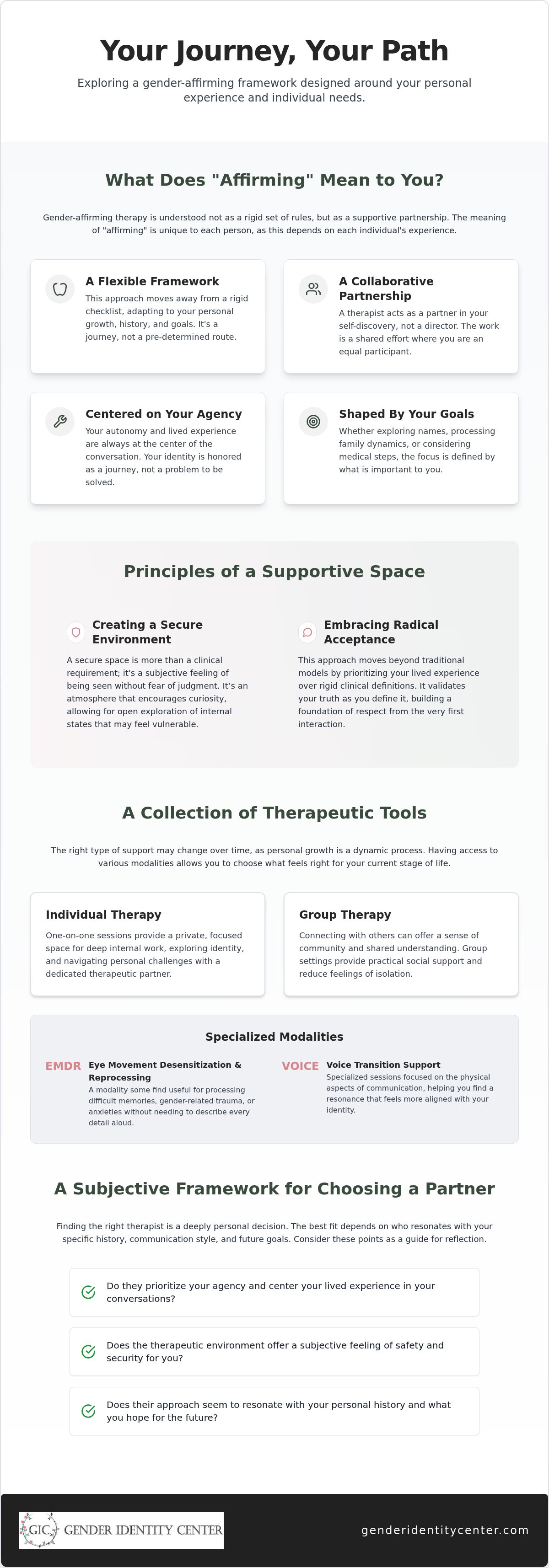
What Does Gender-Affirming Therapy Mean for You?
Gender-affirming therapy is often misunderstood as a rigid checklist or a pre-determined route toward a specific medical outcome. In reality, it's a flexible framework designed to support your personal growth. When asking What is Gender-Affirming Care?, the answer usually involves a combination of social, psychological, and sometimes medical elements. However, the weight given to each of these parts depends on each individual's experience. A gender affirming therapist in Arizona acts as a partner in your self-discovery, rather than a director who tells you where you should end up.
Your history and personal goals shape what "affirming" means to you. For some, it involves exploring name and pronoun changes; for others, it might mean processing the emotional complexities of family dynamics. Because this process is so personal, there's no single right way to engage with therapy. It's a collaborative effort where your agency is always at the center of the conversation. Our clinicians don't view your identity as a problem to be solved, but as a journey to be honored.
A Safe Space to Explore Identity
Creating a secure environment is more than just a clinical requirement. It's about a subjective feeling of being seen without the fear of judgment. In our offices in Phoenix and Tucson, we focus on establishing a space where curiosity is encouraged. You shouldn't feel rushed to reach a conclusion about your identity. This supportive atmosphere is vital for everyone, from children and adolescents to adults, as it allows for an open exploration of internal states that might feel too vulnerable to share elsewhere. We believe that when you feel safe, you're better able to look inward with honesty and compassion.
Moving Beyond Traditional Clinical Models
Traditional mental health structures have sometimes relied on rigid academic labels that don't always capture the nuance of a person's life. This can lead to environments that feel restrictive or even non-affirming. We believe in moving toward a model of radical acceptance. This approach prioritizes your lived experience over clinical definitions. By using affirming declarations and invitations to explore, a gender affirming therapist in Arizona can help you bridge the gap between your current reality and your future self. If you're ready to begin this process, you can learn more about our team of clinicians who specialize in this work. It's about validating your truth as you define it, ensuring you feel respected from your very first interaction.
Therapeutic Modalities: From Individual Sessions to EMDR
Therapy is rarely a linear path; it's more like a collection of tools that you can choose from as your needs evolve. Because personal growth is a dynamic process, the type of support that feels right for you might change over time. This depends on each individual's experience and what they hope to achieve in their current stage of life. Whether you're looking for deep internal work or practical social support, finding a gender affirming therapist in Arizona means having access to various modalities that respect your unique timeline.
A multi-faceted approach can be helpful for those who want to address both emotional and physical aspects of their transition. For example, some people find that integrating specialized services into their care plan provides a more holistic sense of progress. Resources like the University of Arizona Gender Affirming Treatment page emphasize how personalized healthcare planning, including counseling and support services, can be a vital part of an individual's journey. By exploring different options, you can build a therapeutic partnership that feels tailored to your specific reality.
Specialized Care: EMDR and Voice Transition
Eye Movement Desensitization and Reprocessing (EMDR) is a specialized modality that some find useful for navigating gender-related trauma or the stress of systemic exclusion. It's a way to process difficult memories or anxieties without needing to describe every detail out loud. This approach can be particularly supportive for those who have faced clinical environments that weren't affirming in the past. Alongside emotional work, specialized speech therapy can support those who wish to explore voice transition. These sessions focus on the physical aspects of communication, helping you find a resonance that feels more aligned with your identity. Integrating these services with a gender affirming therapist in Arizona allows for a comprehensive approach to self-realization.
Individual vs. Group Therapy
Choosing between one-on-one sessions and a group setting is a subjective decision that depends on your current emotional state. Individual therapy offers a private, secure environment for deep identity work and exploring personal history. It's a space where you are the sole focus. Conversely, group therapy in Phoenix can provide a sense of community and partnership. Hearing from others who share similar lived experiences can lower defenses and reduce feelings of isolation. You might find that one format resonates more than the other, or you may choose to participate in both as you move forward. If you're curious about which path might suit you best, you can schedule a consultation to discuss your options.
Navigating Transition Milestones in Arizona
Moving through the various milestones of transition is a deeply personal endeavor that don't follow a single, universal timeline. Whether you're considering social changes, legal updates, or medical steps, a gender affirming therapist in Arizona can serve as a supportive guide. These milestones are not just administrative tasks; they're significant markers of self-realization. The role of a clinician is to help you process the emotional weight of these changes while providing the necessary support to move forward at a pace that feels right for you.
The Process of Referral Letters
Assessment for WPATH referral letters in Arizona is a collaborative process rather than a gatekeeping hurdle. During an evaluation for hormone replacement therapy or surgery, your therapist works to understand your history and goals. This depends on each individual's experience, as some may feel ready quickly while others prefer a more measured pace of exploration. While organizations like Planned Parenthood Arizona's informed consent model offer accessible paths for medical care, many individuals find that the therapeutic assessment provides a valuable space to discuss the long-term emotional implications of these steps. WPATH standards offer a framework for safety, but a truly affirming clinician ensures that your autonomy remains the priority throughout the process.
Support for Families and Parents
For those with families, milestones often involve the people closest to them. Seeking transgender counseling in Tucson can be a helpful way for families to navigate these transitions together. It's common for parents to have questions about the social or medical steps their children are taking. Family therapy provides a secure environment where everyone can express their feelings and gain clarity. This process helps create a cohesive home where the individual's identity is acknowledged and respected. By working with a gender affirming therapist in Arizona, families can move from a place of confusion to one of resilient support, ensuring that the journey toward self-realization is a shared experience. Every family's path is different, and we're here to help you find the rhythm that works for your unique situation.
Choosing the Right Therapist: A Subjective Framework
Finding the right gender affirming therapist in Arizona is a deeply personal process that goes beyond scanning a list of credentials. Because therapy is a partnership, "the best" provider is a subjective concept that varies from person to person. What feels like a secure and validating environment for one individual might not resonate the same way for another. This depends on each individual's experience and their specific emotional needs at the time. When you begin this search, you're looking for more than a clinician; you're looking for a steady, guiding hand who respects your agency.
During an initial consultation, it's helpful to ask questions that gauge both safety and mutual respect. You might ask how they frame the process of self-discovery or how they handle the nuances of identity exploration. A therapist who prioritizes your self-realization will often invite you to be the expert on your own life. This collaborative approach ensures that you aren't just following a clinical plan, but are actively shaping your own path forward. It's about finding someone who acts as a bridge between your current reality and your future self.
Assessing Clinical Authority vs. Lived Experience
It's common to weigh a therapist's professional training against their understanding of identity. While clinical expertise provides a necessary foundation, many find it equally vital to seek a clinician who values lived experience. This balance can lead to a deeper sense of being acknowledged and understood. Evaluating a therapist’s commitment to intersectional advocacy is also a meaningful step. An inclusive practice acknowledges how different parts of your identity intersect, providing a more comprehensive form of support that honors your whole self without requiring you to leave any part of your history behind.
The Importance of the 'Vibe Check'
Trusting your intuition is a powerful tool when meeting a new affirming therapist. Sometimes, the most important indicator of a good fit is the "vibe check"—the immediate feeling of safety you experience during a conversation. Look for signs of quiet resilience and radical acceptance in how they speak. A calm, unhurried rhythm in their communication can signal that they are a dependable resource who won't rush your process. If you feel a sense of partnership and ease, it's often a sign that you've found a space where you can truly explore. When you feel ready to test this resonance for yourself, you can schedule a consultation to see if our approach aligns with your needs.
Your Path Forward with the Gender Identity Center
Every person's journey is a dynamic and meaningful endeavor. When you connect with a gender affirming therapist in Arizona at our center, you aren't just entering a clinical program; you're entering a partnership that values your lived experience as much as professional expertise. Our clinicians in Phoenix and Tucson work to create a steady flow of support, ensuring that you feel seen and respected from your very first interaction. We believe that you are the expert on your own life, and our role is to facilitate the progress you define for yourself. This depends on each individual's experience and the specific goals they bring into the therapeutic space.
Taking the next step is a process that belongs entirely to you. We invite you to explore the specialized services we offer, ranging from individual and family therapy to EMDR and speech therapy for voice transition. By centering your self-realization in every interaction, we help you build the resilience needed to face societal challenges while maintaining the gentleness required for internal emotional work. It's about moving toward a future that feels authentic, secure, and entirely your own.
Telehealth and Local Office Options
Choosing where you engage in therapy is a subjective decision that depends on your current comfort levels and privacy needs. For some, our physical offices in Phoenix and Tucson provide an immediate sense of safety and a secure environment to explore deep identity work. These spaces are intentionally designed to be warm and non-judgmental. For others, particularly those in rural parts of the state or those with busy schedules, telehealth offers a vital connection to a gender affirming therapist in Arizona without the need for travel. This flexibility allows you to prioritize your comfort in a way that feels right for your unique circumstances.
Connecting with Our Team
Reaching out for support is a brave act of self-care. The process for scheduling an initial session is designed to be simple and accessible, allowing you to see if our approach resonates with you. When you reach out, you can expect to be met by compassionate advocates who understand the nuances of identity and the importance of being acknowledged. We don't rush you toward a specific conclusion or a predetermined outcome; instead, we move at a pace that mirrors your own readiness. Our team acts as a bridge between your current reality and your future self, providing the stability and heartfelt support needed for personal growth. Your path forward is yours to shape, and we're honored to walk alongside you.
Embracing Your Path to Self-Realization
Your journey toward self-discovery is a dynamic process that belongs entirely to you. We've explored how gender-affirming care acts as a flexible framework, focusing on your agency and unique history. Whether you're navigating transition milestones, seeking specialized EMDR support, or looking for a community in a group setting, the right path is the one that resonates with your internal truth. Finding a gender affirming therapist in Arizona means establishing a partnership where you're seen, acknowledged, and respected.
Our team provides compassionate care for all ages, offering specialized WPATH referral services and telehealth options for residents throughout the state. We believe in creating secure environments that facilitate your progress without predetermined outcomes. This depends on each individual's experience, as every timeline is personal. If you're ready to explore these possibilities at your own pace, we invite you to book a session with an affirming therapist in Arizona today. You're the expert on your own life, and we're here to support you with quiet resilience as you move toward your future self.
Frequently Asked Questions
How do I know if a therapist is truly gender-affirming?
Look for specific markers like the use of inclusive language and a clear commitment to radical acceptance. A gender affirming therapist in Arizona should prioritize your agency and lived experience over rigid clinical labels. You might notice a non-judgmental environment where your identity is validated from the very first interaction. This often depends on each individual's experience, so look for a clinician who invites curiosity rather than directing your transition.
What should I expect during my first session at a gender identity center?
Your first session is typically an invitation to explore your goals in a secure environment. You can expect a steady, guiding hand to help you navigate your current feelings and history. We focus on establishing a sense of safety and validation rather than rushing toward a clinical conclusion. This initial meeting is a subjective space where you can gauge if the therapist's rhythm and approach align with your personal needs.
Can a gender-affirming therapist help me with a WPATH letter for surgery?
Yes, our clinicians provide WPATH-compliant referral letters for medical treatments like surgery or hormone therapy. The process involves a collaborative assessment that respects your autonomy while meeting healthcare standards. Because every path is unique, the timeline for these letters depends on each individual's experience and readiness. We act as a bridge between your therapeutic work and your medical goals, ensuring you feel acknowledged throughout the evaluation.
Do I need to have a specific identity label before starting therapy?
No, you don't need a specific label to begin your journey with us. Gender therapy is a supportive framework for self-discovery, and many individuals start while they are still exploring. We provide a safe space to investigate your internal states without the pressure of defining yourself immediately. Your identity is a dynamic experience, and we are here to walk alongside you as you find the language that feels most authentic.
Is online gender therapy as effective as in-person sessions in Arizona?
Many residents find that telehealth provides a dependable resource that matches the effectiveness of in-person care. Whether it's individual sessions or group therapy, the sense of partnership and community remains the priority. This choice depends on each individual's experience and their need for privacy or convenience. For those in rural Arizona, online sessions offer a secure environment to work with a gender affirming therapist in Arizona from the comfort of home.
How long does it usually take to feel comfortable with a new therapist?
Feeling comfortable is a subjective process that varies from person to person. Some may feel an immediate "vibe check" of safety, while others might need several sessions to lower their defenses. We maintain a calm, unhurried rhythm to allow trust to build naturally. This steady flow ensures that you don't feel rushed toward vulnerability before you're ready. It's about finding a consistent, reliable resource that honors your personal timeline.
What if my family wants to be involved in my therapy journey?
We offer family therapy sessions to help your loved ones navigate this journey with you. This can be a helpful way to build a cohesive, affirming home environment where everyone feels seen. Family involvement is a subjective choice and depends on what feels right for your personal growth. Our clinicians act as compassionate advocates, helping families move from a place of confusion toward a resilient and supportive partnership.
Can a therapist help me if I am still exploring my identity and am unsure of my path?
Absolutely, we view therapy as a safe space to explore without a predetermined outcome. You don't need to have a final destination in mind to benefit from a therapeutic partnership. Our clinicians focus on your self-realization, providing a steady hand as you investigate different aspects of your identity. This exploratory phase is a meaningful endeavor, and we honor the curiosity and reflection required to understand your future self.