
Identity Hormones and Your Journey: A Compassionate Guide to GAHT

What if the most profound part of your transition isn't the physical change itself, but the way you learn to inhabit your own skin? You likely feel that the decision to start gender-affirming hormone therapy is one of the most personal choices you'll ever make. It's natural to feel a mix of excitement and a deep-seated worry about how these identity hormones might shift your emotional landscape or your sense of self. This experience is deeply subjective. How you feel often depends on each individual's experience and their unique biological makeup, which is why we approach this topic with flexibility and care.
We understand that the path forward can feel clouded by questions about medical requirements or the fear of emotional instability. Our goal is to offer a sense of clarity as you explore the intersection of your physical health and your psychological well-being. We'll look at the 2022 WPATH Standards of Care Version 8 to demystify the letter-writing process and provide a compassionate guide for those seeking affirming providers within the Arizona community. This article provides a gentle overview of the emotional nuances of hormonal shifts and the practical steps needed to begin your medical journey with confidence.
Key Takeaways
- Understand how identity hormones can serve as a bridge toward your most authentic self, though the way this connection feels depends on each individual’s unique experience.
- Explore the emotional shifts of a second puberty and how to navigate these changes with quiet resilience, acknowledging that the internal journey is often a personal and evolving process.
- Learn about the WPATH Standards of Care and how to partner with clinical experts in Arizona to access resources that honor your agency and specific needs.
- Discover the role of specialized therapeutic support in navigating the complexities of transition, keeping in mind that the path toward your future can take many valid and beautiful forms.
- Reflect on the intersection of physical changes and mental wellness, embracing the idea that the timeline for emotional integration is highly subjective and unique to your lived experience.
What Are Identity Hormones? Exploring the Role of GAHT
Gender-Affirming Hormone Therapy (GAHT) acts as a vital tool for those seeking to align their physical presence with their internal sense of self. We often refer to these as identity hormones because they help bridge the gap between who you are inside and how you move through the world. This process isn't just about medical changes; it's a deep psychological journey of becoming. How these hormones affect you depends on each individual's experience and their specific transition goals. Some people seek subtle shifts while others look for more pronounced physical changes. We believe that your path is unique, and there's no single "correct" way to experience this evolution.
The medical aspects of transition provide the physical foundation, but the internal shift is where the heart of the journey lies. While clinical changes are measurable, the feeling of rightness or comfort in one's skin is subjective. This sense of alignment is a personal milestone that looks different for everyone. For many, the decision to start GAHT is a step toward radical self-acceptance. If you're looking for professional support while you weigh these options, speaking with specialized therapists can help you process the emotional facets of this change.
Common Hormones Used in Affirming Care
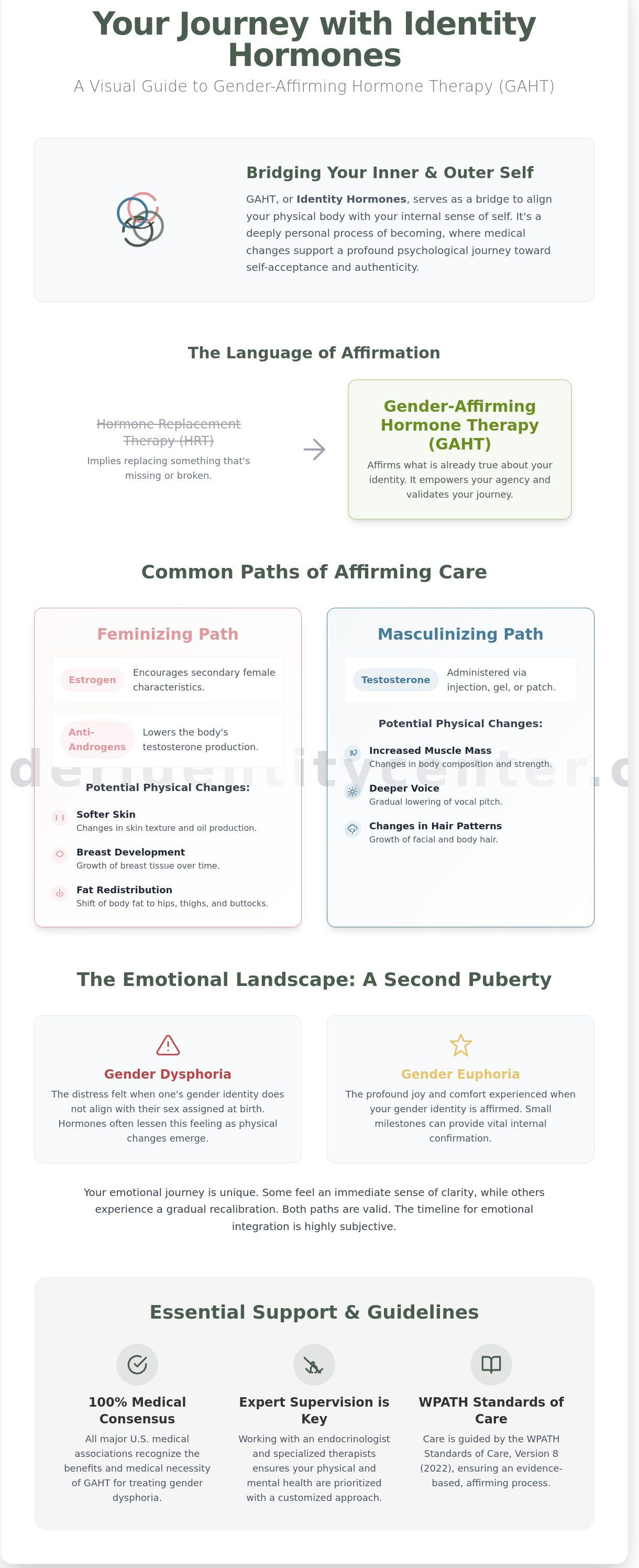
For those pursuing feminizing paths, estrogen and anti-androgens are the primary tools used to encourage softer skin, breast development, and fat redistribution. Masculinizing transitions typically involve testosterone formulations, which can be administered via injections, gels, or patches. According to the WPATH Standards of Care Version 8, released in September 2022, medical supervision is essential for safety. Working with an endocrinologist ensures you use bioidentical hormones that match your body's needs. Every person's endocrine system reacts differently, so a customized approach is the only way to ensure your health remains a priority. Since 100% of major U.S. medical associations recognize the benefits of GAHT, the focus remains on safe, supervised care.
- Estrogen: Often prescribed as estradiol to encourage secondary female sex characteristics.
- Anti-androgens: Used to lower the body's natural production of testosterone.
- Testosterone: Formulated to increase muscle mass, deepen the voice, and change hair patterns.
Why Language Matters: From HRT to GAHT
We're seeing a shift from calling this "Hormone Replacement Therapy" (HRT) to "Gender-Affirming Hormone Therapy" (GAHT). This change moves the narrative from replacing something missing to affirming what's already there. It empowers you to take agency over your own body and your future. Gender-Affirming Hormone Therapy is a medically necessary intervention for gender dysphoria. Using affirming language helps create a safe space for your growth. The way we talk about our bodies impacts how we feel about our progress. Your journey is valid, and the words we use should reflect that truth. This shift in terminology reflects a broader movement toward respecting individual identity as a primary health goal.
The Emotional Landscape: How Hormones May Shape Your Internal Identity
Starting Gender Affirming Hormone Therapy (GAHT) often initiates what many call a second puberty. This period involves a complex blend of emotional volatility and significant personal growth. Your internal experience with identity hormones is deeply personal; it doesn't follow a single, predetermined script. While some people report an immediate sense of "brain fog" lifting, others find the first 12 months involve a more gradual recalibration of their emotional baseline. This variability is a natural part of the process, as every body responds to hormonal shifts in its own time.
The intersection of hormonal changes and mental health is a dynamic space. Gender dysphoria may lessen as physical changes emerge, yet the waiting period for those changes can sometimes create temporary pockets of anxiety. Conversely, gender euphoria acts as a vital compass. Small milestones, like a subtle change in skin texture or a slight shift in voice pitch, often provide the internal confirmation needed to feel secure in your path. This sense of rightness is highly subjective and depends on each individual's unique history and goals.
Processing Psychological Shifts
How testosterone or estrogen impacts your mood depends on your specific chemistry. A 2021 study published in the Journal of Clinical Endocrinology & Metabolism found that 64% of participants experienced noticeable shifts in emotional processing within the first 90 days of treatment. You might find your emotional range feels different or that your access to certain feelings, like crying or physical excitement, has transformed. Managing expectations is crucial because emotional changes frequently outpace physical ones. Having a non-judgmental sanctuary to discuss these evolving perceptions ensures you aren't navigating these internal tides alone.
The Synergy of Therapy and GAHT
Medical transition is rarely just a physical process; it's a psychological evolution. Therapy provides a structured environment to help your self-image catch up to your changing physical reality. According to 2022 data from the U.S. Transgender Survey, 78% of individuals reported that combining GAHT with professional counseling significantly improved their ability to manage social anxiety during their transition. This support is especially helpful when addressing the complexities of public coming out or navigating workplace shifts.
Working with a professional helps you integrate these new physical realities into a stable, authentic identity. If you find the pace of change feels overwhelming, consulting with specialized therapists can help you process the nuances of your journey. We believe that you are the expert on your own life, and counseling simply offers the tools to help you voice that expertise with confidence. This partnership allows you to explore your identity at a pace that feels safe and sustainable for you.
Navigating Personal Expectations: Physical Changes and Identity Integration
Your relationship with identity hormones is a unique dialogue between your body and your sense of self. We recognize that starting this path often brings a mix of profound hope and understandable anxiety. It's helpful to remember that gender-affirming hormone therapy (GAHT) isn't a magic switch; it's a gradual evolution. While some changes, such as voice deepening or certain types of hair growth, are typically permanent after a period of time, others like skin texture or fat distribution are reversible if you choose to stop treatment. This depends on each individual's experience and the specific biological responses of your body.
Many people expect hormones to resolve every emotional hurdle immediately. However, clinical data from the WPATH Standards of Care Version 8 (2022) suggests that while GAHT significantly improves quality of life, it works best when paired with holistic support. You might find that your internal landscape shifts at a different speed than your physical appearance. We believe in practicing radical self-acceptance during the "in-between" stages. This is a time for gentleness. We often suggest connecting with our compassionate therapists to process these shifts in real-time. Your journey is valid at every milestone, regardless of how fast or slow the changes appear.
What to Expect in the Transition Phases
Physical shifts usually begin within 3 to 6 months of starting treatment. For those on a masculinizing path, you may notice a gradual deepening of the voice and increased muscle mass. If you're on a feminizing path, you might experience breast budding and a softening of the skin. Seeing your true self in the mirror for the first time is a powerful moment of validation. This experience is highly subjective; some feel an immediate "click" of recognition, while for others, the feeling of authenticity grows slowly over several years.
Coping with Dysphoria During Medical Change
It's common for dysphoria to shift or even temporarily spike as you begin to notice changes. When one area of your body starts to align with your identity, other areas that haven't changed yet might feel more prominent. This depends on each individual's experience and how they perceive their own progress. To manage the slow pace, we recommend engaging with peer support groups. Sharing space with others who understand the 12 to 24-month timeline for significant fat redistribution can provide a necessary perspective. You aren't alone in this waiting period; community care offers a steady hand when the mirror feels like a challenge.
Practical Steps for Accessing Care: WPATH Standards and Arizona Resources
The World Professional Association for Transgender Health released the Standards of Care Version 8 (SOC8) in September 2022. These guidelines provide a compassionate framework for accessing identity hormones, emphasizing that gender-affirming care is medically necessary. In Arizona, the way you navigate these standards is a deeply personal choice. Some individuals find clarity through a structured medical team, while others prefer a more streamlined approach. This depends on each individual's experience and what feels most supportive for their unique path.
Finding a provider in Phoenix or Tucson involves looking for clinicians who prioritize your agency. Many endocrinologists in the Maricopa County area have shifted toward inclusive practices over the last 10 years, though wait times can vary significantly. Navigating insurance requirements in the state also requires patience. While the Affordable Care Act prohibits most private insurers from denying gender-affirming care, the specific documentation needed can change based on your policy. It's often helpful to call your member services line to ask for their specific "Gender Dysphoria Treatment" clinical policy bulletin.
Securing Your WPATH Referral Letter
A WPATH-compliant referral letter serves as a bridge between your internal self-knowledge and the medical system. It typically outlines your gender history and confirms your readiness for GAHT. The assessment process is not about gatekeeping; it's about ensuring you have a dedicated space to voice your goals. We believe this should be a collaborative effort. To explore this further, you can connect with a supportive partner at the Gender Identity Center to begin your assessment.
Informed Consent vs. Referral Models
Arizona clinics generally operate under two different philosophies. The informed consent model allows adults to access identity hormones by demonstrating they understand the risks and benefits without a formal therapist's letter. Many clinics in Tucson have adopted this since 2014 to reduce barriers. Conversely, the referral model involves a mental health professional as part of the core team. Both models are valid, and the right choice for you might involve a blend of both. Even if you choose informed consent, concurrent therapy can offer a valuable space for identity integration.
Your first consultation is a time to advocate for your needs. Use this checklist to guide the conversation:
- Ask if the provider follows the SOC8 guidelines for individualized care.
- Inquire about the frequency of lab work and blood monitoring.
- Discuss which delivery methods (injections, gels, or patches) align with your lifestyle.
- Verify if the office handles prior authorizations for insurance coverage.
Beyond the Prescription: Therapeutic Support for Your Authentic Future
While identity hormones offer a path toward physical congruence, the internal transition is often just as significant. We believe that your well-being isn't a fixed destination but an evolving process. Every person's timeline looks different; some find immediate relief while others require more time to integrate their changes. This depends on each individual's experience and the specific social support systems they have in place. Our team provides a steady hand as you build a lifelong toolkit for mental resilience. This toolkit helps you move from simply surviving gender dysphoria to truly thriving in your skin.
Integrating identity hormones into your life is a deeply personal decision that benefits from a holistic approach. We focus on specialized areas that medical prescriptions alone cannot address. These include:
- Exploring vocal expression and resonance to find a voice that feels like home.
- Processing past trauma related to systemic exclusion or personal hardship.
- Navigating complex family dynamics and social transitions with confidence.
- Developing self-advocacy skills for medical and professional environments.
Our Affirming Approach in Arizona
We've created a non-judgmental sanctuary for gender-diverse people of all ages. Whether you visit our physical offices in Phoenix or Tucson, or connect through our telehealth platform, you're entering a space of radical acceptance. We currently serve individuals across all 15 Arizona counties, ensuring that geography isn't a barrier to quality care. Our clinicians partner with your medical providers to ensure your care is patient-centered. This collaborative model ensures that your physical and emotional health remain in balance. Because identity is subjective, we adapt our methods to fit your unique needs rather than following a rigid protocol.
Taking the Next Step Toward Your Authentic Self
Prioritizing your mental well-being is a powerful act of self-discovery. There's no single "right" time to begin, but starting today allows you more space to explore your options. You can book a consultation for ongoing therapy or request a WPATH letter for surgical procedures through our qualified therapists. We also offer support for voice therapy for transgender Arizona residents who want to align their vocal expression with their identity. Your journey is a heroic endeavor, and we're here to listen to your story. Every step you take is a move toward a future where you feel fully seen and respected.
Honoring Your Evolving Path to Self-Discovery
Deciding how to integrate identity hormones into your life is a significant step that reflects your unique needs and aspirations. This journey depends on each individual's experience, as the emotional and physical shifts of gender-affirming hormone therapy don't follow a universal timeline. By following the WPATH Standards of Care Version 8 released in 2022, you're engaging with a framework designed to prioritize your health while honoring your personal agency. Whether you're focusing on the subtle internal changes or the broader social transition, your perspective remains the most vital guide in this process; multiple viewpoints on what it means to live authentically are always valid.
Our team provides a sanctuary for exploration with specialized therapists located in 2 physical hubs in Phoenix and Tucson, plus telehealth support available to residents in all 15 Arizona counties. We offer WPATH-compliant referral letters to streamline your access to medical care, ensuring you have the documentation required for your next steps. Every person's transition is a valid and heroic endeavor, and we're honored to act as a bridge toward your future. Begin your journey with a compassionate consultation at the Gender Identity Center. You're the expert on your own life, and we're ready to listen whenever you're prepared to share your story.
Frequently Asked Questions
Do I need a therapy letter to start identity hormones in Arizona?
Whether you need a letter depends on the medical provider's specific protocol, as Arizona allows both informed consent and WPATH-based models. Some clinics like Planned Parenthood of Arizona use informed consent for patients 18 and older. Other private practices might follow WPATH Version 8 standards which sometimes suggest a letter. This choice is personal and depends on which medical pathway feels safest for your unique body.
How long do I have to be in therapy before getting an HRT referral?
The timeline for receiving a referral is highly personal and depends on your unique goals rather than a fixed number of sessions. WPATH Version 8 guidelines, released in September 2022, no longer mandate a specific duration of therapy for adults. We believe you're the expert on your life. Your therapist will work at your pace to ensure you feel prepared for identity hormones whenever you decide the time is right.
Can identity hormones affect my mood or mental health?
Many people report shifts in emotional processing after starting identity hormones, though these changes vary for every individual. A 2023 study in the Journal of Adolescent Health found that gender-affirming care is associated with 60% lower odds of moderate or severe depression. You might feel a new range of emotions or a sense of peace. This experience is subjective and evolves as your body finds its natural balance.
Is gender-affirming hormone therapy covered by insurance in Arizona?
Coverage for GAHT in Arizona varies significantly based on your specific health plan and the provider's network. Blue Cross Blue Shield of Arizona often covers these services, but individual deductibles can range from $1,000 to $5,000 depending on the policy. It's helpful to call the number on your card to ask about gender-affirming care benefits. Every insurance contract is unique, so your experience will depend on your specific coverage.
What is the difference between an endocrinologist and a gender clinic?
An endocrinologist focuses on general hormone health, while a gender clinic provides specialized care tailored to the trans and non-binary community. There are 3 major gender-specialty clinics in the Phoenix area that offer integrated support. Choosing between them depends on whether you prefer a traditional medical setting or an environment designed for gender-expansive people. Both paths are valid ways to navigate your medical transition and ensure your physical safety.
Can I start hormones if I am non-binary or gender-fluid?
Yes, your path to hormonal support is entirely valid regardless of whether your identity is binary or non-binary. Approximately 35% of individuals seeking care identify as non-binary according to the 2022 U.S. Transgender Survey. Your medical goals are yours to define. Some people choose low-dose options, while others seek full transition. This journey is flexible and should always reflect your most authentic self and your personal comfort levels.
What happens during a WPATH letter assessment at the Gender Identity Center?
Our assessment is a collaborative conversation focused on documenting your history and clarifying your transition goals. The process typically involves 1 to 2 sessions where we explore the 6 specific criteria outlined in WPATH standards. We view this as a partnership rather than a gatekeeping exercise. This experience depends on your history, and we strive to make it a supportive step toward the life you're envisioning for yourself.
How much does a gender therapy session cost in Phoenix or Tucson?
Costs for therapy sessions fluctuate based on the provider's experience and whether they offer a sliding scale. Private pay rates in Phoenix and Tucson usually fall between $120 and $180 per hour. About 20% of local clinics offer reduced fees for those with financial barriers. Your investment in your mental health is a personal decision. We can help you explore different options to find a price point that fits your budget.