
Limitations of Using BetterHelp for Gender Dysphoria: Navigating Your Options (2026)

The most accessible path isn't always the one that feels most supportive for your specific needs. When you're seeking a space to explore your gender identity, the convenience of a large platform can be very tempting. However, understanding the limitations of using BetterHelp for gender dysphoria is a vital step in ensuring your care aligns with your goals. This depends on each individual's experience, as some may find what they need in a generalist setting while others require a deeper level of specialized expertise. We know how exhausting it can be to explain the basics of your identity over and over again to someone who doesn't quite get it.
You deserve to feel safe and affirmed, especially when the medical transition process feels overwhelming. We'll explore the nuances of generalist online platforms versus specialized care to help you determine which therapeutic path fits your unique journey. This article looks at the importance of WPATH standards and the benefits of finding local support in Arizona. Whether you're looking for clinical clarity or a community that understands your lived experience, we want to help you find a space where you can truly be seen.
Key Takeaways
- While large platforms offer convenience, the depth of gender-affirming support often varies based on a clinician's specific training and lived experience.
- Exploring the limitations of using BetterHelp for gender dysphoria can help you determine if a generalist approach or a specialized environment feels most supportive for your needs.
- Gain clarity on WPATH standards and the process for obtaining referral letters, which are often helpful for those considering medical transition steps.
- Recognize that finding the right therapeutic path is a personal process, as this depends on each individual's experience and their unique goals for growth.
- Discover the benefits of local care in Phoenix and Tucson, where specialized therapists provide continuity and a deep understanding of the Arizona healthcare landscape.
Understanding the Role of Generalist Platforms in Gender Identity Support
Seeking support for your identity is a courageous step. Many people start this journey by looking at large digital platforms because they offer a sense of immediate connection. While these services provide a valuable entry point, there are nuances to consider. The limitations of using betterhelp for gender dysphoria often come down to the difference between broad mental health support and the specific, clinical depth required for gender identity work. This depends on each individual's experience, as what feels sufficient for one person might feel incomplete for another. We believe that your comfort and safety are the most important factors in this decision.
The Appeal of Accessibility in Online Care
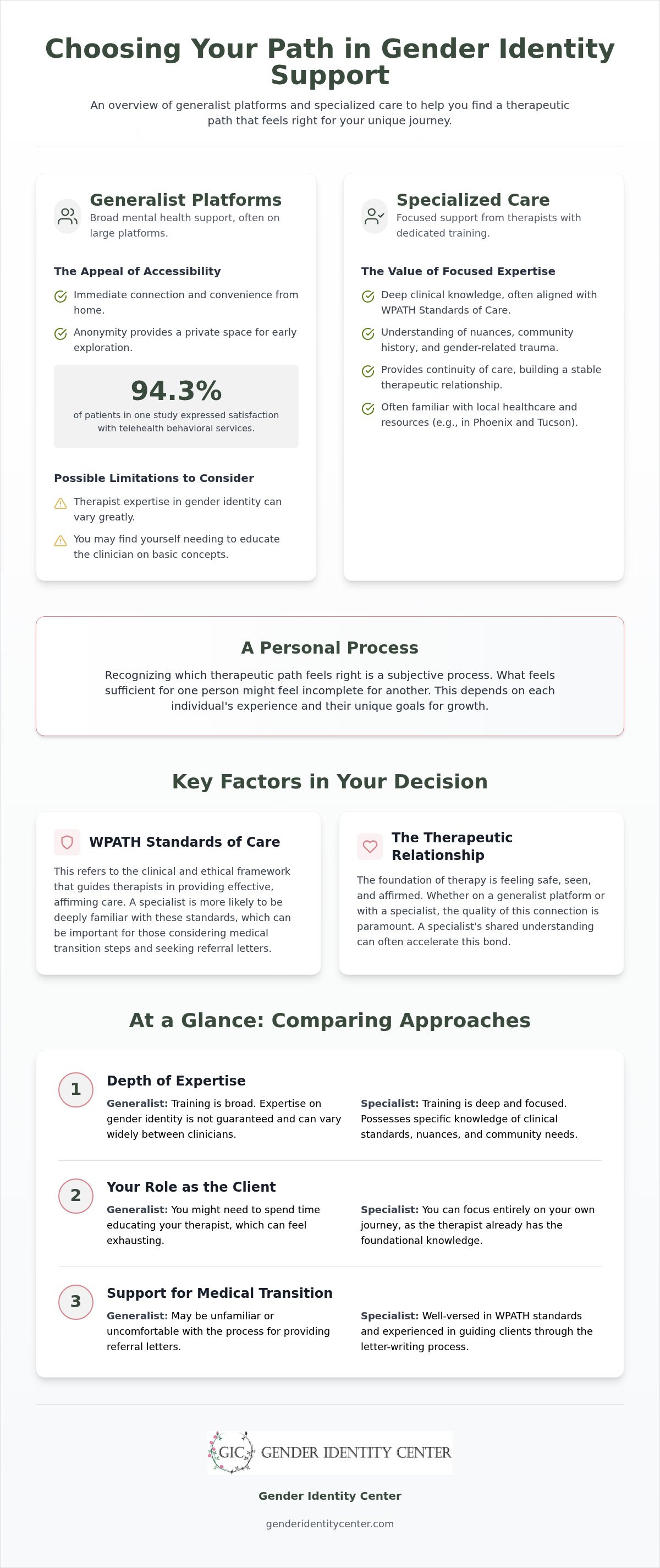
Online counseling has changed how we think about mental health. For many, the ability to sign up for a subscription and message a therapist from home lowers the barrier to entry significantly. This convenience is a primary driver for those who may not have local resources or who feel more comfortable using text-based or video communication. Research suggests that telehealth is highly regarded; in one study, 94.3% of patients expressed satisfaction with behavioral health services delivered this way. There is also a subjective benefit to the anonymity these platforms provide. During the early stages of exploring Gender dysphoria, having a private space to speak can feel like a necessary safety net. It allows you to test the waters of self-expression without the perceived pressure of an in-person clinical setting. For many, this is where the journey of self-realization begins.
Generalist vs. Specialist Models: An Overview
The distinction between a generalist and a specialist is often subtle but important. A generalist approach focuses on broad mental health concerns like anxiety or depression. While a therapist on a large platform might list themselves as "trans-friendly," this description can be interpreted in many ways. It might mean they're supportive and kind, or it could mean they have extensive training in specific clinical standards. The potential for varying levels of expertise across large therapist pools is one of the key limitations of using betterhelp for gender dysphoria. Some clinicians may be very familiar with the community, while others may be learning alongside you. This variation is why many people eventually seek out dedicated therapists who focus exclusively on gender-diverse care. Your needs are unique, and your path toward personal growth is a dynamic process that might require different types of support at different times.
Key Considerations Regarding the Limitations of Generalist Counseling
Finding a space where you feel truly understood is essential for your well-being. While many people appreciate the initial ease of digital platforms, exploring the limitations of using betterhelp for gender dysphoria helps clarify what kind of support you might need. This depends on each individual's experience, as some may feel satisfied with general support while others might find that a lack of specialized training leaves them feeling unheard. Recognizing the limitations of using betterhelp for gender dysphoria isn't about dismissing the platform entirely; it's about ensuring your unique needs are met with the right level of expertise. The therapeutic bond is subjective. It relies on a sense of safety that's often built through shared understanding or deep clinical knowledge.
The Depth of Specialized Training
Specialized education in gender-diverse identities can profoundly impact the care you receive. Generalist therapists are often trained to address broad concerns like stress or grief, but they may not be prepared for the specific nuances of identity exploration. Clinicians who follow the WPATH Standards of Care understand the clinical and ethical frameworks necessary to support your path effectively. Without this background, a therapist might unintentionally rely on outdated concepts or require you to educate them, which can be exhausting. Clinical depth often varies based on a therapist’s personal focus. This makes it helpful to ask about their experience with complex gender-related trauma or their familiarity with the community's history.
Continuity and the Therapeutic Relationship
A stable partnership is often the foundation of successful therapy. Large platforms sometimes face high therapist turnover, which can disrupt the continuity of your care. For those navigating a transition, starting over with a new clinician can feel like a setback. A long-term, stable relationship allows you to go deeper into your personal history without constantly repeating your story. The subjective feeling of being "seen" is often more accessible when working with a specialized therapist who has deep community ties. This sense of partnership can make a significant difference in how you process your journey. If you feel like your current support is hitting a ceiling, it might be helpful to look at more focused options that align with your specific goals.
WPATH Standards and the Medical Referral Letter Process
The journey of medical transition often involves specific clinical steps that ensure your care is safe and affirming. The World Professional Association for Transgender Health (WPATH) provides the recognized standards that many healthcare providers follow. These guidelines often require a referral letter from a mental health professional before you can access certain treatments like hormone replacement therapy or surgical procedures. While many individuals start their therapeutic journey on large digital platforms, one of the notable limitations of using betterhelp for gender dysphoria is the potential difficulty in obtaining these formal documents. This depends on each individual's experience, as platform policies and therapist comfort levels vary widely.
For those living in the Southwest, the process of securing a WPATH referral letter Arizona residents can use is a deeply personal endeavor. Some people find that their generalist therapist is willing to learn the requirements, while others may feel they need a clinician who is already deeply familiar with these standards. The ease of this process is often subjective and depends on the specific goals you have for your transition. We believe that having a clear understanding of these clinical requirements helps you advocate for the care you deserve.
Clinical Requirements for Medical Transition
A WPATH-compliant assessment is more than just a conversation; it's a collaborative review of your history and goals. Consistency in clinical documentation is vital, especially when dealing with insurance companies that require specific diagnostic language to approve coverage. Arizonans seeking medical care often find that local providers look for a certain level of detail in these letters. When a therapist understands the regional healthcare landscape, they can better tailor their documentation to meet the specific needs of surgeons and endocrinologists in Phoenix or Tucson.
Platform Policies on Medical Documentation
Large counseling platforms often prioritize general mental health support, which means they may have restrictive policies regarding medical referrals. A therapist on such a platform might be prohibited by their contract from writing a formal letter of recommendation for surgery. It's important to distinguish between a standard therapy note and a formal medical referral. Because of these potential limitations of using betterhelp for gender dysphoria, many individuals choose to partner with a transgender clinic or a specialized center. These environments are typically structured to provide the comprehensive documentation needed for a medical transition path.
Evaluating Which Therapeutic Path Fits Your Individual Experience
Choosing a therapist is a deeply personal act of self-care. It's about finding a mirror that reflects your true self and a guide who can walk alongside you. There isn't a single "correct" way to seek support; rather, there's the path that feels most aligned with your current needs. Understanding the limitations of using betterhelp for gender dysphoria allows you to make an informed choice about your mental health support. This depends on each individual's experience, as some may find the broad support of a generalist platform perfectly suitable for their early exploration, while others may feel they've reached a plateau that requires a different approach.
We believe your agency is the most vital tool in your healing process. You're the expert on your own life, and recognizing when a certain environment no longer serves your growth is a sign of resilience. Whether you're looking for a space to vent about daily stressors or a dedicated clinical partner to help you prepare for medical milestones, your perspective is the ultimate guide. It's okay to start in one place and move to another as your goals evolve and your understanding of your identity deepens.
Assessing Your Therapeutic Goals
As you reflect on your journey, it helps to consider what you hope to achieve in your sessions. Are you looking for broad emotional support, or do you have specific questions about the medical transition process? Your history with trauma might also influence your choice of care. For some, a generalist's perspective offers a helpful, low-pressure starting point. For others, the limitations of using betterhelp for gender dysphoria become apparent when they need a practitioner who doesn't require "101" explanations about their identity. This choice depends on each individual's experience at different stages of life, and your needs today might be very different from your needs a year from now.
When Specialized Care Becomes a Priority
There are moments when a more focused, community-oriented practice feels like the next logical step. This often happens when you're looking for specialized interventions that generalist platforms might not offer. Some individuals find that EMDR Therapy is a helpful way to process gender-related trauma, while others seek out Speech Therapy to support their voice transition. The subjective value of a specialized center lies in its ability to offer these integrated services under one roof. When you're ready to explore these more specific paths, we invite you to look at our scheduling options to see how a dedicated partner can support your unique progression.
Navigating Specialized Care in Phoenix and Tucson
Finding a community that understands the specific landscape of your home state can provide a unique sense of security. While global platforms offer a broad reach, the limitations of using betterhelp for gender dysphoria may become more apparent when you need a clinician who understands the specific healthcare resources available in Arizona. This depends on each individual's experience, as some may value the convenience of a larger network while others might prefer the clinical continuity that comes with a local provider who can bridge the gap between mental health support and medical care. We believe that having a partner who knows your community can help you feel more grounded as you move forward.
The Value of Local Knowledge
The Arizona healthcare landscape is a dynamic environment with its own set of regional nuances. For those seeking gender identity therapy phoenix offers several specialized options that focus on affirming care. Local therapists often have established relationships with other providers, which can help streamline your journey. Similarly, finding transgender counseling tucson residents trust often involves looking for clinicians who have a deep understanding of community-specific insights. This localized knowledge can be a helpful resource when you're trying to find a safe and affirming environment for your growth. It's about finding a space where you don't have to explain the context of your surroundings.
Starting Your Personalized Journey
When you're ready to move toward a more personalized therapeutic environment, scheduling a consultation with a specialist can help you clarify your path. It's a good idea to interview a potential therapist about their specific experience with gender-affirming care. You might ask about their familiarity with WPATH standards or how they approach identity exploration. This process is about your agency and finding a partner who makes you feel seen and respected. Remember that the limitations of using betterhelp for gender dysphoria are often a reflection of the platform's generalist structure, not a reflection of your worth or the validity of your needs. Your journey is uniquely yours, and your path to self-realization is a meaningful endeavor that deserves a steady and supportive hand.
Choosing Your Path Forward with Clarity
Every journey toward self-realization is a meaningful endeavor that deserves a steady and supportive hand. We've explored how understanding the limitations of using betterhelp for gender dysphoria can help you clarify which type of environment feels most secure for your growth. This depends on each individual's experience, as some may prioritize the convenience of a broad platform while others require the clinical depth of WPATH-compliant standards. Specialized care offers integrated support through services like EMDR and speech therapy, which may not be available in generalist settings.
By choosing a path that aligns with your specific goals, you're honoring your own agency and expertise. Whether you're navigating the medical transition process or seeking a community that understands the local Arizona landscape, your perspective is the ultimate guide. If you are looking for specialized support tailored to your unique journey, view our therapists or schedule a consultation at our offices in Phoenix and Tucson today. You aren't alone in this process, and we're here to walk alongside you as you find your way.
Frequently Asked Questions
Can BetterHelp therapists write WPATH letters for surgery?
Many large digital platforms have internal policies that may restrict their therapists from providing formal medical documentation. While some individual clinicians might be willing to help, it often depends on each individual's experience and the platform's current terms of service. For those seeking gender-affirming surgery, a specialized practice that provides WPATH-compliant referral letters is often a more direct path. This ensures that your documentation meets the specific clinical standards required by surgeons and insurance providers.
Is BetterHelp safe for transgender and non-binary individuals?
Safety in a therapeutic environment is a deeply personal and subjective feeling. While many people find helpful support on broad platforms, others may encounter limitations of using betterhelp for gender dysphoria if their assigned clinician lacks specific training. Feeling truly safe and affirmed often depends on finding a therapist who understands the nuances of your lived experience. We believe that every individual deserves a secure space where their identity is acknowledged and respected without judgment.
How does specialized gender therapy differ from general counseling?
Specialized gender therapy focuses on the unique psychological and social aspects of identity, whereas general counseling typically addresses broader concerns like stress or general anxiety. Specialists often have deep training in WPATH standards and may offer integrated services like speech therapy for voice transition. This choice depends on each individual's experience, as someone looking for transition-specific guidance may find that a specialist provides a more nuanced understanding than a general mental health practitioner.
What happens if my BetterHelp therapist doesn’t understand gender dysphoria?
If a clinician doesn't have a background in identity work, you might find yourself in the position of having to educate them about your basic needs. This can feel exhausting and is one of the common limitations of using betterhelp for gender dysphoria. Most platforms allow you to request a different provider, though finding someone with specific expertise in a generalist pool can be challenging. Many people find that moving toward a specialized center helps them avoid this cycle of explanation.
Are there more affordable alternatives to BetterHelp in Arizona?
Affordability is a major consideration, and many local practices in Phoenix and Tucson offer various ways to access care. Some specialized centers provide reduced rates for sessions with intern therapists or offer group therapy as a more cost-effective option. These local resources can be comparable to subscription models while providing more focused support. Exploring these community-based alternatives might reveal paths that fit both your budget and your specific identity goals for the future.
Can I find a therapist who specializes in EMDR for gender trauma online?
Yes, many specialized providers offer EMDR therapy through telehealth platforms to reach individuals across Arizona. This approach can be particularly helpful for processing gender-related trauma in a safe, virtual environment. While generalist sites might have therapists trained in EMDR, finding one who specifically applies this technique to the transgender experience often requires looking at specialized practices. This depends on each individual's experience, as the connection between trauma and identity is a very personal area of work.
How do I know if I need a specialist for my gender identity journey?
Choosing between a generalist and a specialist often depends on your current goals and where you are in your journey. If you're seeking medical referrals, specialized trauma work, or voice support, a specialist might feel more appropriate. Some people start with general counseling for broad support and then transition to a more focused environment as their needs evolve. Your sense of being acknowledged and understood is usually the best indicator of which therapeutic path is right for you.
What is the benefit of seeing a local therapist in Phoenix or Tucson?
Seeing a local therapist in Phoenix or Tucson provides the benefit of clinical continuity and a deep understanding of the Arizona healthcare landscape. Local providers often know the specific surgeons and endocrinologists in the region, which can be helpful when navigating transition steps. This community-oriented approach helps bridge the gap between therapy and medical care. It also offers the subjective comfort of knowing your provider is part of the same local environment you navigate every day.