
MTF Voice Training in Arizona: A Gentle Guide to Affirming Your Authentic Sound

What if the goal of finding your voice isn't about hitting a specific musical pitch, but about discovering a resonance that finally feels like home? For many, the weight of voice dysphoria can make everyday social interactions feel like a performance rather than a genuine connection. You might feel that your current vocal expression doesn't quite reflect the person you know yourself to be, which can lead to a sense of disconnect or anxiety in public spaces. Exploring mtf voice training arizona is a deeply personal process; how you choose to navigate this path depends on each individual's experience and the specific goals you have for your own transition.
We recognize that the fear of sounding forced or the risk of physical strain can make starting this journey feel a bit overwhelming. It's natural to worry about whether a new sound will ever feel truly sustainable or authentic to your spirit. This guide is designed to help you discover how feminizing voice therapy can align your vocal expression with your true self through a supportive, therapeutic lens. We will look at the importance of professional guidance to protect your vocal health, ways to build confidence, and how local resources in the community can offer a steady hand as you move toward a voice that feels right for you.
Key Takeaways
- Understand how feminizing voice therapy serves as a holistic path toward self-realization and personal safety, moving beyond simple pitch adjustments.
- Learn why your ideal vocal resonance is a subjective choice that depends on each individual's experience and unique sense of identity.
- Discover the value of clinical guidance in protecting your vocal health, offering a structured alternative to the trial-and-error of self-guided learning.
- Explore flexible ways to begin mtf voice training arizona, whether you prefer the convenience of telepractice or in-person sessions in Phoenix and Tucson.
- Gain insight into how a blend of speech therapy and mental health support can help you navigate the emotional and physical aspects of vocal alignment.
Understanding MTF Voice Training in Arizona: A Path to Self-Expression
MTF voice training in Arizona is often viewed as a holistic path where you can explore the various layers of your vocal identity. It isn't just about reaching a higher note on a scale. Instead, it's a comprehensive approach to modifying resonance, weight, and speech patterns to align with who you are inside. This process is deeply personal. For some, the goal might be achieving a voice that is consistently perceived as feminine, while for others, the objective is simply to find a sound that feels more comfortable. Because transgender voice therapy is a subjective endeavor, the "right" outcome depends on each individual's experience and their specific vision for their future self.
When exploring options for mtf voice training arizona, you'll find that support is available in several forms to meet your needs. Whether you prefer in-person sessions in Phoenix or Tucson, or the flexibility of telehealth from your own home, these services are becoming more accessible across the state. This availability allows you to engage with the process in a setting where you feel most secure, which is vital for the emotional work ahead.
The Emotional Impact of Voice Dysphoria
When your voice doesn't match your internal sense of self, it can create a persistent layer of social anxiety. This mismatch, often referred to as voice dysphoria, can make simple tasks like answering the phone feel like a moment of exposure. Developing a voice that resonates with your identity can lead to what many describe as gender euphoria; a sense of profound relief. We understand that testing out new sounds requires immense vulnerability. It's a journey of self-discovery where you learn to inhabit your voice rather than just performing it. This growth can significantly impact your mental health by fostering a greater sense of personal safety in public spaces.
Why Professional Guidance Matters
Trying to change your voice on your own can sometimes lead to unintended physical strain. Without the steady hand of a specialist, you might inadvertently push your vocal cords in ways that cause fatigue. A speech-language pathologist offers a nurturing environment where you can persevere through the natural roadblocks of learning. Professional support helps you identify sustainable techniques that protect your long-term health. Consider these benefits of working with a specialist:
- Safety first: Guidance ensures your new voice is healthy and won't cause pain or damage.
- Real-time feedback: Specialists offer biofeedback that is difficult to get from pre-recorded videos.
- Emotional support: A professional provides a secure space to navigate the social aspects of transition.
By working with someone who understands both the clinical and emotional nuances of transition, you can move toward your goals at a pace that feels right. If you're ready to explore these possibilities, you might consider scheduling a consultation to discuss your unique path.
The Core Components of Feminizing Voice Therapy
Every voice is a unique mosaic of sound, and feminizing your voice is a process of choosing which pieces of that mosaic you want to highlight. It's rarely a linear path or a simple adjustment of one single factor. Instead, it's a multi-layered exploration of how you relate to your own sound. When individuals look for mtf voice training arizona, they often discover that the journey is less about meeting a clinical standard and more about finding a resonance that feels authentic to their lived experience. This depends on each individual's experience and what makes them feel most seen and acknowledged.
Resonance and Brightness
Resonance is the way sound waves are shaped by the throat and mouth. It's often described as the texture or weight of a voice. While pitch refers to how high or low a sound is, resonance is what gives that sound its character. By gently shifting the focus of vibration from the chest toward the front of the mouth, you can create a brighter or lighter quality. This shift in brightness can be a powerful tool for those seeking a more feminine sound without necessarily pushing their pitch to an uncomfortable level. It's a subtle art of shaping sound that feels sustainable for your body.
Pitch and Intonation
Pitch and intonation are also significant components of this work, but they are tools rather than rigid rules. According to the American Speech-Language-Hearing Association, communication change involves a wide variety of vocal and non-verbal behaviors. While some might aim for a specific frequency range, others find that their gender acceptable range is much broader and more flexible. Intonation, or the melodic rise and fall of your speech, can also be explored to match your personality. These patterns are not definitive; they are options for you to explore as you develop a voice that mirrors your internal world.
Non-Verbal Communication and Articulation
Beyond the sound itself, you might choose to look at non-verbal communication and articulation. This could include exploring how pacing, word choice, or even gestures complement your vocal changes. For some, these elements provide a sense of completeness, while others may feel they aren't necessary for their personal expression. Articulation, or how clearly you produce certain sounds, can also influence how your voice is perceived. These are all optional tools designed to help you feel more confident in public spaces. If you're looking for a guiding hand to help you navigate these choices, our compassionate therapists can provide a secure environment for your exploration.
Ultimately, the goal of feminizing voice therapy is to provide you with a sense of agency over your own expression. Whether you want to focus strictly on the mechanics of sound or explore the broader nuances of communication, the path is yours to define. We are here to offer the professional expertise and heartfelt support needed to ensure your progress feels both safe and empowering.
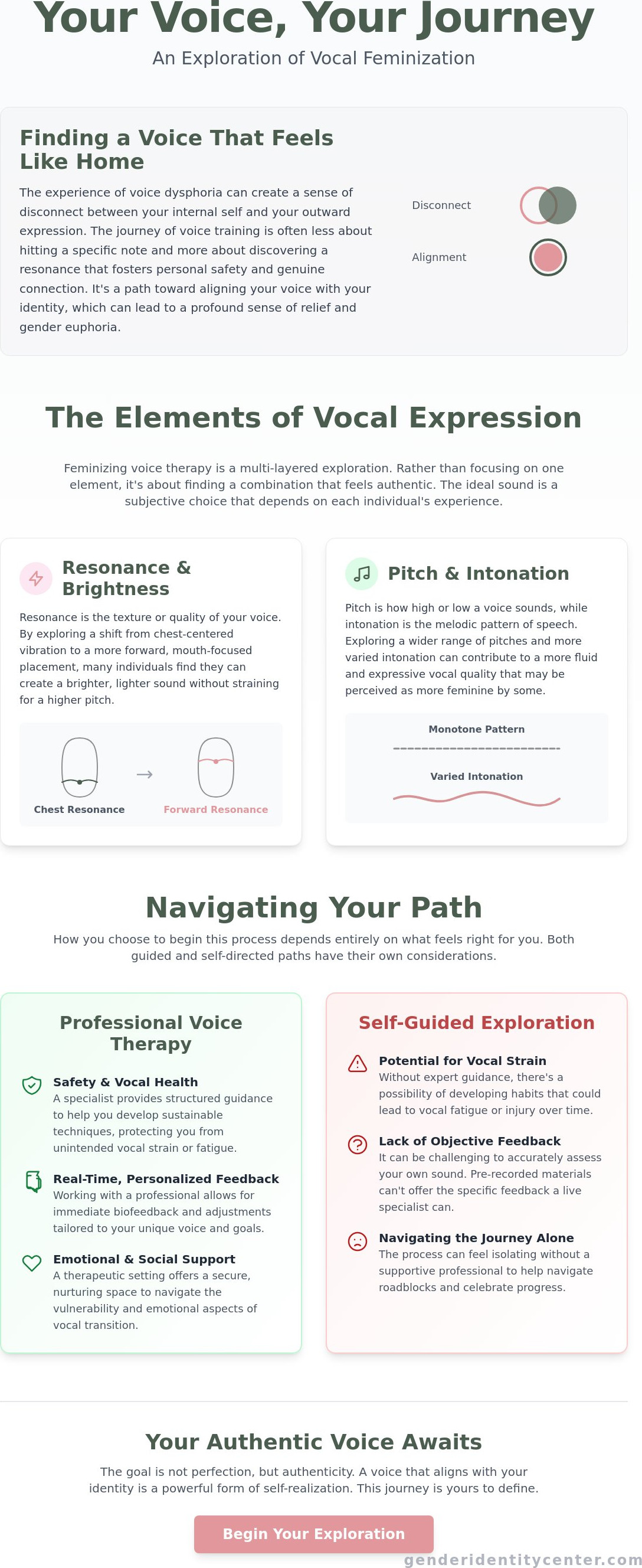
Professional Voice Therapy vs. Self-Guided Learning
Starting your journey with a smartphone app or a video tutorial is a common first step for many people. These digital resources are accessible and can provide a basic understanding of vocal mechanics without an initial financial commitment. However, the depth of mtf voice training arizona often extends beyond what a pre-recorded video can offer. While self-guided work might serve as a helpful initial exploration, professional therapy provides a structured partnership that acknowledges the subjective nature of this process. This depends on each individual's experience and how they prefer to receive and process feedback.
One of the primary differences between clinical sessions and DIY methods lies in real-time biofeedback. A specialist can hear the subtle nuances of resonance and weight that an automated app might miss. They offer immediate, gentle corrections, ensuring you aren't building habits that might be difficult to unlearn later. This interactive element creates a sense of safety. You can move forward knowing that a professional is monitoring your progress and adjusting the pace to suit your unique needs. It's a collaborative effort that prioritizes your comfort above all else.
Avoiding Vocal Strain and Injury
Vocal health is a vital consideration that is sometimes overlooked in self-guided tutorials. Pushing for a certain pitch or resonance without proper support can lead to vocal nodules or chronic fatigue. A clinician monitors your vocal health to ensure that your new sound is sustainable for your daily life. A healthy voice should never feel painful or "tight" during practice. By prioritizing the physical well-being of your vocal folds, you ensure that your voice remains a reliable and resilient tool for self-expression.
The Benefit of a Therapeutic Environment
There is a significant emotional difference between practicing in isolation and working with a compassionate partner. Professional therapy addresses the mental hurdles and social anxieties that apps simply cannot reach. When you work with Gender Identity Center therapists, you enter a secure environment where your lived experience is seen and validated. Progress is often non-linear. It flows at a cadence that depends on your emotional readiness and personal context. This therapeutic alliance acts as a steady, guiding hand, helping you navigate the complexities of social transition with quiet resilience.
Ultimately, the choice between self-guided learning and professional therapy is a personal one. Some may find that a combination of both works best for their lifestyle. Others might prefer the clinical authority and heartfelt support of a dedicated specialist from the very beginning. Your path is your own, and the most important factor is that you feel empowered and safe as you explore your authentic sound.
Preparing for Your Voice Journey in Arizona
Beginning the process of mtf voice training arizona is a meaningful step toward self-realization. It's helpful to view your initial evaluation as a collaborative exploration rather than a formal test of your abilities. This first meeting is a space where you can share your hopes and set milestones that feel authentic to your path. Because every transition is unique, the focus of these sessions depends on each individual's experience and their personal goals for vocal expression. We approach this work with a gentle cadence, ensuring you feel seen and respected from the very start.
Preparing for this journey involves both mental readiness and practical considerations. You might find it helpful to think about the specific environments where you want to feel most confident, whether that's at work, with family, or in public spaces. Setting these intentions helps create a roadmap that reflects your true self. Our role is to act as a bridge between your current reality and your future sound, providing the stability and guidance needed to explore new territory safely.
Vocal Hygiene in the Desert
Living in the Southwest brings specific environmental factors that can influence your vocal health. The dry air in cities like Phoenix and Tucson often leads to vocal fold dehydration, which might make your voice feel tired or strained more quickly. Maintaining consistent hydration is a fundamental part of keeping your vocal cords flexible. You could consider using a humidifier in your home or trying steam inhalation to combat the desert's low humidity. Avoiding common irritants like smoke or excessive caffeine may also help maintain clarity. These small, daily habits ensure your vocal instrument remains resilient during your training sessions.
Scheduling and Telehealth Options
Logistics shouldn't stand in the way of your personal growth. For those who live outside the major metropolitan areas or those who feel most secure in their own environment, telepractice offers a convenient and flexible solution. Virtual sessions provide the same level of professional expertise as in-person visits while allowing you to practice in a space where you already feel comfortable. To get the most out of an online session, it's helpful to find a quiet, private area where you won't be interrupted. If you're ready to begin, you can visit our scheduling page to find a time that fits your life. We invite you to explore our therapy options and find the support that feels right for your unique journey.
Finding Your True Voice at the Gender Identity Center
We believe that vocal expression is deeply connected to your sense of self and mental well-being. At the Gender Identity Center, our approach to mtf voice training arizona isn't just about the mechanics of speech; it's a careful blend of clinical speech pathology and gender-affirming mental health support. This dual focus ensures that while you're learning new techniques, you're also supported through the emotional shifts that often accompany vocal change. We prioritize creating a nurturing space where you can freely express yourself without the fear of judgment or the pressure to meet a rigid standard.
Our clinicians, including Elisa McDowell, bring a depth of lived experience and professional expertise to their work. As allies and members of the community, they understand that finding your voice is a journey of quiet resilience. They act as a wise mentor, offering a steady hand as you navigate the complexities of resonance and pitch. This process is highly personal. The way you choose to integrate these services into your life depends on each individual's experience and their unique vision for their future self.
A Holistic Approach to Transition
Voice work often exists as one piece of a larger puzzle. You might find that your vocal journey naturally intersects with gender identity therapy in Phoenix. By viewing transition as a multifaceted experience, we can provide a more comprehensive support system. Our transgender clinic services are designed to meet you where you are, whether you're just starting to explore or are further along in your process. This includes facilitating WPATH referral letters in Arizona for those who choose that specific path. We prioritize your agency, ensuring that every step taken is one that feels right for your unique context and personal pace.
Your Invitation to Explore
It's completely normal to feel a bit intimidated as you begin. Vulnerability is a natural part of any self-discovery process. We invite you to reach out for a consultation to see if our style of care feels like a good match for your needs. There is no pressure to reach a certain outcome by a specific date. Instead, we offer a steady, guiding hand as you move toward a future where your voice feels like home. You can visit our scheduling page to take that first gentle step. Finding a voice that feels authentic is possible, and we're here to help you explore that potential in a secure and affirming environment.
Embracing Your Vocal Evolution
Finding a voice that resonates with your spirit is a journey of quiet resilience and self-discovery. We have explored how resonance and brightness play a vital role in vocal alignment, and how professional support can help you navigate this path safely. Whether you choose to focus on the mechanics of sound or the emotional nuances of communication, the process of mtf voice training arizona is deeply personal. It's a path that depends on each individual's experience and their own definition of authenticity.
Our Master’s level Speech-Language Pathologists provide a nurturing, LGBTQIA+ affirming environment where you can explore your sound at your own pace. With telehealth available throughout all of Arizona, you can access clinical expertise from the comfort of your own home. We invite you to begin your voice journey by scheduling a consultation with our Arizona specialists today. Your voice is a powerful tool for self-realization, and we're honored to support you as you discover a sound that finally feels like home.
Frequently Asked Questions
How long does MTF voice training usually take to see results?
The timeline for seeing results from mtf voice training arizona depends on each individual's experience and their specific vocal goals. While some might notice subtle shifts in resonance or weight within a few weeks, achieving a consistent and sustainable sound often takes several months of dedicated practice. We focus on a pace that feels comfortable for you, ensuring that your progress is steady and healthy. Muscle memory develops at a different cadence for everyone.
Will voice therapy make me sound like a "different person"?
Voice therapy is designed to help you discover a sound that feels aligned with your true self rather than turning you into someone else. You are the expert on your own life, and the process is about uncovering a resonance that reflects your identity. Most people find that they simply sound like a more authentic version of themselves. The training focuses on highlighting your existing vocal characteristics in a more feminine way that feels natural.
Can I still use my original voice after training?
You don't lose the ability to use your original voice unless you choose to stop using it entirely. Many individuals learn to move between different vocal qualities depending on their comfort level and the social context they are in. Think of it as expanding your vocal range rather than replacing it. This flexibility allows you to navigate various spaces with a sense of agency and personal safety while maintaining control over your expression.
Is MTF voice training in Arizona covered by insurance?
Coverage for mtf voice training arizona varies significantly depending on your specific insurance provider and the details of your plan. Some policies acknowledge voice therapy as a medically necessary part of gender-affirming care; others may have different requirements. It's often helpful to contact your insurance company directly to ask about speech therapy benefits. They can clarify what documentation they might need to process your claim and whether a specific diagnosis is required.
What is the difference between voice feminization and just raising my pitch?
Raising your pitch is only one small part of a much broader and more complex process. While pitch refers to the highness or lowness of a sound, voice feminization involves adjusting resonance, vocal weight, and intonation patterns to create a more feminine quality. This holistic approach ensures that your voice sounds natural and sustainable for daily use. Resonance is often what gives a voice its specific character and texture rather than just its frequency.
Can I do voice training if I have already had vocal cord surgery?
It is possible to engage in voice training after having vocal cord surgery, though the approach may need to be adjusted based on your healing process. We recommend coordinating with your surgeon to ensure that your vocal folds are ready for the exercises involved in therapy. A specialist can help you navigate post-surgical changes with a gentle hand. The focus remains on techniques that prioritize your long-term vocal health and physical comfort.
Do I need a referral to start speech therapy at the Gender Identity Center?
You generally don't need a formal medical referral to begin speech therapy at the Gender Identity Center. However, some insurance plans might require a referral from a primary care physician if you're seeking reimbursement for your sessions. We invite you to reach out to us directly so we can discuss your specific situation. This helps us determine the best way to start your journey in a secure and supportive environment that feels right for you.
How often should I practice my voice exercises at home?
Consistency is often more beneficial than long, intense practice sessions. Many people find that practicing for 10 to 15 minutes a few times a day helps them build muscle memory without causing vocal fatigue. The exact frequency depends on each individual's experience and physical stamina. We work with you to create a practice schedule that fits into your daily life. This ensures your voice stays healthy and resilient as you progress toward your goals.