
Therapy for Parents of a Nonbinary Child in Phoenix

A child’s coming out can change familiar routines, but you don’t have to navigate the adjustment alone. Therapy for parents of a nonbinary child in Phoenix can give you space to process your feelings, understand changes in names, pronouns, or appearance, and practice responding with care. Counseling can center your relationship and your child’s needs, at a pace that fits your family.
You may want to support your child and still feel unsure about what to say or how to respond. Those feelings can coexist with love and a willingness to learn. Counseling gives you room to explore them without making your child responsible for reassuring you or explaining everything.
Here, you’ll learn how parents can adjust when a child comes out, respond to changes in names and pronouns, and work through family disagreements. We’ll also look at how counseling can support open communication and help you build a caring environment as your family finds its way forward.
Key Takeaways
- Ask your child which name and pronouns feel right, and stay open to changes in how they express their identity.
- If you use the wrong name or pronouns, a brief apology and a correction can help keep communication respectful.
- Counseling can give parents space to process their reactions and work through differences while keeping their child’s well-being in view.
- Tordoff and colleagues found that transgender and nonbinary youths receiving social or medical support had lower rates of depression and suicidal thoughts over a 12-month period.
Caregiver challenges when a young person changes pronouns or appearance
A young person may change their name, pronouns, or appearance while exploring their gender and sense of self. For parents, the adjustment can affect everyday routines, from how relatives introduce the child to what appears on a school form. Therapy for parents of a nonbinary child in Phoenix can offer space to explore these changes and consider what support feels right for your family.
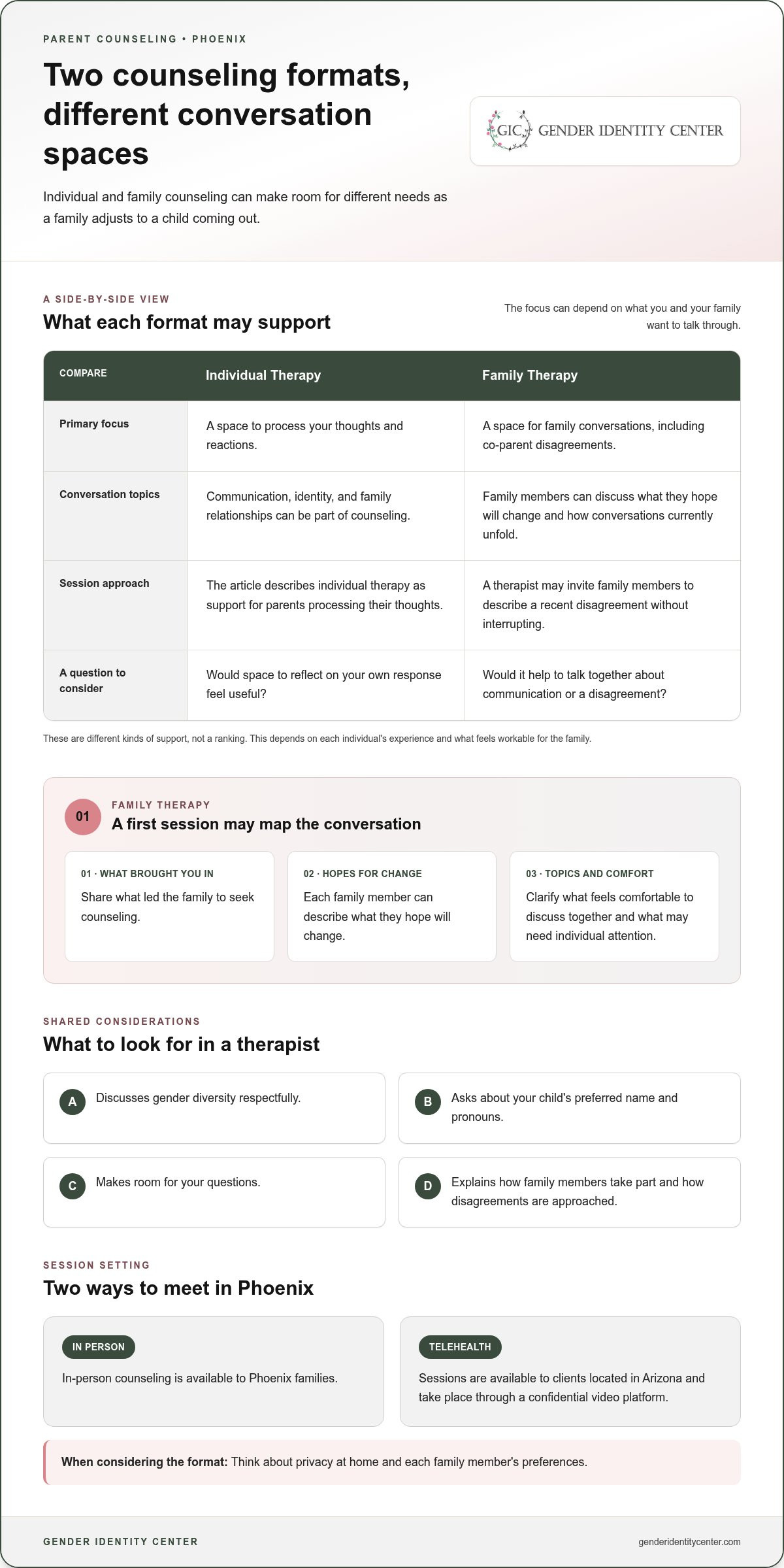
Phoenix families can choose telehealth or in-person counseling at Gender Identity Center. Telehealth sessions are available to clients located in Arizona and take place through a confidential video platform. Consider privacy at home and each family member’s preferences when deciding which format feels workable.
Adjusting to Changes in Name and Appearance
Adjusting means making space for a young person’s evolving name, presentation, or pronouns in everyday family life. Small interactions can shape whether a child feels recognized at home. For example, talk about an upcoming family gathering beforehand, including what your child wants relatives to know. Let their preferences guide the conversation, and remember that those preferences may change over time.
Pronoun Choices and Validation
Pronouns are the words a young person wants others to use when referring to them. Asking what feels right makes the conversation direct and personal. You might say, “What pronouns would you like me to use when I introduce you?” Then listen and use them in the settings your child identifies.
Parents may be learning new language while their child figures out what feels authentic. A calm conversation about the difference between sex and gender can be a starting point, especially when you listen before explaining. You could ask which parts of a new look feel important to your child instead of interpreting the change for them. Questions and adjustments can be part of the process for everyone, and each family finds its own pace.
Avoiding misgendering and deadnaming
Misgendering means using language that doesn’t reflect someone’s gender identity. Deadnaming means using a name they no longer use. Parents may slip while changing old habits, especially in quick conversations or familiar routines. How you respond matters: calmly correct yourself and continue, without making your child manage your stress.
Try practical steps at home. Update your child’s contact name in your phone, for example, and practice saying their name before introducing them to someone. If you make a mistake, correct it briefly and move on. A long explanation can shift attention away from your child and onto your discomfort.
- Ask your child privately which name and pronouns they want you to use in different settings.
- Practice with a trusted family member before a gathering, if your child is comfortable with that.
- If another person uses an old name, follow your child’s lead about whether and how to correct them.
- Keep the conversation open, since a young person’s preferences may change over time.
Some parents, including cisgender parents who haven’t previously thought about pronoun use, need time to build new habits. A written reminder can help, but don’t make practice your child’s responsibility. Using their name and pronouns is described as a major protective factor. It also shows that their identity is welcome in everyday interactions, from introductions and family messages to conversations about school.
If repeated mistakes are creating distance, a supportive conversation can help you notice what gets in the way and plan a repair. Gender counseling may offer space to explore assumptions, stress, and ways to communicate with care. You can learn about affirming therapy approaches as you consider what kind of support feels comfortable for your family.
Therapists can build rapport with parents without attacking them, since parents may otherwise shut down or leave therapy. Any decision to avoid a transgender or nonbinary child’s name and pronouns should be limited to the brief period of building rapport with the parents. A therapist should not avoid using the child’s name and pronouns in front of them, as this can signal a lack of support for their identity.
Counseling for parents adjusting to a child coming out
A child coming out can bring love, surprise, worry, and questions into the same family conversation. Counseling gives parents room to understand those emotions and consider how they want to respond. You might feel unsure while still wanting your child to feel heard. Both feelings can be part of the adjustment.
In Phoenix, Gender Identity Center offers individual and family counseling for parents seeking support with communication, identity, and family relationships. Individual Therapy can help you process your thoughts; Family Therapy can support conversations about co-parent disagreements. A child who doesn’t identify within the gender binary may need a different kind of conversation than a parent first expected.
When choosing a gender-affirming therapist, look for someone who discusses gender diversity respectfully, asks about your child’s preferred name and pronouns, and makes room for your questions. Ask how family members take part in sessions and how the therapist approaches disagreements. These conversations can help you decide whether the approach feels appropriate for your family.
In an initial family therapy session, expect to discuss what brought you in, what each family member hopes will change, and how conversations currently unfold. A therapist might invite you and your child to describe a recent disagreement without interrupting. The first meeting can also clarify which topics feel comfortable to discuss together and which may need individual attention.
Counseling can help you reflect on how your reactions affect your child’s mental health and sense of connection. A therapist may acknowledge your fears while encouraging responses that support your child. The goal isn’t for every family member to think alike. Counseling can provide space to listen, recognize shared care, and work toward communication that feels safer for everyone.
Parents can use counseling to process their feelings and find ways to support their child.
After building rapport, therapists can connect with parents through their love for their child and the fears shaping their responses, then challenge transphobic thinking.
Parenting transgender and nonbinary children
Parenting a transgender or nonbinary child can mean learning how your child understands their identity while keeping their autonomy central. Start by asking what support they want in a specific situation, such as meeting relatives. Children don’t all want the same response, so ask what feels respectful to yours.
Arizona laws and policies affecting mental health care can depend on the service and circumstances. For a minor’s therapy, ask at the outset how consent, confidentiality, and parent participation are handled. These conversations clarify what information may be shared and how your child’s privacy is considered.
Gender Identity Center does not work directly with insurance, helping protect client confidentiality. The practice provides superbills for clients to submit to their insurance plans for possible reimbursement. Review your plan’s behavioral health benefits and coverage details to understand what costs may apply.
To find support groups in Phoenix, look for groups specifically for parents or caregivers of transgender and nonbinary children. Before attending, consider asking who the group is for, what topics it covers, and how members’ privacy is handled. A caregiver group can offer space to share questions without asking a young person to guide the discussion.
Respecting privacy can be as practical as asking before sharing your child’s name or identity with relatives, school staff, or friends. Check who already knows before making an introduction. Let your child say what feels safe, and revisit the conversation if their preferences change. Assigned sex at birth does not determine the name or identity they choose to use.
Tordoff and colleagues found that transgender and nonbinary youths receiving social or medical support had lower rates of depression and suicidal thoughts over a 12-month period. That finding offers context for why supportive relationships may matter, while each young person’s experience remains individual. To explore affirming therapy approaches, consider what kind of support may fit your family.
Gender Identity Center: Individual Therapy
Gender Identity Center offers Individual Therapy for parents who want space to process their feelings and consider how to support their child. If family conversations feel difficult, Family Therapy can help you work through communication and differing perspectives together. Group Therapy offers connection with others navigating related experiences, and EMDR Therapy is another option.
The right format depends on what you want to explore. Individual Therapy may suit personal reflection, while Family Therapy can help when shared conversations are the focus. Choose a next step that feels right for your circumstances.
To discuss support options in Phoenix or Tucson, contact Gender Identity Center.
Take the Next Step at Your Own Pace
You don’t need every answer before starting a new conversation with your child. Set aside a calm moment to ask what would help them feel respected at home. Listen first, then consider what you can practice. Change can unfold gradually, and every family’s experience is different.
Seeking therapy for parents of a nonbinary child in Phoenix can give you room to reflect on your questions while staying connected to your child’s needs. Choose support based on what matters most now, whether that’s personal reflection or making space for family conversations.
If you’re ready to explore support, contact Gender Identity Center. Taking a first step can create more room for understanding, connection, and growth, at a pace that feels right for your family.
Frequently Asked Questions
How Can Therapy For Parents Of Children and Adolescents With Gender Dysphoria Help?
Therapy can help you understand your reactions and respond in ways that support your child’s well-being. Use a session to prepare for a conversation about school, relatives, or family disagreements. A therapist can help you listen without rushing to solve every concern, while making room for your questions. The aim is to support communication and care, not to change a young person’s gender identity.
Does insurance cover family therapy for parents of a nonbinary child in Arizona?
Coverage depends on the individual insurance plan and how care is billed. Review its behavioral health benefits, network rules, and coverage details for family sessions.