
Transgender Support Groups in Arizona: Exploring Community and Connection in 2026
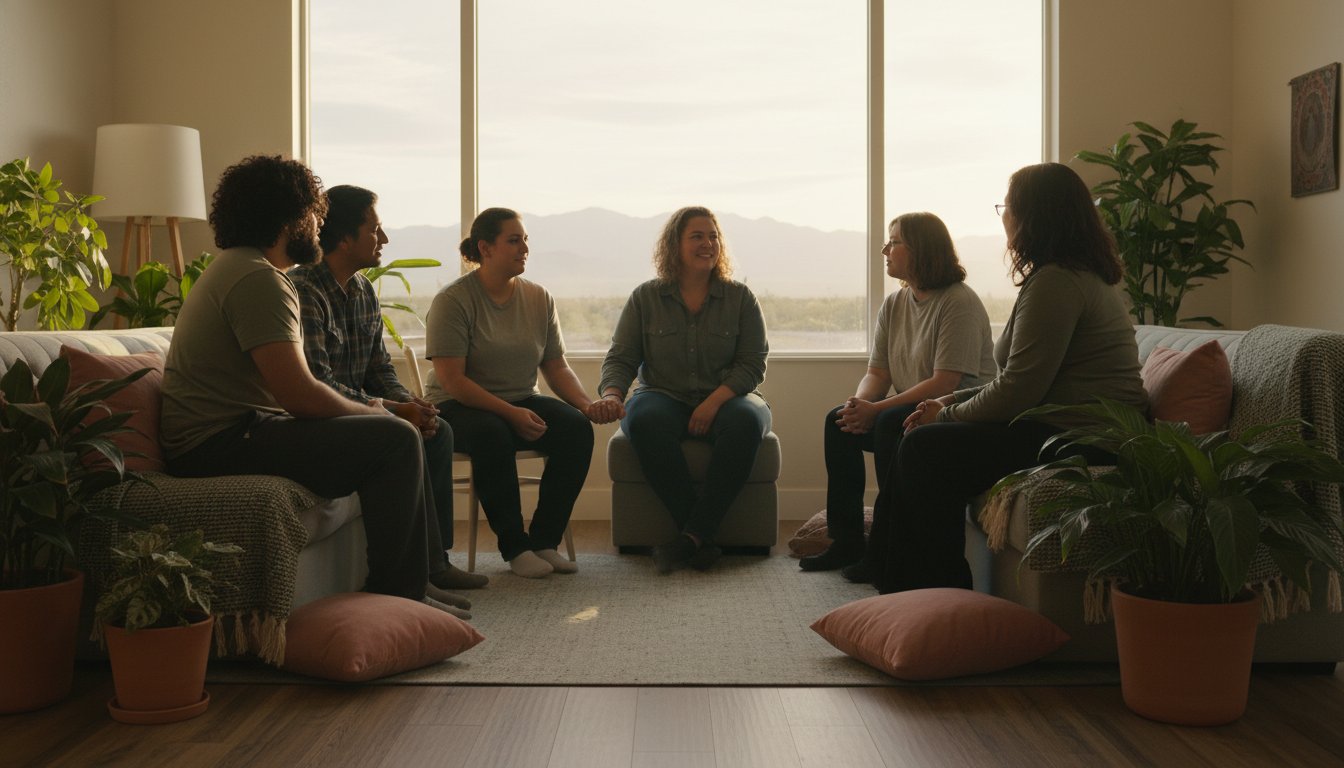
What if the most transformative part of your transition isn't a medical milestone, but the moment you realize you're no longer walking this path alone? It's completely natural to feel a sense of hesitation when looking for transgender support groups in Arizona, especially when you're wondering if a room full of strangers will truly understand your specific story. You might feel a heavy weight of isolation or perhaps a quiet anxiety about whether you'll "fit in" to a community that already seems established. We recognize that taking this first step requires immense courage, and it's okay to move at a pace that feels safe for you.
In this guide, you'll discover the diverse landscape of community spaces across the state and learn how to find a space that resonates with your unique personal journey. We'll explore the differences between peer-led circles and professional group therapy, helping you distinguish between casual connection and clinical support. Ultimately, the right path depends on each individual's experience and what you need to feel seen today. We'll look at how local organizations are shaping the 2026 landscape, ensuring you have the information needed to choose a community that honors your subjective reality.
Key Takeaways
- Learn how to distinguish between peer-led circles and clinical settings when exploring transgender support groups in Arizona to find the environment that feels safest for you.
- Recognize that the choice between a social group and a therapeutic space depends on each individual's experience and their specific goals for connection.
- Identify the various formats of community support available throughout the state, including specialized spaces for youth, families, and specific gender identities.
- Understand how professional gender counseling and group therapy can offer a structured layer of support for those navigating complex emotional milestones.
- Gain practical insights on how to vet potential groups to ensure they align with your personal values and offer the radical acceptance you deserve.
Understanding the Landscape of Arizona Transgender Support
Finding a space where your identity is not just acknowledged but celebrated is a profound part of the human experience. When we talk about transgender support groups in Arizona, we're describing spaces built on the foundation of shared lived experience. These aren't just meetings; they're containers for stories that might otherwise go untold. Whether you're just beginning to explore your gender identity or you've been on this path for years, the "right" group is entirely a matter of personal resonance. A support group is a flexible environment for self-discovery.
We recognize that Understanding the Landscape of Arizona Transgender Support involves navigating a complex social and geographic terrain. Arizona's mix of vibrant urban centers and vast rural expanses creates a unique backdrop for our community. While the laws and social climate may shift, the need for a steady, guiding hand remains constant. Finding a safe, affirming space within our local state context is a vital step toward feeling secure in your own skin. It's about finding a place where you don't have to explain the basics of your existence.
The Role of Community in the Transition Journey
Isolation can be a heavy burden to carry. Connecting with others helps to lower those defenses and provides a sense of quiet resilience. Your needs for support aren't static; they often evolve as you move through different stages of your journey. Some days you might need deep emotional processing, while other days you might just want to be around people who "get it" without any explanation. We view the group experience as one of many possible paths to wellness, and this depends on each individual's experience at any given time. There is no single "correct" way to seek connection.
Arizona-Specific Support Dynamics
The network of resources is growing, particularly within the Phoenix and Tucson corridors. These hubs offer a variety of options, but we also know that distance can be a barrier for those in more remote areas. Telehealth and virtual meetings have become essential bridges, ensuring that geography doesn't restrict access to community. When exploring transgender support groups in Arizona, you'll find that the available formats are as diverse as the desert itself. Whether you're looking for an in-person circle in the Valley or a digital space from a smaller town, the goal is always to find a secure environment where you are acknowledged. Choosing a path that fits your subjective experience is the most empowered way to move forward.
Navigating the Varieties of Support Groups Available
The path toward community isn't a straight line, and the types of transgender support groups in Arizona reflect this beautiful complexity. You might find that your needs change depending on the day or the specific challenge you're facing. Some spaces are designed for advocacy and social change, while others focus purely on the internal emotional landscape. Because every journey is unique, the value of each format is entirely open to interpretation. It's about finding a rhythm that feels right for your current reality. You are the expert on what you need, and the variety of available options honors that agency.
Peer-Led vs. Facilitated Meetings
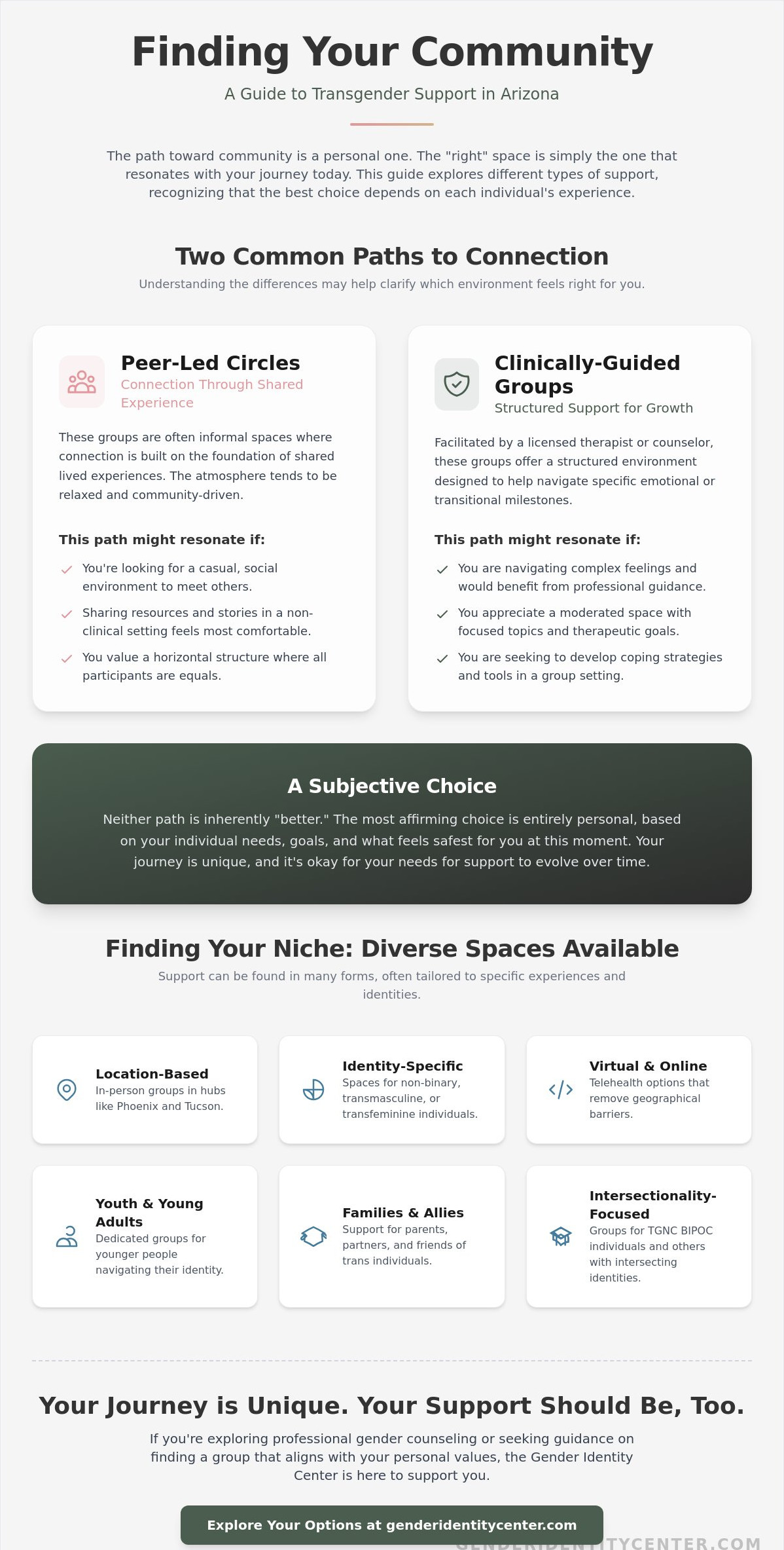
Peer-led groups offer a sense of horizontal connection that many find refreshing. These are informal spaces where you can share resources, vent about daily hurdles, or simply exist without judgment. The UArizona LGBTQ+ Health Resources provide excellent examples of how these community-driven spaces function in Tucson and beyond. In contrast, facilitated or clinically-guided groups offer a different kind of safety. These are moderated by professionals who can help navigate group dynamics and ensure that the conversation remains constructive. The choice between an informal chat and a structured session is a subjective one. Neither is inherently better; they simply serve different purposes on your path of self-discovery.
Specific Focus Groups: Finding Your Sub-Community
Finding a sub-community can sometimes make a large world feel a bit smaller and more manageable. Many people look for spaces that acknowledge the intersection of their various identities. This might mean seeking out groups for TGNC BIPOC individuals or spaces that are sensitive to neurodivergent needs. There are also vital resources for the people who love you. Groups for parents, partners, and family members can help your support system grow alongside you. If you're exploring these options in Southern Arizona, looking into Transgender Counseling in Tucson might provide the clarity you need. We believe that having a variety of options allows you to be the expert on your own life, choosing the specific type of connection that resonates with you today.
Meeting frequencies and structures are as varied as the people who attend them. Some organizations host weekly drop-in sessions, while others require a commitment to a closed, multi-week therapeutic cycle. You might find that a mix of formats works best for you. If you're feeling ready to explore a more structured environment, you might consider looking into specialized gender counseling to see if a professional setting aligns with your goals for personal growth.
Peer-Led vs. Clinically-Guided Spaces: A Subjective Choice
Deciding where to invest your emotional energy is a significant step in any journey of self-discovery. When you look at the landscape of transgender support groups in Arizona, the choice between a peer-led circle and a clinically-guided space often depends on each individual's experience and what they hope to gain from the interaction. Some people seek the raw, unfiltered connection of a social gathering, while others prefer the structured safety of a professional setting. Because every person's history and current needs are unique, neither option is objectively better than the other. It's simply a matter of finding the container that can hold your story most effectively right now. You might even find that you benefit from both at different times.
When a Therapeutic Environment Might Feel Beneficial
A clinical group is more than just a conversation; it's a space where a trained professional actively manages the group's emotional safety. This can be particularly helpful if you're navigating complex mental health hurdles or processing past trauma that requires a delicate touch. A therapist can identify when a discussion might be becoming overwhelming and help ground the participants in the moment. This level of clinical expertise provides a layer of protection that some find essential for their internal progress. If you're curious about the professionals who facilitate these types of sessions, you might find it helpful to learn about the Gender Identity Center therapists and their approach to affirming care. Having a steady, guiding hand can make the process of exploring your identity feel much more secure.
The Value of Informal Peer Connection
Peer-led spaces offer an organic path to friendship and mutual aid that feels grounded in everyday life. These groups are usually created and maintained by individuals who are living the same experiences you are, providing a unique sense of partnership. They often provide a faster route to social connection because the environment is less formal and more focused on shared networking and community building. Because these groups are frequently free or low-cost, they remain highly accessible to many in our community regardless of their financial situation. In these spaces, you're empowered to share resources, tips on navigating local systems, and the simple joy of being understood without a clinical lens. The strength of these groups lies in their radical acceptance and the collective wisdom of the members. Your choice between these two worlds might shift over time, and that's a perfectly valid part of your progression.
Finding a Safe Space in Phoenix, Tucson, and Beyond
Finding transgender support groups in Arizona involves more than just looking up an address; it's about finding a place where you can exhale. While the major population centers of Phoenix and Tucson house the majority of organized resources, the energy of these spaces can vary significantly. Some people find comfort in the bustling, diverse options of the Phoenix metro area, while others prefer the tightly knit, community-driven atmosphere found in Tucson. The Gender Identity Center serves both of these communities, providing a bridge between the two largest hubs of our state. We understand that your location often dictates your starting point, but your personal comfort should always guide your final destination.
Navigating Phoenix and Tucson Resources
The Phoenix area provides a wide net of resources, ranging from large advocacy organizations to small, specialized therapeutic circles. This concentration allows for a high degree of specificity, which can be helpful if you're looking for a very particular sub-community. Tucson’s unique community-oriented support culture often feels more grassroots and interconnected, offering a different kind of warmth. Whether you feel more at home in a large city setting or a smaller community circle is a subjective choice. If you're currently in the Valley and looking for a professional environment, you might consider reading about Gender Identity Therapy in Phoenix to see if it aligns with your needs.
Vetting a Group for Personal Safety
Your sense of safety is paramount, and it's something only you can define. When you're researching potential groups, take a moment to look at their mission statements or the backgrounds of the people leading the sessions. Does the language feel affirming? Is there a clear commitment to intersectional advocacy? It's perfectly okay to attend a single meeting and decide it isn't the right fit for you. This depends on each individual's experience and what they require to feel acknowledged. You aren't obligated to stay in a space that doesn't resonate with your values. For some, the added layer of privacy offered by online groups is a necessary step before engaging in person. We encourage you to schedule an initial session if you'd like to discuss which type of group environment might best support your personal growth.
How the Gender Identity Center Supports Your Group Journey
At the Gender Identity Center, we view our role as a compassionate advocate and a patient, wise mentor. While exploring transgender support groups in Arizona is a vital way to build community, many find that professional group therapy or individual counseling provides a necessary foundation for their growth. Our approach is intentionally unhurried. We prioritize your agency, ensuring you feel seen and respected from the very first interaction. Whether you're seeking gender counseling or specialized speech therapy, the pace is always determined by your comfort level. We don't believe in a one-size-fits-all model; instead, we offer a range of services from WPATH referral letters to family therapy, all designed to wrap you in a blanket of sensitivity and radical acceptance.
Complementing Group Support with Individual Therapy
Connecting with others in a group setting can be a powerful experience, yet it often brings up complex emotions that require more focused attention. This is where individual therapy can serve as a steady, guiding hand. By working one-on-one with a therapist, you can process the insights gained in a group environment at a deeper level. This depends on each individual's experience and their current emotional capacity. For those processing trauma, options like EMDR therapy in Phoenix or Tucson might offer the specific support needed to move forward with resilience. We view these services not as separate tracks, but as a cohesive way to support your personal progression. The integration of clinical authority with heartfelt support creates a secure environment where you can explore the nuances of your identity without judgment.
Taking the Next Step at Your Own Pace
Every journey is individual. There is no rush to achieve a specific outcome or meet a societal expectation of what "progress" should look like. We are here to facilitate your self-realization on your own terms, acting as a permanent and dependable resource for the community. As you navigate the many transgender support groups in Arizona, remember that you are the expert on your own life. If you feel that a more structured therapeutic environment would be beneficial, we invite you to visit our scheduling page to explore your options. Whether you need a WPATH referral letter, family therapy, or a secure space to talk, we are here to walk alongside you. Seeking connection is a brave and meaningful endeavor, and we are honored to be a bridge between your current reality and your future self.
Embracing Your Unique Path to Connection
Finding a community that mirrors your internal world is a deeply personal endeavor. We've explored how the landscape of transgender support groups in Arizona offers a variety of paths, from informal social circles to structured therapeutic environments. Whether you find value in peer-led mutual aid or prefer the clinical safety of a facilitated group, the choice remains entirely yours. This depends on each individual's experience and what they need to feel acknowledged at this specific moment in their journey. There is no right or wrong way to seek connection; there is only the way that feels safest for you.
Our clinicians are dedicated to the Arizona LGBTQ+ community and provide a steady, guiding hand as you navigate these choices. We offer specialized services including WPATH-compliant referral letters and gender-affirming speech therapy to support your personal progression. You don't have to navigate these transition milestones alone. We invite you to explore our affirming therapy options and group resources at the Gender Identity Center when you feel ready to take that next step. Your story is meaningful, and there is a space here where you can be truly seen and respected as you are.
Frequently Asked Questions
How do I know if a transgender support group is right for me?
Deciding to join a group depends on each individual's experience and their current readiness for social connection. If you feel a persistent sense of isolation or a desire to hear from others walking a similar path, a group setting might offer the validation you're seeking. Many people find it helpful to attend a single session as an observer to determine if the group's specific energy and values align with their personal needs.
What is the difference between a peer support group and group therapy?
Peer support groups are typically informal circles led by community members who share lived experiences, focusing on mutual aid and social networking. In contrast, group therapy is a clinical service facilitated by a licensed professional who manages group dynamics and provides therapeutic interventions. While peer groups offer a sense of horizontal partnership, clinical groups provide a structured environment specifically designed to address deeper emotional hurdles or trauma processing.
Are there transgender support groups in Arizona for parents of trans youth?
Yes, Arizona has several dedicated spaces where parents and caretakers can find community and guidance. These groups allow families to process their own journeys in a non-judgmental environment while learning how to provide affirming support for their children. Finding a space with other parents can help lower the defenses of those navigating the complexities of their child's transition for the first time.
Do I need a formal diagnosis to join a gender identity support group?
Most community-led transgender support groups in Arizona do not require a formal diagnosis or any medical documentation to participate. For clinically-guided therapy groups, an initial consultation is usually the standard starting point rather than a pre-existing diagnosis. This unhurried approach ensures that the group remains an accessible resource for anyone exploring the nuances of their identity, regardless of where they are in their medical journey.
Are there online support groups for transgender people living in rural Arizona?
Virtual meetings have become a permanent and dependable resource for those living outside the major Phoenix and Tucson corridors. Many local organizations now offer digital formats to ensure that geography does not restrict access to a secure environment. Online spaces provide a necessary layer of privacy and accessibility, allowing you to connect with the broader Arizona community from the safety of your own home.
How much do transgender support groups in Arizona typically cost?
The cost of attending a group varies significantly based on the format and the organizing entity. Peer-led meetings are frequently free of charge or suggest a small donation to cover basic meeting costs. Clinical group therapy involves a professional fee, though some providers may offer documentation for insurance reimbursement. It's always a good idea to check the specific financial structure of a group before your first visit.
Can a support group help me get a WPATH referral letter?
While peer support groups are wonderful for emotional connection, they cannot provide the clinical documentation required for medical transitions. A WPATH referral letter is a professional service that must be provided by a qualified clinician after a consultation. If you're attending a clinically-guided group, the facilitator may be able to assist you with this process or guide you toward an individual session to complete the necessary assessment.
What should I expect during my first support group meeting?
You should expect a calm, measured environment where your privacy and agency are prioritized from the start. Most meetings begin with a brief introduction and a review of group agreements to ensure everyone feels acknowledged and safe. You are never required to share more than you're comfortable with, and it's perfectly acceptable to simply listen as you begin to explore the strength of community support.