
Transgender Support Groups in Arizona: Finding Your Affirming Community

What if the most important part of your journey isn't the destination, but the people who walk beside you along the way? For many folks in Phoenix and Tucson, the search for a safe space can feel overwhelming, especially when you're trying to understand the landscape of transgender youth therapy arizona. You might feel isolated or anxious about whether you'll truly fit into a specific group. We understand that this feeling of uncertainty is a natural part of the process. It's okay to feel hesitant when the social climate feels complex and the path forward isn't always clear.
Finding the right support depends on each individual's experience and what feels most affirming to you at this moment. This guide will help you discover various pathways to community and clinical support across the state, tailored to your unique identity journey. We'll explore the differences between peer-led circles and professional therapy groups; this helps you access resources for transition and reduce gender-related stress through shared experiences. Whether you're looking for a professional bridge or a casual social connection, we're here to help you find where you belong. Your path is your own, and we're honored to help you explore the options available to you.
Key Takeaways
- Learn how to distinguish between peer-led social circles and clinical group therapy to find the environment that best supports your current emotional needs.
- Understand that the definition of a safe space is subjective, meaning the "right" group depends on each individual's experience and personal journey.
- Explore how options for transgender youth therapy arizona can provide a professional complement to community support, helping families navigate the transition process together.
- Discover how peer-led organizations in Phoenix and Tucson use lived experience to facilitate social transition and resource sharing.
- Gain clarity on how to assess your own goals for connection, ensuring you choose a path that aligns with your unique sense of comfort and safety.
Exploring Transgender Support Groups in Arizona
Support groups in Arizona serve as sanctuary spaces where gender-diverse individuals can gather to share their lived experiences and vital resources. We see these environments as more than just meetings; they're secure settings where you can feel acknowledged without the pressure of societal expectations. Finding a group that resonates with your personal journey is a deeply subjective process. What feels like a perfect fit for one person might not meet the needs of another, and that's perfectly okay. For those exploring transgender youth therapy in Arizona, the path often begins with a simple desire to feel seen within a community that understands the nuances of identity. Your support needs will likely vary based on your unique life stage, whether you're just starting to explore your gender or have been living authentically for many years.
The Spectrum of Support in Arizona
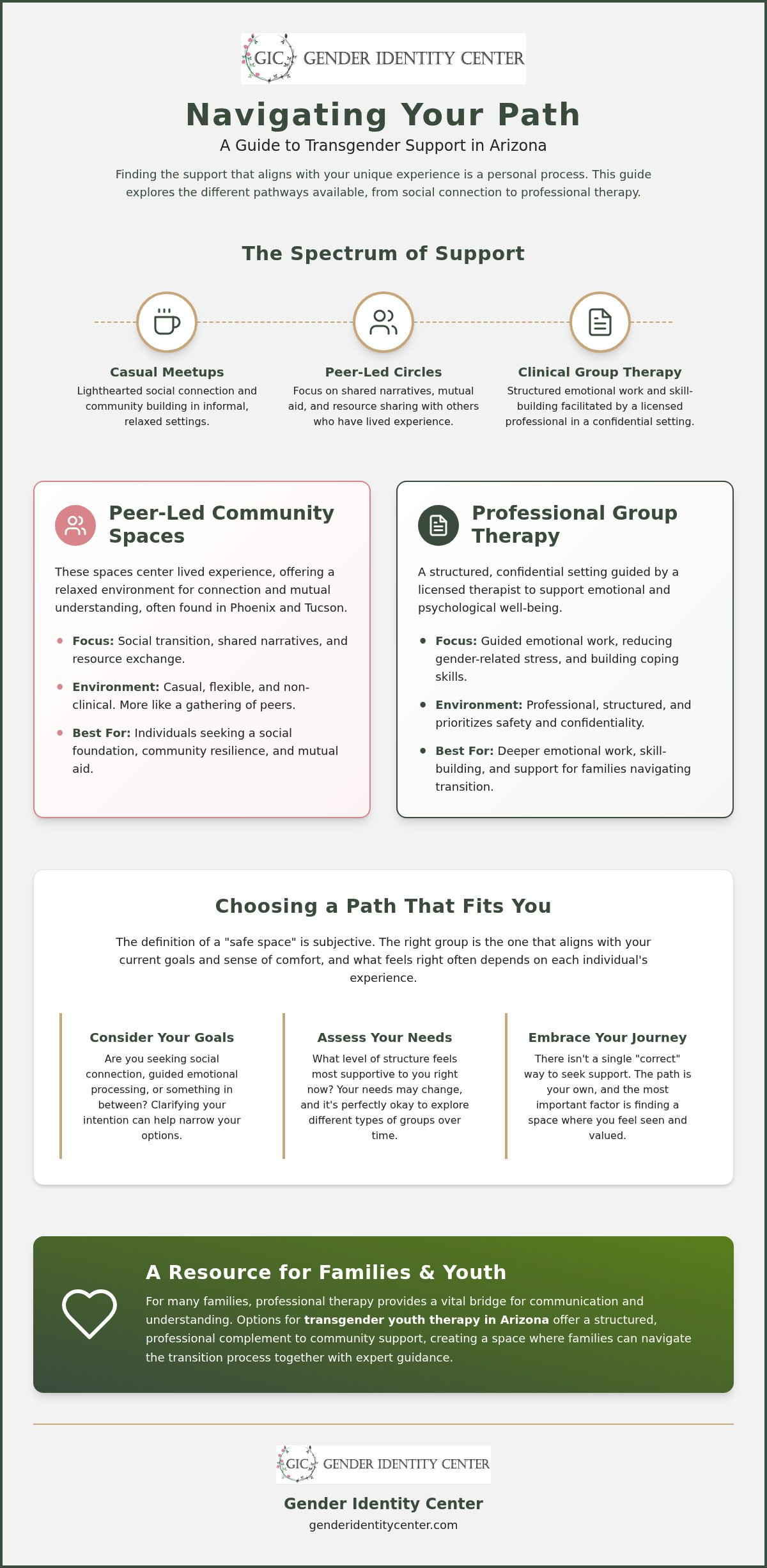
Arizona offers a wide variety of spaces, ranging from casual social meetups to peer-led circles and professional clinical therapy. Choosing between these options often depends on each individual's experience at the time. Some people find that social meetups provide the lighthearted connection they crave, while others might seek the quiet resilience found in peer-led environments. Peer groups often focus on shared narratives and mutual aid. In contrast, clinical groups, such as those facilitated by our therapists, provide a more structured approach to emotional work. There isn't a single "right" way to seek support. The most effective choice is usually the one that aligns with your current goals for self-discovery and personal growth.
Why Community Connection Matters
Living in a climate that can sometimes feel restrictive makes finding an affirming community even more vital. Residents in Phoenix and Tucson often seek out local spaces to counteract feelings of systemic exclusion or personal hardship. Being part of a group allows you to be acknowledged in a professional and safe environment, which can be a powerful antidote to isolation. The local landscape in Arizona shapes these needs, as many individuals look for a bridge between their current reality and their future selves. You might find it helpful to research various transgender rights organizations to see how local efforts fit into a national framework of advocacy. Sharing your narrative with others who have faced similar challenges can foster a sense of partnership and radical acceptance. It's about moving forward at a pace that feels comfortable for you, supported by a community that values your expertise on your own life.
Peer-Led Support and Community Engagement in Arizona
Arizona’s landscape of support is rich with grassroots efforts that prioritize the value of lived experience. For many, joining a peer-led group is a meaningful step toward social transition and collective resource sharing. These spaces offer a unique form of community engagement that feels less like a medical appointment and more like a gathering of peers. Whether you are in Phoenix or Tucson, local organizations provide a flexible environment for those seeking a casual connection. This type of social support can be a vital part of your journey, though its impact often depends on each individual's experience and what they hope to gain at that specific time.
Finding Peer Groups in Phoenix and Tucson
Local grassroots organizations in Phoenix and Tucson work tirelessly to create a sense of partnership among gender-diverse residents. You might find social meetups through organizations like Southern Arizona Senior Pride or Prisma Community Care, which often host events that allow you to meet others in a non-judgmental setting. This social foundation often acts as a bridge to more structured resources, including transgender youth therapy arizona. While social circles are wonderful for building a narrative of shared resilience, some folks find they eventually want to explore deeper emotional work through professional channels. You can look at resources from The Trevor Project to see how national support models influence local community building. These organizations provide a roadmap for those who feel isolated in a complex social climate.
What to Expect in a Peer-Led Setting
The rhythm of a peer-led group is typically calm and unhurried. You won't find the clinical structure of a therapy session here; instead, these spaces center your agency and self-discovery through open dialogue. Navigating group dynamics in a non-clinical environment allows for a diverse range of perspectives and personal stories to emerge naturally. It's a place where you can be acknowledged and heard without the pressure to reach a specific therapeutic outcome. If you feel that your needs are shifting toward a more clinical focus, you might consider exploring our scheduling options to see if professional facilitation feels right for you. Ultimately, the choice between peer support and clinical care is a personal one that reflects your current reality and future goals. This flexibility ensures that you remain the expert on your own life.
The Benefits of Clinical Group Therapy
While peer-led circles offer wonderful social connection, clinical group therapy provides a steady, guiding hand for those ready for deeper emotional work. This type of professional facilitation moves beyond casual social sharing toward the therapeutic processing of trauma and complex identity questions. Whether this environment feels right for you often depends on each individual's experience and their current goals for personal growth. Some folks find that the clinical authority of a professional counselor provides a sense of stability and reliability that helps them feel truly seen. We believe that this structured approach can serve as a meaningful bridge for those navigating the nuances of their identity.
A Safe Environment for Deep Exploration
In a clinical setting, professional ethics create a foundation for a non-judgmental space. This structure allows you to explore gender-related trauma through clinical lenses that prioritize your safety and validation. Unlike a casual meetup, these sessions are intentionally crafted to support personal progression and quiet resilience. Many families exploring transgender youth therapy arizona find that this structured approach helps lower defenses and facilitates radical acceptance. The subjective benefits of these sessions vary; some individuals value the rhythmic flow of professional dialogue, while others appreciate the specific focus on internal emotional states. This environment ensures that every participant is acknowledged in a professional and safe setting.
Connecting with Professional Clinicians
Finding qualified gender therapists in Arizona is a meaningful step toward building your support team. A professional clinician strikes a delicate balance between clinical authority and heartfelt support, acting as a mentor in your self-discovery. You might choose to integrate these sessions with individual gender therapy in Phoenix to create a comprehensive plan for your well-being. Preparing for a therapeutic conversation within a group involves a willingness to engage with others while remaining the expert on your own life. We find that professional guidance can facilitate progress, but the pace and depth of that journey always remain within your agency. By combining group work with individual counseling, you can access a multi-layered approach to transgender youth therapy arizona that honors your unique path and provides a sense of permanent, dependable resource.
Resources for Families and Transgender Youth Therapy in Arizona
Supporting a family through a transition is a collective endeavor that requires a flexible, patient approach. Every family member brings their own unique perspective to the table, and the way they navigate this change depends on each individual's experience. While the focus often centers on the child, parents and siblings also navigate a process of growth and self-realization. Within the scope of transgender youth therapy arizona, we emphasize that there's no single "correct" way for a family to evolve. It's about finding a rhythm that respects everyone’s agency while prioritizing the safety and well-being of the youth.
Support for Parents of Trans Youth
We often frame the parent's experience as a meaningful endeavor of learning rather than a hurdle to overcome. Families in Phoenix can find affirming education through various local community resources that offer a steady, guiding hand during times of change. Engaging in family therapy can be a powerful way to build quiet resilience together, allowing for difficult conversations to happen in a secure environment. This collaborative work helps lower defenses and fosters a sense of partnership between generations.
For those in Southern Arizona, seeking transgender counseling in Tucson provides specific guidance tailored to the local social climate. This professional support helps parents move from a place of uncertainty to one of radical acceptance, providing a sense of stability for the entire household. It's a process of travel where the destination is a deeper, more authentic connection with your child.
Creating a Safe Home Environment
Creating a safe home environment involves bridging the gap between a child's internal reality and the family's external understanding. External support groups can often help lower defenses within the family by providing a space to process emotions outside of the home. This allows the home to remain a sanctuary where the adolescent can feel acknowledged and respected. Radical acceptance isn't about having all the answers immediately; it's about a commitment to staying present through the journey, even when the path feels complex.
We see transgender youth therapy arizona as a bridge that facilitates progress, helping each member feel seen during the social transition. This therapeutic support ensures that the home environment remains a non-judgmental space for self-discovery. By centering the reader's agency, we help families realize they are the experts on their own lives and relationships. This steady flow of support creates a sense of reliability that families can depend on as they move forward together.
If you're ready to explore how professional guidance can support your family's unique path, you can schedule a consultation with our team to discuss your specific needs.
Navigating the Selection Process: What Support Best Fits You?
Finding the right space for your growth is a deeply personal endeavor. It's about more than just finding a meeting time; it's about finding an environment where you feel truly seen and acknowledged. The process of choosing between peer-led circles and clinical transgender youth therapy arizona depends on each individual's experience and their current goals for connection. Safety and comfort are subjective qualities. What feels like a secure sanctuary for one person might feel different for another. We encourage you to view this selection process as a flexible exploration rather than a definitive decision. Your path is a journey of self-realization, and the support you choose should feel like a steady, guiding hand.
Questions to Ask Yourself
As you look at the options in Phoenix and Tucson, you might find it helpful to sit with a few reflective questions. Are you primarily seeking a social connection to share lived experiences, or is your current focus on clinical emotional support for deeper trauma work? You may also want to consider if a specific group's mission aligns with your personal identity journey at this stage. The level of professional guidance you need can shift over time, and this fluidity is a natural part of personal progression. Some folks feel they need the clinical authority of a counselor right now, while others prefer the informal rhythm of a peer group. There are no wrong answers; there's only what feels most affirming to you today.
Taking the First Step
Initiating contact with a resource should feel like an invitation to explore, not a commitment you aren't ready to make. When you're ready to reach out to group facilitators, look for those who project a sense of quiet resilience and radical acceptance. Understanding the scheduling process for clinical groups can help lower anxiety about the logistics of joining. We believe in allowing yourself the space to explore different options without pressure. If a group's pace or rhythm doesn't feel like a match after the first session, your agency remains central. It's okay to try different spaces until you find the one that resonates with your current reality. You are the expert on your own life, and the path you choose for transgender youth therapy arizona should always reflect your future self.
Beginning Your Path Toward Connection
Finding the right community is a journey of self-discovery where you remain the expert on your own life. We've explored how the choice between social peer circles and clinical facilitation depends on each individual's experience at the time. Whether you're looking for a casual social bridge or a more structured environment, your needs are valid and deserve to be acknowledged in a secure setting. Every step you take toward connection is a meaningful endeavor that honors your unique identity and personal progression.
Families also play a vital role in this process; navigating transgender youth therapy arizona can provide the professional guidance needed to build resilience together. Our specialized gender-affirming clinical team offers WPATH-compliant therapeutic support in both Phoenix and Tucson, ensuring a steady, guiding hand is always available. If you feel ready to explore these options, we invite you to schedule a consultation to find the right therapeutic group for your journey. Remember that personal growth is a dynamic process, and you don't have to walk this path alone. We're here to act as a bridge toward your future self, providing a permanent and dependable resource for your well-being.
Frequently Asked Questions
Are there transgender support groups in Phoenix for adults only?
Yes, several organizations in Phoenix offer adult-only spaces that focus on the unique challenges of adulthood, such as workplace navigation or long-term social transition. The specific availability of these groups often depends on each individual's experience and what they are seeking at the time. Organizations like local peer-led circles frequently provide these age-specific environments to ensure that folks feel acknowledged and respected among their peers in a non-judgmental setting.
What is the difference between a peer support group and group therapy in Arizona?
Peer support groups are typically led by individuals with lived experience and focus on social connection and resource sharing. In contrast, group therapy is facilitated by a licensed professional who provides a steady, guiding hand for emotional work and processing trauma. Whether you choose a peer-led or clinical path often depends on each individual's experience and current goals. Both options play a vital role in the landscape of transgender youth therapy arizona.
Can parents of transgender children find support groups in Tucson?
Yes, Tucson has several resources specifically designed for parents and families of gender-diverse youth. Organizations like Southern Arizona Senior Pride or local family-focused therapy clinics offer spaces where parents can learn and grow together. These environments foster radical acceptance and provide a secure setting to discuss the family's unique path. The most helpful resource often depends on each individual's experience and the specific needs of the family unit at that moment.
How much do transgender support groups in Arizona typically cost?
Costs for support groups vary significantly depending on the type of facilitation provided. Many peer-led community groups are available at no cost or for a small donation to cover meeting space. Clinical group therapy sessions led by licensed professionals typically involve a fee, though some may accept insurance or offer sliding scales. We recommend checking with individual facilitators or organizations directly, as the financial aspect depends on each individual's experience and the specific program's structure.
Are online support groups available for Arizona residents?
Online support groups are widely available and provide a convenient option for those who may have difficulty traveling to Phoenix or Tucson. Many clinical practices and grassroots organizations have expanded their reach through telehealth platforms to create secure virtual environments. This flexibility allows you to access community from the comfort of your own home. Whether an online or in-person setting is better depends on each individual's experience and their personal comfort with digital connection.
Is my privacy protected when I join a gender-affirming support group?
Privacy is a top priority in both peer-led and clinical settings, though the specific protections can vary. Clinical groups are bound by professional ethics and legal confidentiality standards, ensuring a secure environment for deep exploration. Peer groups usually establish shared community agreements to respect one another's narratives and identities. We believe that feeling safe is essential for self-realization, so it's always appropriate to ask facilitators about their specific privacy protocols before joining a session.
What should I expect during my first support group meeting in Arizona?
You can typically expect a warm, non-judgmental welcome where you are invited to share as much or as little as you feel comfortable. Most meetings begin with introductions and a review of community agreements to ensure everyone feels seen and respected. The rhythm of the conversation is usually unhurried, allowing for a steady flow of shared experiences. Your first visit is a chance to observe the group's pace and see if it resonates with your personal journey.
Do I need a diagnosis of gender dysphoria to join a support group?
Most support groups do not require a formal diagnosis of gender dysphoria for you to participate. These spaces are designed to be inclusive of all gender-diverse individuals, regardless of where they are in their path of self-discovery. This approach centers your agency and recognizes that you are the expert on your own life. Whether a clinical diagnosis is helpful for your broader journey is a subjective matter that depends on each individual's experience and specific goals.