
Trauma Therapy for LGBTQ+ Individuals in Arizona: A Path Toward Healing

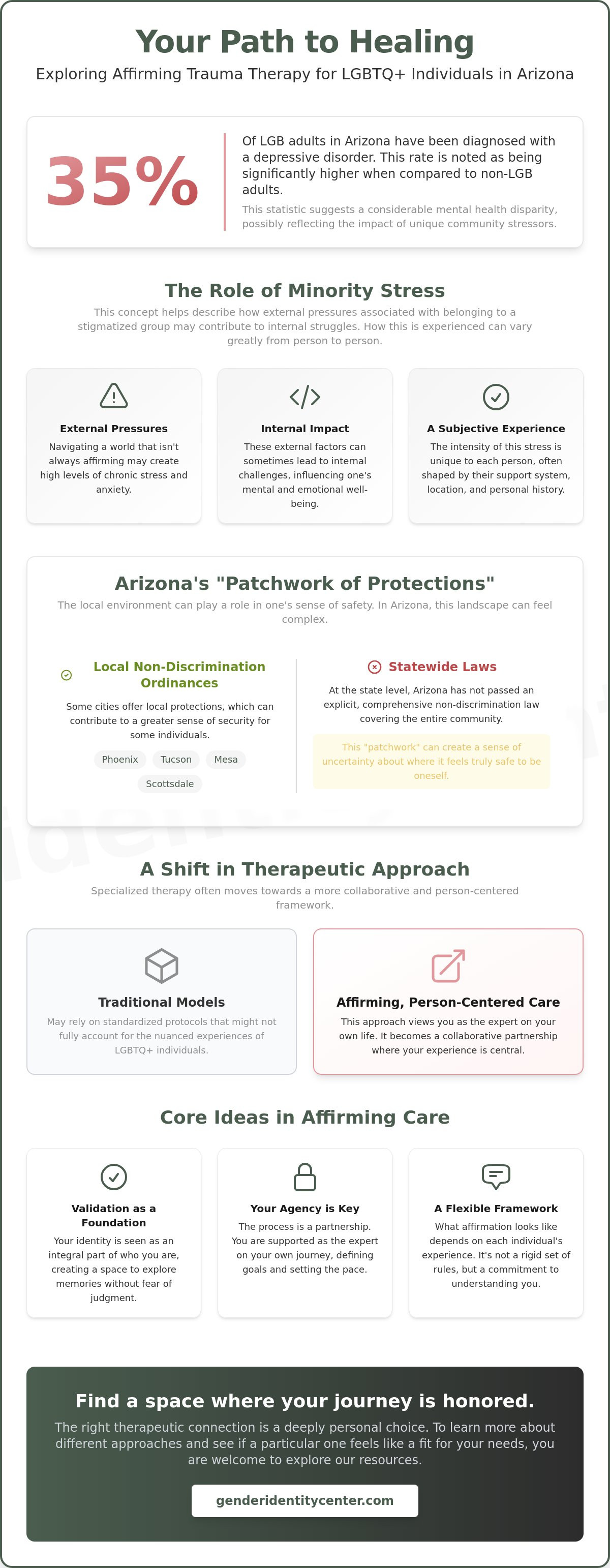
Did you know that 35% of LGB adults in Arizona have been diagnosed with a depressive disorder, a rate significantly higher than that of non-LGB adults? This statistic, from 2026 data, highlights the profound impact that systemic and personal stressors can have on our community. It's common to feel a sense of hesitation when seeking support, especially if you've faced clinicians who didn't quite understand your identity or if you're navigating the emotional toll of recent news. We believe that your experience is valid, and the path to feeling better is rarely a straight line.
Finding effective trauma therapy for lgbtq individuals az is a deeply personal endeavor, and the right approach often depends on each individual's experience and unique history. In this guide, we'll explore how specialized trauma therapy may support your unique journey toward resilience and self-discovery in Arizona. We'll discuss the importance of finding a truly affirming space, look into modalities that might be helpful, such as EMDR or group therapy, and focus on how you can maintain agency throughout your healing process.
Key Takeaways
- Explore how factors like minority stress and the local environment in Arizona might shape your personal sense of safety and community.
- Learn how specialized trauma therapy for lgbtq individuals az often prioritizes your unique lived experience rather than following a rigid clinical model.
- Discover how different therapeutic approaches, such as EMDR or gender counseling, might offer a path toward processing difficult memories that feels right for your needs.
- Understand why the connection you feel with a therapist is often a significant factor in how you experience the healing process, which depends on each individual's experience.
- Gain insight into how a non-judgmental space can support your agency as the expert on your own journey toward self-realization.
Understanding the Landscape of Trauma for LGBTQ+ Individuals in Arizona
Trauma is rarely a single, isolated event that looks the same for everyone. Instead, it's often a collection of lived experiences that shape how we interact with the world around us. For many, the need for trauma therapy for lgbtq individuals az arises from a complex blend of personal history and the social environment. It's helpful to view trauma not as a fixed clinical label, but as a subjective response to stress, exclusion, or harm. Whether these experiences are sudden or accumulate over years, the way they impact your life depends on each individual's experience. Healing is a non-linear process, and there's no "right" way to move through it.
The Role of Minority Stress in Mental Health
Living with chronic stress is a reality for many in our community. This often stems from "minority stress," which describes the high levels of anxiety and fear faced by members of stigmatized groups. Research on the Mental health of LGBTQ people suggests that these external pressures can lead to internal struggles. In Arizona, 35% of LGB adults have been diagnosed with a depressive disorder, a figure that reflects the weight of navigating a world that isn't always affirming. These numbers aren't just data points; they represent the quiet resilience required to live authentically. The intensity of this stress varies significantly between individuals, influenced by factors like your support system, your neighborhood in Phoenix or Tucson, and your personal history.
Why Safe Spaces in Arizona Matter for Healing
The local environment plays a significant role in how we process trauma. Arizona presents a unique landscape where some cities, like Phoenix, Tucson, Mesa, and Scottsdale, have local non-discrimination ordinances, while the state as a whole lacks an explicit statewide law. This patchwork of protections can create a sense of uncertainty about where it's truly safe to be yourself. Finding a therapeutic environment that acknowledges these local dynamics is often essential for feeling seen. A safe space isn't just about a physical office; it's about a relationship where your identity isn't just tolerated, but is central to the conversation. What makes a space feel secure is deeply personal. For some, it's a clinician's specialized training; for others, it's the feeling of being understood without having to explain the basics of their identity. If you're looking for a partner in this process, you may want to explore our therapists to see if a particular approach feels like a fit for your needs.
What Specialized Trauma Therapy May Look Like for You
Traditional clinical models often rely on standardized protocols that may not fully account for the complexities of queer and transgender lives. In contrast, specialized trauma therapy for lgbtq individuals az often moves away from these rigid structures in favor of person-centered care. This approach recognizes that you are the ultimate expert on your own life. Instead of a clinician dictating the terms of your recovery, the process becomes a collaborative partnership. This is why trauma therapy for lgbtq individuals az is most effective when the goals of each session are defined by you, ensuring the work remains relevant to your current needs and future aspirations. Your journey is yours alone, and the pace of therapy should reflect that.
Affirming Care as a Foundation for Progress
Affirming care is best understood as a flexible framework rather than a fixed set of rules. It involves creating a space where your gender identity and sexual orientation are not just acknowledged, but are seen as integral parts of your whole self. This validation provides a steady foundation, allowing you to explore difficult memories without the fear of being misunderstood or judged. Because the community is so diverse, what affirmation looks like depends on each individual's experience. For some, it might mean using specific terminology that reflects their identity; for others, it may involve a clinician simply holding space for the nuances of their relationships and family dynamics. This flexibility helps to lower internal defenses, making it easier to engage with the deeper work of healing.
The Importance of Subjective Experience in Therapy
Your personal narrative is the most significant element of any session. We believe in avoiding hard stances on how a person "should" feel about their past or their current internal state. Trauma can be messy and confusing, and there's no requirement to have everything figured out before you walk through the door. A specialized therapist encourages a neutral, gentle exploration of your thoughts and feelings, allowing you to interpret your experiences in a way that feels authentic to you. This focus on subjectivity ensures that the therapeutic process remains inclusive of all viewpoints and lived realities. By centering your voice, therapy becomes a tool for self-realization rather than a process of fitting into someone else's definition of "wellness." If you're curious about how this collaborative approach might support your goals, you can explore our scheduling options to find a time that works for you.
Exploring Modalities: Could EMDR or Gender Counseling Support You?
Healing isn't a one-size-fits-all experience. When you're looking for trauma therapy for lgbtq individuals az, you might encounter various therapeutic tools designed to help you process the past. Two modalities that many find helpful are EMDR therapy and gender counseling. Whether these are right for you depends on each individual's experience and what feels most supportive at this specific moment in your life. We believe that your comfort and sense of safety should always dictate which path we explore together. Choosing a modality is an act of agency, a way for you to decide how you'd like to engage with your own story.
Understanding EMDR Therapy for the LGBTQ+ Community
Eye Movement Desensitization and Reprocessing (EMDR) is a modality that uses bilateral stimulation, such as guided eye movements or gentle rhythmic taps, to assist the brain in processing difficult memories. For some, this approach can be particularly helpful when addressing identity-based trauma or the cumulative stress of systemic exclusion. You might find that EMDR therapy for gender-related trauma provides a structured yet flexible way to navigate memories that feel stuck or overwhelming. It's important to remember that the pace of this work is entirely up to you. Some people prefer to move through their history quickly, while others find that a slower, more measured cadence feels more secure. There is no "correct" speed for memory processing, and your therapist is there to follow your lead.
The Synergy of Gender and Trauma Counseling
It's quite common for the exploration of gender identity to overlap with the work of processing past trauma. These two areas of life are often deeply intertwined, as our sense of self is frequently shaped by how we've been treated by others. Integrating gender counseling with trauma-informed practices allows for a holistic approach that acknowledges your whole self. A flexible therapeutic style is often helpful here, as it allows us to shift focus between gender-specific questions and broader emotional healing as needed. For many, starting with gender identity therapy in Phoenix serves as a safe starting point for deeper trauma work. This synergy creates a space where you don't have to compartmentalize your identity to find relief from the past. Ultimately, the effectiveness of these combined approaches is subjective and rests on the strength of the partnership between you and your therapist. We view these modalities as invitations to explore your internal world at a pace that feels sustainable and respectful of your unique journey.
Navigating the Search for a Trauma-Informed Therapist in Arizona
Finding the right provider for trauma therapy for lgbtq individuals az is a process that involves both logistical steps and an internal sense of resonance. It's often helpful to look for a counselor whose values align with your own. This shared foundation can facilitate a deeper sense of trust. Research often suggests that the "therapeutic alliance", which is the quality of the bond between you and your therapist, is one of the strongest predictors of a positive outcome. However, whether a specific alliance feels supportive or not depends on each individual's experience. You might prefer the tactile presence of in-person sessions in a local office, or you may find that the flexibility and privacy of telehealth better suit your current lifestyle. Your comfort matters most.
Questions to Consider When Choosing a Counselor
When you begin reaching out to potential therapists, it's okay to treat the first interaction as a two-way exploration. You might consider asking about their specific experience with LGBTQ+ trauma or how they approach the intersection of identity and healing. Communication styles vary greatly. Some clinicians are more directive, while others take a more observational, patient-centered approach. Reflecting on which style feels most supportive to you is a great way to center your own agency. Finding the right "fit" is often a subjective feeling that may take time to discover. It's perfectly valid to speak with several providers before deciding where to begin your work.
Accessing Care in Phoenix, Tucson, and Beyond
Arizona's geographic diversity means that accessing specialized support can look different depending on where you're located. While large hubs like Phoenix and Tucson offer various in-person options, virtual platforms have expanded access for those in more rural areas or those who simply prefer the comfort of their own home. Accessibility is key. For instance, seeking transgender counseling in Tucson can provide a vital link to the local community, whereas telehealth might offer an added layer of privacy. Balancing your need for community connection with your personal requirements for confidentiality is a delicate process. The choice that feels most sustainable for you is often the most effective one, especially when navigating trauma therapy for lgbtq individuals az.
We understand that this search can feel overwhelming, especially when you're already managing the emotional toll of past experiences. If you're ready to explore how a partnership might look for you, we invite you to view our list of affirming therapists to see if someone's profile resonates with your unique journey.
Cultivating Resilience Through Affirming Support at the Gender Identity Center
At the Gender Identity Center, our approach to trauma therapy for lgbtq individuals az is rooted in the belief that every person deserves a space where they feel truly acknowledged. We strive to provide a neutral, non-judgmental environment where you can explore your internal world without the pressure of meeting external expectations. Our clinicians prioritize your agency, recognizing that you're the expert on your own life and your own needs. Whether you're processing past hardships or looking toward future self-realization, we're here to offer a steady, guiding hand. We provide a wide range of services to support this exploration, including:
- Individual Therapy, Family Therapy, and Group Therapy
- EMDR Therapy for processing difficult memories
- Speech Therapy and Professional Consultation
- Gender Counseling, Transgender Counseling, and Gender Therapy
- Support with WPATH Referral Letters
The specific combination of these services that might be helpful often depends on each individual's experience. There is no predetermined path; instead, we invite you to explore what support feels most relevant to your current life stage and personal goals.
A Compassionate Approach to Individual Therapy
Our work in individual therapy is designed to lower the defenses that often arise after facing systemic exclusion or personal hardship. We practice a style of radical acceptance, ensuring that you feel seen and respected from your very first interaction. Our therapists view themselves as partners in your journey, acting as a bridge between your current reality and your future self. We believe that every therapeutic journey is a meaningful endeavor, regardless of where you start or how quickly you choose to move. This process of self-discovery is a dynamic and positive experience, and we're honored to hold space for your growth.
Taking the Next Step at Your Own Pace
Choosing to begin trauma therapy for lgbtq individuals az is a deeply personal decision. We recognize that readiness is subjective and that perspectives vary based on the person. There's no rush to reach a conclusion or a specific outcome; our communication rhythm is calm and unhurried to mirror the pace of a therapeutic conversation. When you feel that the time is right for you, we provide clear paths for scheduling your initial session. Whether you're seeking a secure environment to process emotions or looking for specific tools like EMDR, your progress remains our central focus. We're here to facilitate your movement toward a more resilient and authentic version of yourself, whenever you're ready to begin.
Beginning Your Journey Toward Personal Resilience
Healing is a deeply personal endeavor that unfolds at its own pace. Throughout this guide, we've explored how trauma therapy for lgbtq individuals az can be adapted to fit your unique lived experience. Whether that involves specialized EMDR, gender-focused counseling, or seeking WPATH-compliant referral support, the process remains centered on your agency. It's helpful to remember that the effectiveness of any specific modality depends on each individual's experience and their unique sense of safety within the therapeutic alliance.
Our compassionate clinicians serve Phoenix, Tucson, and all of Arizona, providing a secure environment for you to explore your internal world. We're here to act as a steady, guiding hand as you move through your own path toward self-realization and growth. If you feel ready to see what a collaborative partnership might look like for you, we invite you to explore our affirming therapy options and schedule a session. You deserve to be seen and acknowledged in a space that honors your whole self. Your future is a meaningful endeavor, and we're here to support your progress whenever you feel the time is right.
Frequently Asked Questions
How do I know if I need trauma therapy specifically?
Recognizing the need for specialized support often begins with an internal sense that your current coping strategies don't feel like enough. You might notice feelings of hypervigilance, intrusive thoughts, or a persistent desire to avoid certain memories. Whether these feelings indicate a need for trauma therapy depends on each individual's experience and how much these states interfere with your daily life. It's a personal realization rather than a rigid medical requirement.
Is EMDR therapy safe for everyone in the LGBTQ+ community?
EMDR is generally considered a helpful tool for many, though its safety and effectiveness are highly subjective. It's important to work with a clinician who can assess your current stability and readiness before beginning this work. For some, the bilateral stimulation feels grounding; for others, it might feel overwhelming at first. This decision is part of a collaborative process where your comfort and sense of security are always the priority.
Can I receive trauma therapy online if I live outside of Phoenix or Tucson?
You can certainly access trauma therapy for lgbtq individuals az through virtual platforms if you're located anywhere in the state. Telehealth provides a flexible way to connect with affirming clinicians without the need to travel to major cities. This accessibility also extends to specialized care; for example, consulting a women's psychiatrist for PMDD allows for hormone-informed support from the privacy of home. Your location shouldn't be a barrier to finding a supportive environment.
What is the difference between general counseling and trauma-informed care?
General counseling often focuses on navigating current life stressors, while trauma-informed care specifically acknowledges how past harmful events shape your present reality. This specialized approach prioritizes creating a secure environment and intentionally avoids retraumatization. It's a lens through which a therapist views your whole story, rather than just treating a set of symptoms in isolation. This perspective helps ensure you feel seen and respected throughout the process.
How long does trauma therapy typically last for LGBTQ+ individuals?
The duration of your time in therapy is entirely flexible and depends on each individual's experience. Some people find that a few months of focused work provides the tools they need; others may choose to engage in support for a longer period as they navigate different life stages. We view therapy as a dynamic process that evolves as your goals change. There is no predetermined timeline for healing or self-discovery.
Will my therapist understand the nuances of my specific gender identity?
Affirming therapists are committed to honoring the nuances of your identity, though the specific depth of this understanding often grows through your partnership. It's helpful to view your clinician as a student of your lived experience. You are the expert on your own life, and a supportive therapist will follow your lead in how you choose to be understood. This collaborative relationship is built on mutual respect and ongoing communication.
What if I don’t feel ready to talk about my past experiences right away?
You aren't required to discuss anything until you feel completely ready and secure in the therapeutic relationship. Many people begin trauma therapy for lgbtq individuals az by focusing on current stabilization and building coping skills before ever touching on past events. The pace of your sessions is within your control. A patient clinician will never rush you into a conversation that feels premature or unsafe for your current state.
How does minority stress impact the way trauma is processed in therapy?
Minority stress can act as a persistent weight that influences how you perceive safety and process past harm. This systemic pressure is often a significant factor in therapy, as it intersects with your personal history and local environment. Acknowledging these external stressors helps to frame your internal states as valid responses to a complex world. This understanding allows for a more holistic approach to healing that includes your social reality.