
Bigender Counseling in Arizona for Gender-Diverse Clients

What makes a therapist a good fit for a bigender client? With bigender counseling in Arizona, a supportive fit means feeling respected, understood, and free to describe your identity in your own words. A therapist’s experience and approach matter, as does feeling safe in conversation.
It’s understandable to want more than a general promise of support. You may be looking for someone who listens without making assumptions and recognizes that your needs are personal. Your experience is your own, not a one-size-fits-all story.
This article explains what to look for in a therapist’s experience and affirming approach, what counseling may involve, and how in-person or telehealth sessions can shape care. It also covers what to expect as you consider support that respects your pace and makes room for your understanding of yourself.
Key Takeaways
- A therapist doesn’t need to share your gender identity to offer supportive care; relevant experience and respectful listening can help shape the work.
- An initial consultation can help you understand a therapist’s approach, experience with gender-diverse clients, and session logistics.
- Notice whether a therapist respects your language for your identity, avoids assumptions, and supports your self-understanding.
- Consider whether in-person or telehealth sessions better fit your comfort, access, and preferences.
What if I cannot find a therapist who shares my gender identity?
A therapist doesn’t need to share your gender identity to support you as you explore it. In Arizona, licensing requirements depend on the clinician’s professional license and the type of care provided.
Locating Gender-Identity Therapists in Arizona
In Phoenix, Tucson, or elsewhere in Arizona, look for therapists who describe experience with transgender and gender-diverse clients. That experience can help them discuss identity without treating bigender experiences as confusion or assuming that gender determines sexual orientation. In an initial conversation, notice whether they ask what language feels right and how you want your identity understood. These details can help you assess whether their approach feels respectful.
Exploring Identity and Self-Acceptance
Bigender experiences can include different feelings about gender in different settings or at different times. For example, gender dysphoria may involve distress about a mismatch between your identity and how others perceive you. Gender euphoria may involve comfort when your name, clothing, or pronouns feel affirming. Experiences vary, and a therapist can help you explore what they mean to you without prescribing a label or destination.
A therapist who doesn’t share your identity can still offer useful support through careful listening, relevant clinical experience, and a willingness to learn from your descriptions. Notice whether they validate what you share rather than steering the conversation toward their assumptions. They can also help you consider how stigma, family relationships, or depression affect your wellbeing, while keeping your goals central.
One practical step is to describe what you want from therapy, such as space to explore identity, support with disclosure, or help responding to misgendering. Notice whether the therapist listens and asks relevant follow-up questions. For bigender counseling in Arizona, sharing an identity isn’t the only measure of fit. The therapist’s ability to respect your language and experiences matters, too.
How can a therapist explain their experience working with transgender clients during an initial consultation?
An initial conversation can help you understand how a therapist’s experience may shape care. In Phoenix or Tucson, ask about the clinician’s approach, the concerns they work with, and how sessions are arranged.
Ask how their work with transgender and gender-diverse people informs therapy. A useful response may explain how they learn each person’s language for gender identity, avoid assumptions about sexual orientation, and consider intersectionality: how gender can interact with race, disability, culture, faith, or other parts of someone’s life. You can also notice whether they discuss anti-oppression principles in practical terms, such as responding respectfully to discrimination or family rejection.
Session logistics matter, too. The therapist can explain whether the first meeting is a consultation or a therapy session, how appointments are held, and what goals you might discuss. You could share that you’re struggling with disclosure at work or navigating a relationship change. Their response can show whether they listen closely and make room for your priorities.
Support can take different forms. Individual therapy offers space for personal reflection; family therapy may help relatives discuss communication and support; group therapy can bring people together around shared concerns. Relationship stress can also be explored in individual sessions. Couples therapy is a distinct service, so clarify what kind of support is available for relationship concerns.
Are low-cost or sliding-scale counseling options available for LGBTQ+ people in Arizona? Costs and sliding-scale arrangements vary across practices, and factors such as insurance and income may affect access. A therapist can explain the payment options that apply to their practice during the consultation.
To continue exploring fit, review therapist profiles and areas of focus. Consider whether the therapist’s experience and way of communicating feel relevant to your needs; this depends on each individual’s experience.
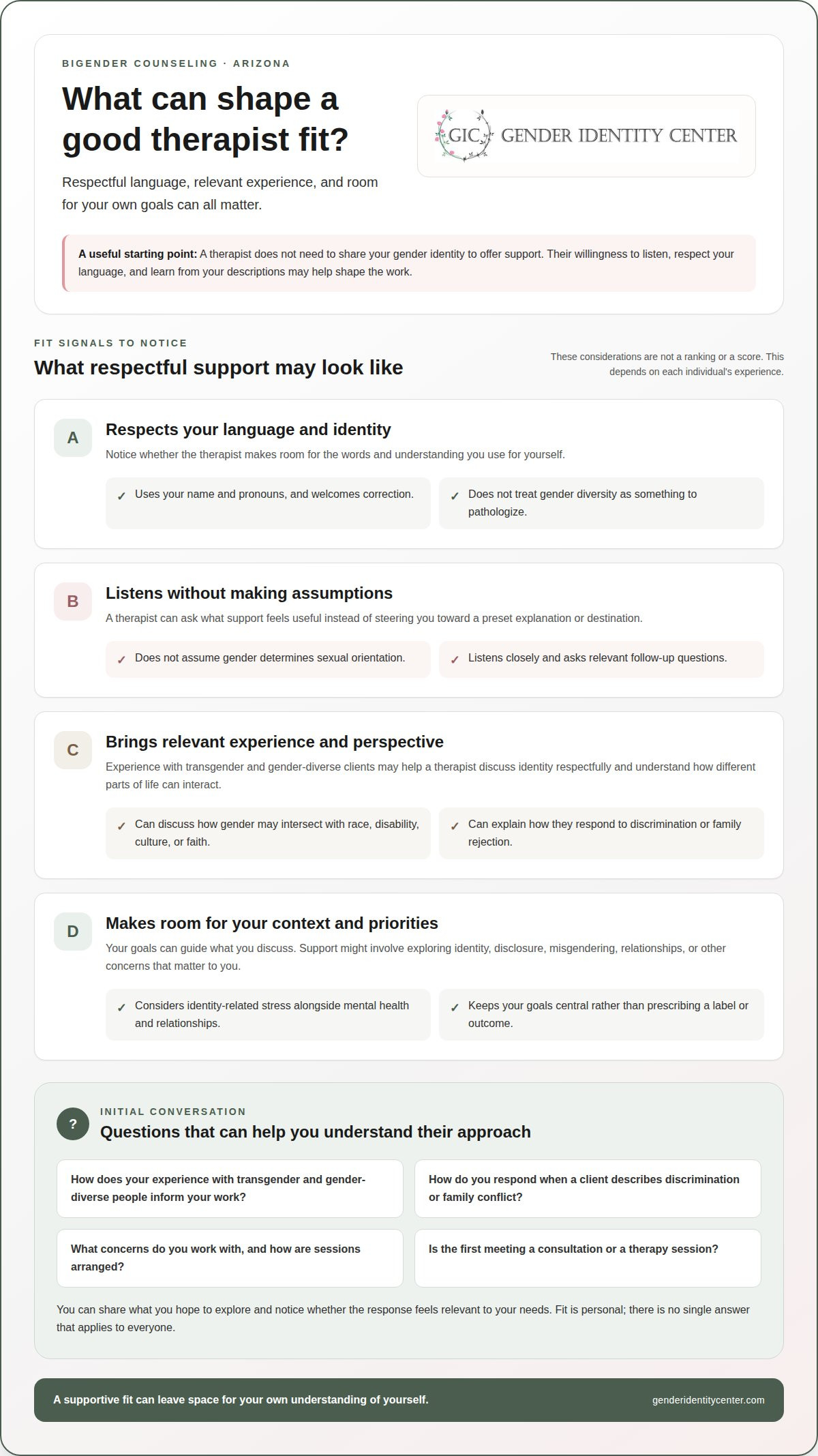
What qualities may indicate that a therapist is a good fit for working with gender-diverse clients?
A good fit can involve respectful language, relevant experience, and care that leaves room for your goals. These qualities may matter for transgender, non-binary, and gender-diverse adults and teens, depending on each individual's experience.
Gender-Affirming Support Across Identities
An affirming therapist respects the words you use for your gender identity and doesn’t assume it determines your sexual orientation. For example, a bigender client may also identify as bisexual, straight, queer, or another way. The therapist can make room for these identities without treating one as evidence against another. Notice whether they ask what support would feel useful rather than setting a fixed destination for you.
Accessing LGBTQ+ and gender-affirming therapy
When looking for LGBTQ+ support, consider whether the therapist can discuss mental health alongside identity-related stress, relationships, or trauma. A teen coping with misgendering at school may want a different focus from an adult exploring disclosure at work. For young people, an accepting adult can be an important source of support, while therapy offers space to express personal needs and concerns.
Qualities to look for in an affirming therapist for adults and teens
For adults and teens, look for a therapist who listens without pathologizing gender diversity, uses your name and pronouns, and welcomes correction. Ask how they respond when a client describes discrimination or family conflict. Some people also consider a therapist’s stance on conversion therapy when deciding whether the approach feels right. You may want care that feels respectful of your agency.
After an initial conversation, consider whether you could explain a concern in your own words without being pushed toward a label or outcome. You might describe wanting support with family conversations or simply wanting room to understand what feels comfortable. A helpful therapist can discuss how those goals may guide sessions. The right fit depends on your experience, including what helps you feel heard and safe.
In-person and telehealth sessions
In-person and telehealth sessions offer different settings for discussing gender, relationships, and mental health. If you’re questioning a binary label, privacy, travel, and comfort with video can shape which format feels workable. A session might focus on identity exploration, anxiety, or a specific conversation with a partner or family member. The setting matters because it affects how you take part and what helps you feel present.
For in-person counseling in Tucson, consider travel time, appointment location, and whether a private room feels comfortable. Meeting face to face may suit you if you value a dedicated space away from home. Telehealth can reduce travel and let you join from a familiar setting, such as a private room. It requires a device, a reliable connection, and enough privacy to speak openly. Neither format is automatically better; your priorities and circumstances guide the choice.
Partners and family members can support a bigender person by listening to the language they use for their identity and asking before sharing personal information. A partner might ask which name or pronouns feel right in a particular setting. A family member can avoid treating someone’s gender as a debate or assuming it must fit a binary category. Therapy can offer space to discuss these conversations, set boundaries, and explore what support could look like in daily life.
Before choosing a format, consider what you want from the session. If travel adds stress, telehealth may feel more manageable; if home lacks privacy, an in-person setting may suit you better. You can also think about whether a partner or family member should join a conversation, and what you want them to understand. To take a next step, explore scheduling options and consider which session setting aligns with your needs.
Gender Identity Center
Gender Identity Center offers a supportive place to explore questions about gender identity and what you want from counseling. Individual Therapy can make room for personal reflection, while Family Therapy or Group Therapy may suit people seeking support in a shared setting. EMDR Therapy is another option for addressing trauma-related concerns when relevant to your goals.
Consider reaching out if you want professional support while exploring your identity, communicating with family, or processing difficult experiences. Therapy can start with the concerns that matter most to you.
To explore counseling, contact Gender Identity Center and take the next step at your own pace.
Let your next step reflect what feels right
Your understanding of gender can keep unfolding, and support can make room for questions without requiring an immediate label or decision. As you consider bigender counseling in Arizona, think about what you want more room for next: speaking openly, feeling more at ease in relationships, or noticing what brings comfort. Your priorities may shift as you learn more about yourself, and the pace can remain yours.
Choosing to begin therapy doesn’t mean having every answer ready. You can start with one concern or with the feeling that you want a space where your experiences are taken seriously. Gender Identity Center offers individual, family, and group therapy, with formats that can suit different needs.
If you’re ready to explore support, contact Gender Identity Center and share what you hope to work toward. This depends on each individual’s experience, and your next step can begin wherever you are.
Frequently Asked Questions
How can an Arizona counselor provide gender-affirming care for bigender people?
An Arizona counselor can support a bigender person by making space for their own language, goals, and changing experiences. Bigender counseling in Arizona may include exploring how identity relates to relationships, stress, or daily life, without requiring a particular label or outcome. At Gender Identity Center, therapeutic support is distinct from medical diagnosis, prescriptions, or surgical care.
Which Arizona therapists specialize in nonbinary or gender-diverse counseling?
Gender Identity Center clinicians provide gender-focused counseling for transgender and gender-diverse people in Phoenix and Tucson. The practice offers individual, family, and group therapy, with the format shaped around the kind of support someone seeks. Therapist profiles can help you learn about clinicians’ areas of focus. Whether a therapist feels like a good fit depends on your concerns, communication preferences, and what you want from care.
What topics might an Arizona counselor discuss before starting bigender-affirming therapy?
A counselor may discuss why you’re seeking therapy, what you hope to explore, and any privacy concerns. You might want to talk about family conversations, identity-related stress, or fitting therapy into your routine. Gender Identity Center keeps client information private and does not disclose it without both verbal and written or signed permission.
How much does counseling cost in Arizona, and do insurance plans cover gender-affirming therapy?
The practice does not bill insurance directly. It provides superbills for possible reimbursement, though coverage depends on your plan. HSA and FSA cards are accepted.
Can Arizona residents access online counseling with a gender-affirming therapist?
Yes. Gender Identity Center offers telehealth for clients located in Arizona through a confidential video platform. Online sessions may suit you if travel to an office is difficult or you prefer meeting from a private space. Before a session, choose a place where you can speak comfortably without interruptions. Telehealth is limited to people physically located in Arizona.
How can an Arizona therapist’s credentials and experience with bigender clients be discussed?
You can ask a therapist about their professional credentials and how their experience informs their work with gender-diverse clients. For example, ask how they approach your goals if your identity language or needs change over time. Gender Identity Center’s clinicians are licensed mental-health professionals. You can discuss their experience and approach when considering whether a therapeutic relationship feels right for you.