
Does AHCCCS Cover Therapy for Gender Dysphoria? Understand the Costs

AHCCCS can cover therapy for gender dysphoria through its behavioral health benefits. Members may access outpatient counseling and family therapy through approved providers. The services covered and any out-of-pocket costs depend on the member’s plan and the care received.
It makes sense to want a clear picture of coverage before starting therapy. Understanding how AHCCCS handles behavioral health care can help you consider your options while focusing on what matters most: finding support that respects your identity and goals.
This article explains how gender dysphoria therapy fits within AHCCCS mental health services, what counseling may involve, and which factors can affect costs. We’ll also look at the kinds of behavioral health care available through AHCCCS, so you can better understand how support may fit into your path.
Key Takeaways
- AHCCCS mental health benefits can include therapy for gender dysphoria, with coverage shaped by how your plan classifies the care.
- Explore how counseling may support personal, family, and ongoing mental health needs.
- Understand which plan and care details can affect what you pay out of pocket.
- Learn how individual therapy can provide a supportive space for exploring your needs and goals.
Insurer implementation and benefit classification
AHCCCS categorizes therapy for gender dysphoria as behavioral health care, while other gender-affirming services may follow separate coverage rules. Understanding the difference can help you identify what your plan may cover and where restrictions may apply.
Eligibility and Medical Necessity
Eligibility concerns whether someone qualifies for coverage, while medical necessity concerns whether a service is clinically needed. Adult coverage includes medically necessary mental health services, so the type and purpose of therapy matter. This distinction separates counseling from other services that may fall under different benefit categories. A person’s identity alone is not a reason to assume therapy is excluded; coverage depends on the benefit category and clinical need.
Referrals and Prior Authorization
Most AHCCCS members receive behavioral health services through their chosen AHCCCS Complete Care plan. The plan handles relevant referrals and prior authorizations for gender-affirming mental health care. These requirements can affect access to outpatient counseling, so review the plan’s process before arranging care. A referral or authorization required for one service does not necessarily apply to every type of therapy.
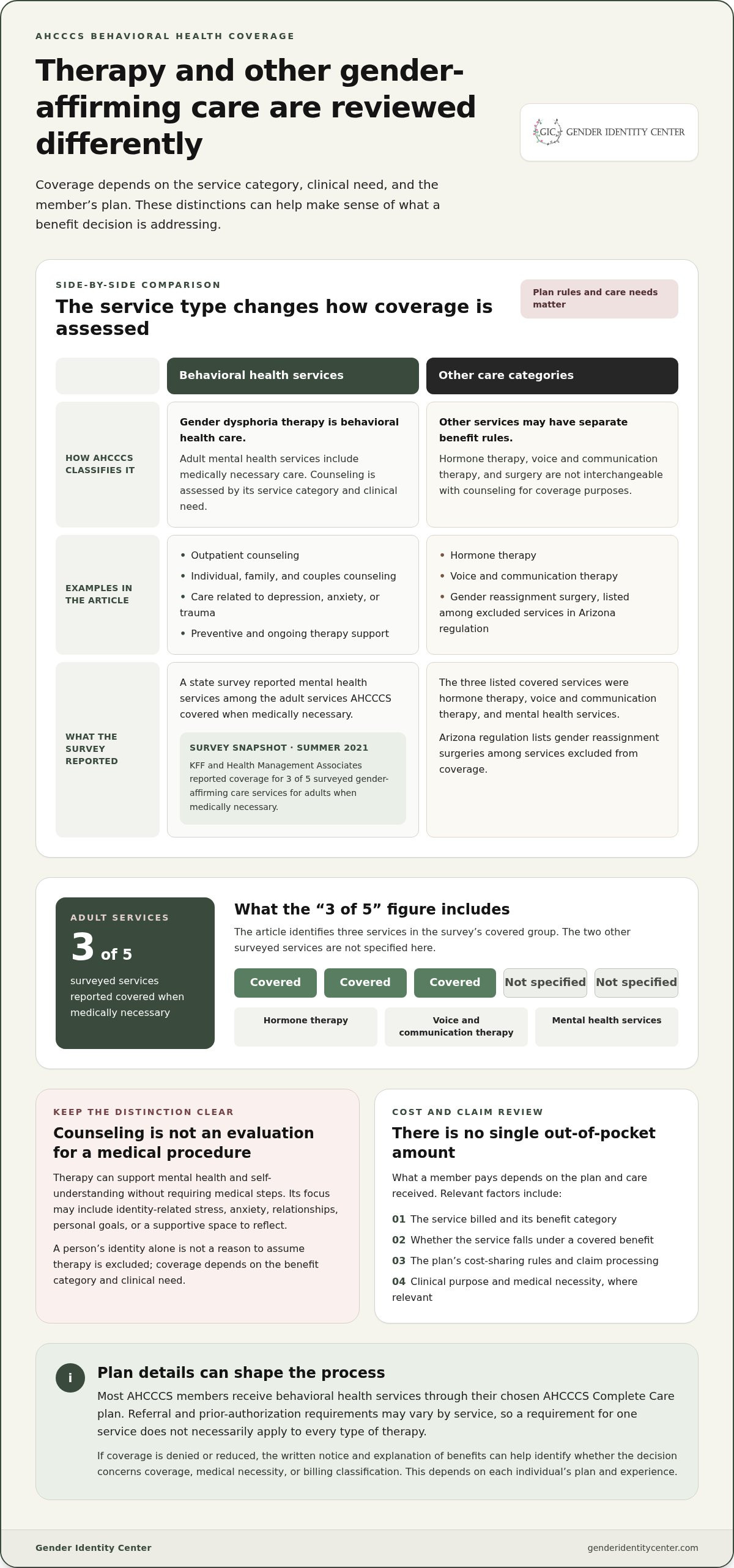
Coverage for hormone therapy and mental health services involves separate benefit questions. A state survey found that AHCCCS covers three of five surveyed gender-affirming care services for adults when medically necessary: hormone therapy, voice and communication therapy, and mental health services. This indicates that hormone therapy may be covered, but does not mean every related evaluation falls under the same benefit. Mental health counseling is assessed separately, based on its service category and medical necessity.
Gender-affirming surgery has a different classification. AHCCCS’s Arizona regulation lists gender reassignment surgeries among services excluded from coverage. That exclusion contrasts with the surveyed coverage categories for adult hormone therapy and mental health services. Understanding the distinction can help you interpret a plan decision: therapy, hormone treatment, and surgery aren’t interchangeable benefits, even when each relates to gender-affirming care.
Counseling and ongoing therapy
Therapy can support people exploring gender dysphoria, managing distress, and strengthening everyday wellbeing. AHCCCS plans generally include individual and family counseling, couples counseling, care for depression, anxiety, and trauma, as well as preventive and ongoing therapy support. For example, someone might seek individual counseling for identity-related stress, while a family may want help communicating with care and respect.
Ongoing counseling can focus on the concerns you bring, rather than prescribing one path for everyone. Sessions may help you understand your emotions, consider personal goals, and develop ways to manage difficult situations. Family counseling can give relatives space to listen and work through questions together. The focus may change as your needs and priorities evolve.
Therapy for gender dysphoria is different from an evaluation for surgery or hormone treatment. Counseling can support mental health and self-understanding without requiring medical steps. You can discuss what you want from therapy, such as coping with anxiety, navigating relationships, or having a supportive place to reflect. The work stays centered on your experience.
If AHCCCS denies coverage, read the written notice for the reason and the plan’s appeal instructions. Follow the stated submission process and deadline, and include relevant clinical records explaining the need for counseling. Keep copies of the notice and everything you submit so you can track the appeal and respond to any requests from the plan.
Coverage details can affect how ongoing care is arranged. AHCCCS members generally receive behavioral health services through their chosen AHCCCS Complete Care plan, so the plan’s benefit terms matter. The care category, clinical purpose, and whether a service is ongoing can affect how a request is handled. Understanding these distinctions can help you describe the support you’re seeking clearly.
Insurance coverage and out-of-pocket costs
Coverage category matters because therapy, hormone treatment, and surgery can be treated differently. KFF and Health Management Associates surveyed states in Summer 2021; their findings reported AHCCCS covered 3 of the 5 surveyed gender-affirming care services for adults when medically necessary. Those services were hormone therapy, voice and communication therapy, and mental health services. The survey offers a useful snapshot, while your plan’s benefit rules shape how a covered service is handled.
Your out-of-pocket responsibility depends on the specific benefit and your AHCCCS plan. Factors include the service billed, whether it falls under a covered benefit, and the plan’s cost-sharing rules. An outpatient counseling visit and a surgical procedure, for example, belong to different coverage categories. Reviewing the explanation of benefits can show how a claim was processed and what amount, if any, you owe.
AHCCCS regulation 9 AAC R9-22-205.B lists gender reassignment surgeries among services excluded from coverage. That distinction is important when estimating expenses: coverage for mental health care doesn’t mean surgery is covered, and the exclusion for surgery doesn’t automatically determine how counseling is treated. Keep the service type clear when reading benefit documents or a claim decision.
If a claim is denied or reduced, compare the notice with the service description and the plan’s stated benefit category. Check whether the decision concerns coverage, medical necessity, or billing classification. These are distinct issues, and identifying the specific reason can clarify what information may be relevant to an appeal. Keep the notice and related claim documents together.
There is no single out-of-pocket amount for every AHCCCS member or therapy service. Plan terms, eligibility, service type, and claim processing all affect the result. A written explanation of benefits shows how a particular claim was assessed and can help distinguish the plan’s coverage decision from the provider’s charge.
Mental health services available through AHCCCS
AHCCCS behavioral health coverage includes several types of support, not only therapy focused on gender dysphoria. Members may access outpatient counseling and family therapy through approved providers. Other listed behavioral health services include mental health counseling, psychiatric and psychologist services, and opioid use disorder treatment.
For gender dysphoria, covered mental health care may include individual counseling and family therapy when these fit the member’s behavioral health benefits. Counseling can address distress, relationships, anxiety, or other concerns affecting wellbeing. The service and its clinical purpose help determine how care is categorized. Gender-affirming support does not require everyone to have the same goals or approach.
Most AHCCCS members receive behavioral health services through their chosen AHCCCS Complete Care plan. To find an in-network therapist experienced in supporting gender-diverse people, start with the plan’s behavioral health provider directory. Search for mental health clinicians and use any listed specialties or experience descriptions to narrow the results. If the directory provides limited details, the plan’s member services can explain how to find in-network behavioral health providers.
When comparing directory listings, look for providers who describe experience with gender dysphoria, transgender clients, or gender-affirming counseling. You can also clarify practical details, such as whether the provider is accepting patients and offers the type of counseling you want. This can help you find a suitable fit within your plan’s network.
AHCCCS also lists psychiatric and psychologist services, which are distinct from counseling. Someone seeking talk therapy may look for outpatient behavioral health counseling, while another person may need a psychiatric evaluation or medication-related care. The plan’s covered service categories help distinguish these needs. Searching within the relevant category can focus your search and help you describe the support you’re seeking.
Effective October 1, 2022, AHCCCS Complete Care Regional Behavioral Health Agreements and Tribal Regional Behavioral Health Authorities serve individuals determined to have a serious mental illness.
Crisis services are available to any person in Arizona regardless of insurance. Arizona Health Care Cost Containment System directs people seeking immediate help to call 988.
Gender Identity Center: Individual Therapy
Gender Identity Center offers Individual Therapy for transgender and gender-diverse people who want space to explore their experiences and goals. Individual therapy can provide a place to talk through identity-related stress, relationships, or emotional wellbeing at your own pace. Family Therapy and Group Therapy offer other ways to work through questions with others, and EMDR Therapy is also available.
The right therapy approach depends on what feels useful to you and the concerns you want to address. Gender Identity Center provides mental health support; AHCCCS coverage depends on your plan’s benefits and the service category. To discuss therapy options in Phoenix or Tucson, contact Gender Identity Center or visit genderidentitycenter.com.
Choose a Next Step That Feels Right for You
Your path through care can start with a conversation about what support would feel useful now. If you’re asking, “does AHCCCS cover therapy for gender dysphoria,” coverage depends on your plan’s benefits and the specific service. Understanding that distinction can also make room for a personal question: what kind of support would help you feel heard and move forward?
Gender Identity Center offers Individual Therapy, Family Therapy, and Group Therapy in a supportive setting for people exploring their needs. Consider whether you prefer one-on-one reflection or support that includes family or peers. There is no single right pace; your goals can guide the conversation.
If you’d like to explore that possibility, contact Gender Identity Center. You deserve room to move forward in a way that respects your identity and your own sense of direction.
Frequently Asked Questions
Does AHCCCS cover therapy for gender dysphoria in Arizona?
Yes. AHCCCS mental health benefits can cover therapy for gender dysphoria when the care qualifies under a member’s behavioral health benefits. Counseling may address emotional distress or family communication. Therapy is a mental health service, distinct from medical or surgical care.
What are AHCCCS copays or out-of-pocket costs for therapy?
There is no single copay for every AHCCCS therapy visit. Your responsibility depends on your eligibility, plan terms, the service billed, and how the claim is processed. If you receive an explanation of benefits, use it to distinguish the provider’s charge from the amount assigned to you. The notice may also show whether the plan covered the service or applied a different benefit category.
Do AHCCCS coverage rules differ by health plan or Arizona county?
Plan administration and provider networks can differ, so your enrolled AHCCCS Complete Care plan is the practical reference for covered behavioral health services. Most members receive these services through their chosen plan. For an appointment in Phoenix or Tucson, use your plan’s provider directory to find participating therapists in your area, then review the behavioral health benefits for the service you’re seeking.