
Does Insurance Cover Gender-Affirming Therapy in Arizona? A 2026 Guide

What if the answer to your most pressing healthcare questions isn't found in a rigid handbook, but in the specific details of your own life? When you wonder, does insurance cover gender affirming therapy az, you're seeking more than just a financial figure; you're looking for validation that your identity is recognized and supported. It's completely natural to feel a sense of confusion or even fear when looking at insurance terms, especially with the shifting landscape of 2026 regulations like the updated ACA Essential Health Benefit rules. We understand that this stress can be heavy, and we're here to walk beside you.
We believe that your experience is unique, and coverage often depends on each individual's experience and their specific plan structure. This guide explores the subjective nature of insurance for gender-affirming care in Arizona and helps you learn how to navigate your individual benefits. We'll look at how concepts like "medical necessity" are interpreted through the WPATH Standards of Care and provide a clear path for you to check your own coverage. By the end, we hope you feel a sense of agency and a renewed belief that the support you need is within reach.
Key Takeaways
- Discover how various insurance plan structures in Arizona may influence your access to supportive and non-judgmental mental health care.
- Learn a step-by-step framework for contacting your provider to ask, "does insurance cover gender affirming therapy az" and clarify your specific behavioral health benefits.
- Understand how the subjective interpretation of WPATH standards and medical necessity can vary depending on each individual's experience and their specific insurer.
- Explore how personal factors such as deductibles and plan types might shape your unique financial landscape for therapy sessions.
- Gain insight into how affirming support can be accessed through flexible scheduling and telehealth options tailored to your personal journey.
Understanding Gender-Affirming Therapy Coverage in Arizona
Gender-affirming therapy is far more than a clinical label; it's a supportive, non-judgmental mental health practice that honors your internal truth. When you're trying to figure out, does insurance cover gender affirming therapy az, it's helpful to remember that the answer is often found in the nuances of your specific policy. While many individuals first think of medical interventions, therapy serves as a steady, guiding hand through the emotional and social layers of your development. Understanding Gender-Affirming Care requires looking at the person as a whole, focusing on the psychological process of self-realization. This mental health support is often treated differently by insurers than medical procedures like HRT, which means your therapy benefits might follow a unique set of rules.
The Affordable Care Act (ACA) has historically provided a foundation for insurance protections in Arizona, though the way these rules are applied can feel flexible. In 2026, the interpretation of "affirming care" often depends on each individual's experience and the specific values of their insurance provider. In cities like Phoenix and Tucson, different clinicians may have varying ways of framing their services, which can influence how a plan views the necessity of the care. We believe that you are the expert on your own life, and the therapeutic relationship should reflect that agency, regardless of the complexities of the insurance landscape.
What Does Insurance Consider "Gender-Affirming"?
Insurance providers typically view gender-affirming care through the lens of behavioral health services. This might include individual therapy, family counseling, or group sessions that create a sense of partnership and community. From a clinical perspective, many insurers utilize diagnostic codes like Gender Dysphoria to determine if a session is medically necessary. However, being "affirming" is less about a specific code and more about the therapist's commitment to radical acceptance. This approach ensures you feel seen and respected during every interaction. Because this is a clinical philosophy rather than a rigid procedure, the way a claim is processed can vary based on how a provider documents the session's impact on your personal growth.
Arizona-Specific Insurance Landscape in 2026
The insurance environment in Arizona is currently a tapestry of different viewpoints and evolving regulations. Major private payers, including Blue Cross Blue Shield of Arizona and Cigna, navigate federal standards alongside state-specific legislative trends. For those utilizing AHCCCS, Arizona's Medicaid program, mental health services have traditionally been an accessible resource for adults, though the landscape remains fluid as new bills are discussed in the state legislature. Whether you are seeking support from affirming therapists in Phoenix or Tucson, employer-sponsored plans often have the flexibility to define their own benefit structures. This means that outcomes are often dependent on the specific contract chosen by an employer, making personal context the most important factor in your search for coverage.
Key Factors That Influence Your Therapy Benefits
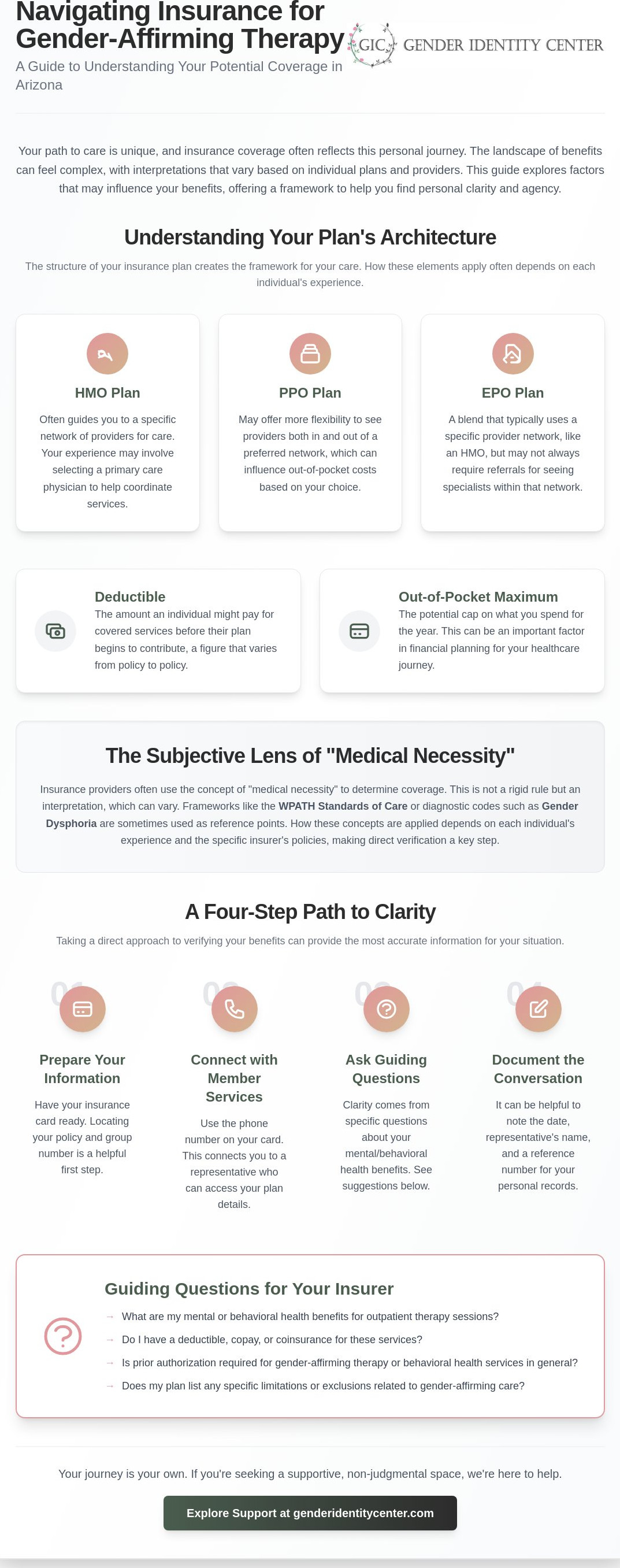
Understanding your benefits is a process of discovery. In Arizona, the architecture of your insurance plan, whether it's an HMO, PPO, or EPO, creates the framework for your care. HMOs often require you to stay within a specific circle of providers, whereas PPOs might offer more freedom to seek specialized support outside that circle. EPO plans are another common option in the Arizona market, typically combining the network restrictions of an HMO with the lack of referral requirements found in a PPO. When you're wondering, does insurance cover gender affirming therapy az, it's helpful to look at your deductible and out-of-pocket maximum. These are the markers that determine when your insurance begins to carry more of the financial weight. Because every policy is a unique contract, the way these costs manifest depends on each individual's experience and their specific financial goals.
In-Network vs. Out-of-Network Subjectivity
Choosing between an in-network or out-of-network provider is a personal decision that balances cost with connection. Some people prioritize the lower costs of in-network care to manage financial stress. Others find that a specific specialist's expertise is worth the out-of-network investment for their personal growth. Your personal context is the deciding factor when asking, does insurance cover gender affirming therapy az, for your specific situation. If you choose a therapist who isn't in your network, you might be able to use "Superbills." These are detailed documents you can submit to your insurer to request partial reimbursement. This path is quite flexible and often depends on your plan's specific out-of-network benefit structure. We believe that your choice of provider should be based on where you feel most safe and acknowledged. If you're feeling uncertain about where to start, you might find it helpful to explore our affirming therapists who understand these nuances.
Specialized Therapy Modalities
Certain types of support, such as EMDR therapy for gender-related trauma, may have different coverage criteria than traditional talk therapy. Insurance companies often view these specialized modalities as components of the transition journey, but their willingness to pay depends on how "medical necessity" is documented. For example, the University of Arizona's Gender Affirming Treatment Benefit provides a local example of how specialized care can be integrated into a student health plan. Even speech therapy for voice transition is often subject to individual clinical review. Ultimately, the way an insurer views these services is highly subjective and varies based on the person's specific health narrative. We view these specialized modalities as vital tools for your resilience and self-realization, regardless of how a specific insurance company might initially categorize them.
The Subjective Nature of Medical Necessity and WPATH Standards
The World Professional Association for Transgender Health (WPATH) provides the Standards of Care that many Arizona insurers use as a clinical compass. While these standards offer a framework for what constitutes quality care, their application is rarely a rigid, one-size-fits-all process. When you're trying to understand, does insurance cover gender affirming therapy az, you'll likely encounter the term "medical necessity." This phrase is often open to interpretation, meaning that what one insurance reviewer considers essential, another might view with more scrutiny. This variability often depends on each individual's experience and the specific way a clinical narrative is presented to the insurance company. We see our role as a bridge between your lived truth and the clinical documentation required to help you access your benefits.
A therapist's role extends beyond the session room; they often act as a compassionate advocate for your unique clinical needs. Because the insurance landscape is fluid, a clinician's ability to articulate the importance of your progress is vital. They help translate the quiet resilience of your personal growth into the structured language that insurance providers recognize. This collaborative effort ensures that your identity is acknowledged and respected within a system that can sometimes feel cold or indifferent. We believe that by working together, we can navigate these subjective clinical requirements to support your journey toward self-realization.
Clinical Documentation and Its Importance
Insurance companies typically review therapy progress notes to verify that the care you receive meets their specific criteria for "medical necessity." There's a delicate balance here between protecting your personal privacy and providing enough clinical justification to secure coverage. For instance, insurers look for evidence that therapy is helping you manage internal states or navigate the social process of transition. However, the definition of success in therapy is flexible and depends on the person. Because "medical necessity" isn't a fixed target, the way your sessions are documented can significantly influence whether a claim is approved or questioned.
Referral Letters and Insurance Approval
For many individuals, mental health support is a foundational step that connects to future medical goals. Insurance plans in Arizona often require a referral letter before they will authorize higher levels of care, such as surgery or other medical interventions. The Arizona Medicaid (AHCCCS) Coverage guidelines illustrate how mental health services are integrated into the broader healthcare picture for adults. The assessment process for these letters is deeply subjective; it's a meaningful endeavor rooted in conversation rather than a checklist. Ultimately, the strength of a referral letter depends on personal context and the quality of the therapeutic partnership, ensuring the final document truly reflects your individual path.
How to Verify Your Specific Insurance Benefits in 2026
Taking the step to call your insurance company is a powerful act of self-advocacy. We know that picking up the phone can feel daunting, but it's a meaningful way to claim your agency in your healthcare journey. When you ask, does insurance cover gender affirming therapy az, you're seeking clarity in a system that often feels opaque. To get the most accurate picture, we recommend calling the member services number on the back of your insurance card. This process is a dialogue, and the information you receive often depends on each individual's experience and the specific representative you speak with.
During your conversation, it's helpful to confirm if a specific therapist in Phoenix or Tucson is "credentialed" with your plan. Credentialing simply means the provider has been vetted and accepted into the insurance network. We suggest documenting the name of the person you speak with and asking for a call reference number. These details provide a sense of stability and a record of your efforts, which can be invaluable if you need to revisit the conversation later. Every interaction is a step toward making your care more attainable and secure.
Questions to Ask Your Insurance Representative
Having a specific list of questions can help you feel more grounded during the call. You might consider asking:
- Does my plan cover CPT code 90837, which is for a 60-minute therapy session, when used with a diagnosis of Gender Dysphoria?
- What is my remaining deductible for the 2026 calendar year?
- Do I have a co-pay or co-insurance for mental health office visits?
These technical details help clarify the financial landscape of your care. However, remember that the answers you receive are part of a flexible process. Your coverage is not just a set of numbers; it's a reflection of your individual policy's current interpretation of benefits. Because these interpretations can shift, having your own records helps ensure you are treated with the respect you deserve.
Navigating Denials and Appeals
If a claim is initially denied, try to view it as a starting point rather than a final answer. The appeals process is often subjective, providing an opportunity to offer additional context about your clinical needs. You can work with your therapist to submit a letter of medical necessity that highlights your personal growth and the importance of continued support. In Arizona, there are community resources and advocacy groups that can help you navigate these challenges. This path requires resilience, but you don't have to walk it alone. If you're ready to begin this process with a supportive partner, you can explore our scheduling options to find a time that works for you.
Finding Affirming Support at the Gender Identity Center
At the Gender Identity Center, we view the therapeutic relationship as a sacred partnership. Our clinicians in Phoenix and Tucson are dedicated to providing a space where you feel seen and respected from your very first interaction. When you reach out to ask, does insurance cover gender affirming therapy az, we start by acknowledging the complexity of your personal journey. We approach every session with radical acceptance, ensuring that our support is tailored to your subjective experience rather than a rigid set of clinical expectations. Your path is unique. We're here to offer a steady, guiding hand as you explore the nuances of your identity and move toward a future that feels authentic.
Our commitment to WPATH-compliant care ensures that you receive support rooted in professional expertise and lived experience. We offer professional consultation and specialized services like gender therapy and individual therapy, all designed to facilitate your personal growth. Whether you prefer meeting in person or utilizing our flexible scheduling options for telehealth across Arizona, we strive to make care accessible. We believe that self-realization is a meaningful endeavor. We're honored to walk beside you as you navigate this process at a pace that feels comfortable for you.
Our Approach to Insurance and Accessibility
Navigating the financial landscape of mental health care can feel like a societal challenge, but you don't have to face it alone. We work with individuals to help them understand the complexities of their specific insurance plans, acknowledging that coverage often depends on each individual's experience. Beyond the financial aspect, the value of specialized gender identity therapy lies in the creation of a secure environment where your growth is the ultimate objective. We're committed to intersectional advocacy, ensuring that all Arizonans have a place where they are acknowledged and supported without judgment. We believe that outcomes are often dependent on personal context, and we're here to help you find the best path forward.
Taking the Next Step in Your Journey
Finding a therapist who feels like the right "fit" is a deeply personal part of the therapeutic conversation. We invite you to reach out for an initial consultation to discuss your needs and see how our approach aligns with your goals. While the question of does insurance cover gender affirming therapy az involves many variables, the hope of resolution is always present. Your journey toward self-discovery is a dynamic and positive experience. We're here to act as a permanent and dependable resource for you. You are the expert on your own life. We're ready to support the next chapter of your story with the gentleness and strength you deserve.
Embracing Your Journey with Confidence
Navigating the intersection of identity and insurance is a deeply personal process. We've explored how the structure of your plan and the subjective nature of clinical standards can influence your access to care. The answer to does insurance cover gender affirming therapy az often depends on each individual's experience and the specific details of their policy. While the landscape of 2026 presents its own unique challenges, your resilience and agency remain the most powerful tools in your search for support.
Our clinicians in Phoenix and Tucson, along with our telehealth team across Arizona, are ready to partner with you. We offer specialized services such as EMDR and voice therapy, and we're committed to providing WPATH-compliant referral letters that respect your lived truth. You don't have to carry the weight of these administrative hurdles alone. We're here to act as a bridge between your current reality and your most authentic self. Explore our affirming therapists and start your journey today. Your growth is a meaningful endeavor, and we're honored to support you every step of the way.
Frequently Asked Questions
Does AHCCCS cover gender-affirming therapy in Arizona for 2026?
AHCCCS, Arizona's Medicaid program, has historically covered mental health services for adults when they are deemed medically necessary. Whether your specific sessions are covered in 2026 may be influenced by evolving state legislative trends and the current interpretation of clinical guidelines. Outcomes are often dependent on personal context and the specific behavioral health organization managing your care. We recommend checking your individual member handbook for the most stable and current information regarding your benefits.
What is a superbill, and can I use it for gender therapy in Phoenix?
A superbill is a detailed document provided by an out-of-network therapist that you can submit to your insurance company to request potential reimbursement. In Phoenix, many individuals use this flexible option to access specialized care while still attempting to utilize their insurance benefits. Your ability to receive money back depends on each individual's experience and their plan's specific out-of-network coverage rules. It's a helpful tool for those who prioritize finding a specific therapeutic fit over network restrictions.
Will my insurance pay for a WPATH referral letter assessment?
Insurance providers often pay for the assessment process required for a referral letter when the session is billed as a standard mental health evaluation. When you ask, does insurance cover gender affirming therapy az, it's helpful to clarify if diagnostic assessments are included in your outpatient benefits. Because "medical necessity" is a subjective term, the final decision on a claim often depends on how the clinician documents the session's role in your personal growth and self-realization.
How do I find an in-network gender therapist in Tucson?
You can find an in-network therapist in Tucson by using your insurer's online provider search tool or by calling the member services number on the back of your card. This search is a personal journey, and the availability of affirming providers can vary depending on your specific insurance network. We believe that finding a therapist who makes you feel safe and acknowledged is a vital step. Your choice of provider should always center your own agency and the unique needs of your identity.
Is EMDR therapy for gender trauma covered by standard insurance plans?
EMDR therapy is typically covered by standard insurance plans when it is used as a treatment modality for a diagnosed mental health condition. The way an insurer views this specialized support often depends on the person and the specific clinical justification provided by the therapist. While many plans recognize EMDR as an effective tool for processing trauma, the coverage criteria can feel flexible. It's helpful to confirm that your plan does not have specific exclusions for specialized therapeutic techniques.
Can I use my HSA or FSA for gender-affirming counseling sessions?
Yes, you can generally use funds from a Health Savings Account (HSA) or a Flexible Spending Account (FSA) to pay for gender-affirming counseling sessions. These accounts are designed to cover qualified medical expenses, and mental health therapy is widely recognized as an eligible cost. This option provides a sense of stability and financial agency as you navigate your healthcare. Your ability to use these funds is a dependable resource that supports your ongoing journey toward personal development.
What should I do if my insurance denies coverage for my therapy?
If a claim is denied, you can initiate an appeals process to provide more context regarding the medical necessity of your care. A denial is often a starting point for a therapeutic conversation between your provider and the insurance company rather than a final answer. This process depends on each individual's experience and the specific reason for the initial denial. Working closely with your therapist to submit a letter of support can help ensure your clinical needs are properly acknowledged.
Does insurance cover voice therapy for transgender individuals in Arizona?
Insurance coverage for voice therapy in Arizona is highly subjective and varies significantly between different insurance carriers. Some plans may cover these services as part of a comprehensive transition journey, while others might view them through a different clinical lens. When inquiring about this, you might ask about "speech-language pathology" benefits for gender-related care. The final outcome is often dependent on personal context and how your specific plan defines the boundaries of medically necessary rehabilitation.