
What to Expect in Your First Gender Therapy Session: A Guide to the Journey

What if your first therapy session wasn't a test to pass or a clinical hurdle to clear, but simply a space where your truth is the only authority? Many of us carry a heavy weight of anxiety into that initial appointment, perhaps worrying we'll need to "prove" our identity or navigate rigid gatekeeping. It's completely natural to feel uncertain about the "right" way to talk about who you are. Understanding what to expect in first gender therapy session can help transform that initial spark of fear into a sense of partnership and validation.
How this unfolds often depends on each individual's experience, as there is no single, universal path to self-realization. We're here to walk alongside you in a process that is gentle, subjective, and centered entirely on your unique needs. You'll discover how we build a secure environment together, the types of supportive questions you might explore, and how to prepare for a journey that moves at your own pace. Let's look at how this first step can become a bridge to your future self, grounded in a sense of quiet resilience and radical acceptance.
Key Takeaways
- Reframe your first appointment as a meaningful departure point on a journey of self-discovery, where your unique truth is the only authority.
- Learn what to expect in first gender therapy session by understanding the balance between initial paperwork and the start of a supportive, therapeutic bond.
- Discover how to treat personal goals as gentle invitations to explore, as the direction of your growth depends on each individual's experience.
- Access a flexible checklist to help you prepare an emotional and physical space that centers your agency and personal comfort.
- Understand how to evaluate the therapeutic relationship to ensure your therapist acts as a steady, guiding hand for your specific needs.
The First Step: Understanding the Subjective Nature of Gender Therapy
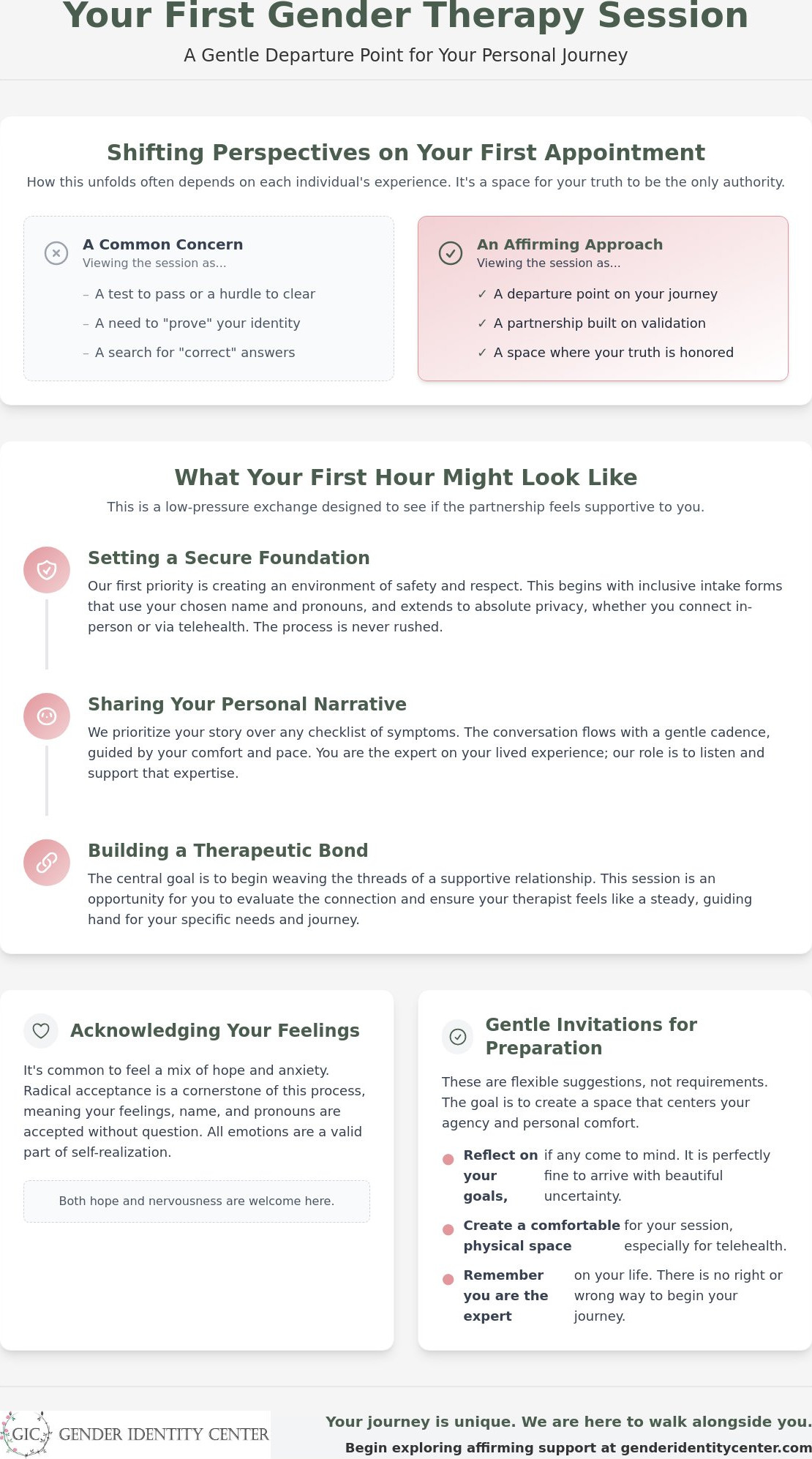
Imagine standing at the edge of a new path. It's common to view a first appointment as a hurdle or a clinical evaluation, almost like a medical exam where you must provide "correct" answers. However, we view this initial hour as a departure point on a personal journey. When considering what to expect in first gender therapy session, it's helpful to remember that there is no right or wrong way to show up. Some people arrive with a clear narrative, while others feel a sense of beautiful uncertainty. This depends on each individual's experience, and every perspective is held with equal respect.
Your therapist doesn't sit behind a desk as a judge or a gatekeeper. Instead, they offer a steady, guiding hand to help you explore the landscape of your own identity. You are the expert on your lived experience; our role is to provide the safety needed for that expertise to flourish. This process is not about reaching a predetermined destination, but about creating a partnership that honors your pace and your voice.
Normalizing the Mix of Hope and Anxiety
Feeling a flutter of nerves is a natural part of the progression toward self-realization. It takes a unique kind of quiet resilience to reach out and make that first appointment, especially when navigating a complex societal landscape. We recognize that initial sessions vary significantly based on your personal history and current needs. For some, the first hour is a relief. For others, it's a vulnerable space that requires a slow, measured pace. Both are valid. We don't rush the conversation; we let it flow with a gentle cadence that mirrors your comfort level.
Radical Acceptance from the Start
In the broader context of transgender health care, therapy serves as a vital anchor for emotional well-being. A non-judgmental environment isn't just a clinical goal; it's a fundamental requirement for healing. This means your pronouns, your chosen name, and your internal states are accepted without question. We believe in radical acceptance, where you don't have to "prove" your gender to receive support. This affirming start is a cornerstone of gender identity therapy in Phoenix, ensuring that you feel seen and respected from the very first interaction. By centering your agency, we ensure the therapeutic space belongs to you.
The Intake Process: What Might Happen During Your Initial Appointment
The first hour of our time together is often referred to as an "intake session." While the term sounds clinical, it's truly an introductory meeting designed to see if the partnership feels supportive to you. This is a time for us to begin weaving the threads of a therapeutic bond while attending to the practical foundations of your care. When exploring what to expect in first gender therapy session, it's helpful to view this as a low-pressure exchange. We're simply getting to know one another in a way that respects your boundaries and your pace.
The experience can look slightly different depending on your location and how you choose to connect. For example, those visiting us in Phoenix or Tucson might experience the physical warmth of our office space, while those using telehealth will focus on building that same connection through a secure digital screen. Regardless of the format, the communication rhythm remains calm, measured, and unhurried. We don't believe in rushing these first moments. Instead, we allow the conversation to unfold with a gentle cadence that respects your current emotional state.
Logistics and Secure Environments
Establishing a secure environment is our first priority. This begins before you even step into the room through inclusive intake forms that prioritize your chosen name and pronouns. These documents aren't meant to be barriers or cold medical records; they're tools that help us acknowledge your identity before we even speak. In both our physical offices and our encrypted digital platforms, we work to ensure your privacy is absolute. This creates a container where you can feel safe enough to begin your exploration. We view paperwork as a supportive framework that handles the necessary logistics so we can focus entirely on your well-being.
Information Gathering vs. Personal Narrative
While we do need to gather some information, we prioritize your personal narrative over a checklist of symptoms. In many settings providing gender-affirming care, the intake process serves as the foundation for future support, but how much you share remains entirely in your hands. We might ask about your history or your hopes for the future, but you choose which parts of your story are ready to be told. This depends on each individual's experience, as some feel ready to dive deep immediately while others prefer to wait. Our approach to transgender counseling in Tucson and beyond centers on this agency. If you're feeling ready to begin this partnership, you can explore our scheduling options to find a time that works for you.
Navigating the Conversation: Potential Topics and Personal Goals
The dialogue within a therapeutic space is not a series of checkboxes to be ticked off. Instead, we view goals as gentle invitations to explore rather than rigid treatment plans. When considering what to expect in first gender therapy session, it's helpful to remember that the conversation is led by your own comfort and curiosity. You might find that topics like gender dysphoria or euphoria emerge naturally as we talk, or you may prefer to focus on the immediate logistics of your daily life. This depends on each individual's experience, and there is no pressure to prioritize one aspect of your identity over another.
While some external resources regarding what to expect at a first therapy session focus heavily on clinical history, our approach centers on your desires. The session may touch upon social, medical, or legal transition goals, but only if those are areas you wish to navigate. Outcomes are dependent on personal context. They vary for everyone. We're here to hold space for whatever version of the future you're currently imagining, providing a steady hand as you weigh your options.
Exploring Identity and Self-Discovery
Identity is not a fixed destination. It's a fluid, evolving process of self-realization. You might feel like you're standing before a vast map without a compass, and that is perfectly okay. You don't need to have all the answers or specific labels figured out before our first meeting. We act as fellow travelers on this journey, helping you bridge the gap between your current reality and your future self. We use metaphors of travel because they honor the movement and progression inherent in growth. You're allowed to change your mind, refine your language, and explore new paths as they appear.
Discussing Referral Letters and Medical Advocacy
For many, therapy is a vital step in accessing gender-affirming medical interventions. We can support these paths through WPATH referral letters in Arizona, acting as a compassionate advocate within the broader healthcare system. Seeking a letter is a completely valid goal for your first session. However, it's not the only reason to be here. Whether you need a specific document or long-term emotional support, our role remains the same. We're here to facilitate your progress and ensure you feel acknowledged by the professionals you encounter. Your agency is the most important factor in every decision we make together.
Preparing for Your Session: Creating a Safe Space for Yourself
Preparation for a therapeutic meeting isn't about checking off a rigid list of requirements or studying for an evaluation. Instead, it's a gentle process of honoring your own needs and creating a container where you feel safe enough to speak your truth. When you consider what to expect in first gender therapy session, it's helpful to remember that the most important element you bring is simply yourself. You don't need a polished narrative or a definitive list of labels. Sometimes, the most profound preparation is the act of showing up exactly as you are in that moment, without the need to perform or prove anything.
We encourage you to center your own agency throughout this initial phase. This depends on each individual's experience; for some, preparation involves journaling their thoughts or writing down specific questions. For others, it means intentionally not thinking about the session until it begins to avoid over-analyzing. Both approaches are valid and respected. By choosing how you enter the space, you begin to reclaim your story before the first word is even spoken. This sense of quiet resilience helps lower your defenses and allows you to feel truly acknowledged from the very start.
Practical Considerations for Arizona Residents
If you're joining us via telehealth from home, finding a private and quiet space is a meaningful first step in establishing a secure environment. This might be a corner of your bedroom, a parked car, or any spot where you feel shielded from interruptions. Here are a few practical tips to help you settle in:
- Mind the Clock: Arizona's unique relationship with time zones can sometimes be confusing if you're traveling. Double-check your appointment time to ensure you're ready when the session begins.
- Grounding Objects: Bring a comfort item into the space. Holding a soft blanket, a smooth stone, or a favorite fidget toy can provide a sense of physical stability during vulnerable moments.
- Tech Check: Ensure your device is charged and your connection is stable. This allows you to focus on the conversation rather than the equipment.
Emotional Grounding and Intentions
We suggest carving out five to ten minutes of unhurried time before the call or visit begins. Use this window to breathe and step away from the rush of your daily responsibilities. Focus on the idea that the individual is the expert on their own life. This reminder reinforces that you hold the keys to your own truth, and the therapist is simply there to support your exploration. You're also welcome to bring your own questions for us. Asking about a therapist's approach or their specific experience is a wonderful way to ensure the partnership feels like a genuine match. If you're ready to create this space for yourself, you can explore our scheduling options to begin your journey.
Choosing Your Path: Evaluating the Therapeutic Relationship
The first hour of your journey is a mutual introduction. While you are learning what to expect in first gender therapy session, remember that you are also evaluating the person sitting across from you. This is as much an opportunity for you to interview the therapist as it is for them to understand your needs. You deserve a space where you feel seen and respected from the very first interaction. Trusting your intuition is a vital part of this process. If the connection feels like a partnership rather than a clinical evaluation, it's a sign that you've found a steady, guiding hand. A good therapeutic match often possesses a gentle cadence. It doesn't rush you toward a specific outcome. Instead, it flows with a rhythm that mirrors a natural, supportive conversation.
This sense of alignment is deeply subjective. What provides comfort to one person might not resonate with another, and that is perfectly acceptable. We believe that your comfort is the most important metric of success in these early stages. By centering your own agency, you ensure that the therapeutic process remains a tool for your growth rather than an external requirement you must fulfill. This partnership is a meaningful endeavor that should feel like a safe harbor as you navigate the complexities of identity and self-discovery.
Signs of a Supportive Partnership
Identifying a healthy therapeutic match often comes down to the feeling in the room. A supportive provider acts as a facilitator of your progress rather than a judge of your identity. You might notice if they use inclusive, affirming language naturally, without making it feel like a forced performance. A key indicator of a good fit is whether your lived experience is valued as the primary source of expertise. This depends on each individual's experience; what feels like a perfect match for one person might feel different for another. Our Gender Identity Center therapists prioritize this sense of partnership, aiming to act as a bridge between your current reality and your future self. They project the image of a community-oriented entity that values your voice as much as professional expertise.
Next Steps in Your Journey
As the first session concludes, it's helpful to remember that a second appointment is always an invitation, never an obligation. You hold the agency to decide if the conversation should continue. If the first meeting doesn't feel like the right fit, that is a completely normal part of the search for support. Finding a therapist whose rhythm matches yours can take time, and exploring different options is a valid part of the progression toward self-realization. We view our role as providing a permanent and dependable resource, regardless of where you are in your exploration. This path is not a race. It is a meaningful endeavor that requires patience and gentleness. When you feel ready to take that next step, you can explore scheduling a session to see how we might walk alongside you. This journey is yours to lead, and we are here to support the path you choose.
Moving Toward Your Authentic Self
Your journey of self-discovery is a deeply personal endeavor that unfolds at your own pace. By understanding the gentle nature of the intake process and the importance of a supportive partnership, you can approach your first appointment with a sense of quiet resilience. We believe that feeling validated and seen is the foundation of any therapeutic bond. This depends on each individual's experience; there is no single right way to navigate your identity.
When you think about what to expect in first gender therapy session, remember that you are the expert on your own life. Our team provides a secure environment through WPATH compliant clinicians and convenient telehealth services available across all of Arizona. Whether you are interested in specialized EMDR or speech therapy, we are here to act as a bridge to your future self.
Begin your journey with a compassionate partner, schedule your first session today.
You deserve to be acknowledged exactly as you are. We look forward to walking this path with you.
Frequently Asked Questions
Do I need to be sure of my gender identity before my first session?
You don't need to have a fixed label or a certain identity figured out before you begin. Many people use the therapeutic space to explore the fluid nature of their internal states. When thinking about what to expect in first gender therapy session, remember that uncertainty is a valid place to start. This depends on each individual's experience; we're here to hold space for your questions and help you bridge the gap toward self-realization.
How long does a typical first gender therapy session last?
A standard initial session typically lasts about 50 minutes. This unhurried timeframe allows us to attend to both the necessary logistics and the beginning of our partnership. Knowing what to expect in first gender therapy session helps you prepare for a measured period designed to ensure you feel seen and respected. It's a gentle cadence of conversation that provides enough room for you to share your narrative without feeling rushed.
What if I feel uncomfortable talking about certain parts of my history?
You remain the expert on your own life and always have the agency to decide which parts of your story to share. We respect your boundaries and believe that comfort is a vital metric of success. If certain topics feel too heavy or premature, we can simply set them aside. This process is entirely centered on your unique needs and moves at a pace that feels safe and supportive for you.
Can I bring a partner or family member to my first session?
You're welcome to bring a supportive partner or family member if their presence helps you feel grounded and secure. While individual therapy focuses on your personal journey, having a trusted person can sometimes lower defenses during a first meeting. This depends on each individual's experience and what they need to feel acknowledged. We can discuss how to best involve them while maintaining the primary focus on your own personal growth.
Will the therapist tell me if I am 'really' transgender?
A therapist's role is to act as a steady, guiding hand rather than an authority who diagnoses the truth of your identity. We believe that you're the expert on your lived experience. Instead of telling you who you are, we provide the tools and safety needed for you to reach your own self-realization. This journey is a subjective process of discovery where your internal truth is the only authority we follow.
Is my first session covered by insurance in Arizona?
Insurance coverage for gender therapy depends on your specific provider and the details of your plan. We suggest contacting your insurance company directly to verify their current mental health benefits and any requirements for gender-affirming care. While we can't provide definitive answers for every policy, many plans in Arizona do offer support for therapeutic services. We can help you navigate the logistics of your paperwork to facilitate this process smoothly.
What is the difference between a gender therapist and a regular counselor?
A gender therapist typically possesses specialized training in the nuances of identity and the specific challenges faced by the community. They are often familiar with WPATH standards and the psychological aspects of transition. While a general counselor provides valuable support, a specialist focuses on the unique vocabulary of self-discovery. This expertise helps create a secure environment where you feel understood without needing to explain basic concepts of your identity.
Can I get a WPATH letter during my very first appointment?
While some people receive a WPATH referral letter after their initial meeting, this depends on each individual's experience and clinical readiness. We view the first session as a time to establish a partnership and understand your medical or social goals. If you're seeking a letter for surgery or other care, we'll discuss your history and needs with radical acceptance. Our priority is ensuring you're supported and acknowledged throughout the healthcare system.