
Hormone Therapy in Phoenix: A Guide to Navigating Your Transition Journey (2026)

What if the clinical roadmap for your transition mattered less than the quiet, inner voice telling you it's finally time to begin? You've likely felt the weight of gatekeeping anxiety or the fear that a provider won't truly see you. It's understandable to feel cautious when the process seems designed to test your validity rather than support your growth. We believe your medical care should be a sanctuary, and finding hormone therapy phoenix shouldn't feel like a series of hurdles to clear.
This guide offers a gentle path for your 2026 transition, focusing on the steps that lead toward your most authentic self. We'll explore the WPATH Standards of Care Version 8 and the vital differences between informed consent and letter-based models. Because this depends on each individual's experience, we'll look at how to find affirming mental health support that honors your subjective truth. You'll gain a clear understanding of the clinical landscape in Arizona while remaining the primary expert on your own life's journey.
Key Takeaways
- Understand how gender-affirming care serves as a tool for alignment, recognizing that the decision to start is a deeply personal choice that depends on each individual’s experience.
- Learn to navigate the emotional landscape of transition with mental health support that focuses on your subjective exploration rather than clinical gatekeeping.
- Compare the various clinical models for accessing hormone therapy phoenix to find the pathway that feels most supportive of your unique journey and comfort level.
- Discover practical steps to prepare for your consultation, from researching affirming providers to clarifying your personal goals for your evolving identity.
- Explore how to obtain WPATH-compliant referral letters through a safe, affirming process that centers your agency and honors your authentic path.
Understanding Gender-Affirming Hormone Therapy in Phoenix
You're exploring a path that's as unique as your own fingerprint. We recognize that Understanding Gender-Affirming Hormone Therapy serves as a vital bridge for many, allowing your external presence to hum in harmony with your internal identity. Deciding to start hormone therapy phoenix is a significant milestone, yet it's also a deeply personal choice that doesn't follow a universal script. Some people feel a sense of urgency, while others prefer a slower, more observational pace. Ultimately, this depends on each individual's experience and how they perceive their own needs at any given moment.
The Valley of the Sun offers a growing landscape of affirming care. We've watched the local network of providers expand to meet the needs of the approximately 150,000 LGBTQ+ adults living in the Phoenix metropolitan area. This growth reflects a shift toward more compassionate, accessible healthcare. We are here to walk alongside you as you navigate these options, ensuring you feel empowered to make decisions that honor your truth. Our community is becoming a place where medical support feels less like a hurdle and more like a steady, guiding hand.
Beyond local Phoenix options, specialized international resources like ED Health Clinic provide confidential support for managing sexual health during the transition process.
The Subjective Nature of Transition
There's no "right" way to use hormones or a specific "look" you're required to achieve. Your journey is yours to define. Whether you're seeking feminization, masculinization, or a more non-binary expression, your goals are valid. Medical support acts as a tool for your personal authenticity rather than a set of rules you must follow. This process is inherently subjective. What feels like progress for one person might not be the objective for another. We prioritize your agency, acknowledging that you're the expert on your own life and body. This flexible approach allows you to evolve at a pace that feels safe and sustainable.
Why Phoenix Residents Seek Specialized Care
Finding a local medical home is a priority for many in our community. Phoenix presents unique environmental factors, such as extreme heat that can reach 115 degrees during summer months. These conditions can affect how your body responds to certain treatments or how you manage your overall wellness and hydration. Working with specialized therapists and doctors in Arizona ensures your care plan accounts for these local realities. A specialized provider offers a sanctuary where you're seen and respected, moving beyond the coldness of traditional clinical settings toward a partnership based on radical acceptance and professional expertise. You aren't just a patient; you're a member of a resilient and growing community.
The Role of Mental Health Support in Your Hormone Journey
Deciding to start hormone therapy phoenix is a deeply personal step that involves both your body and your emotional well-being. We view mental health support as a collaborative bridge rather than a barrier you must overcome. This process isn't about proving who you are to a stranger or meeting a specific set of criteria to "earn" your transition. Instead, it's about having a dedicated, safe space to process the significant shifts that come with medical intervention. Because identity is a fluid and personal evolution, this depends on each individual's experience when they begin to align their physical self with their internal truth.
We believe that therapy provides a sanctuary where you can voice your expectations and even your fears without the pressure of being judged. It's a place to discuss what you hope hormones will achieve and to prepare for the social and emotional changes ahead. Beyond local support, you can discover Women’s Mental Health Specialist for virtual, hormone-informed mental health care that ensures you feel grounded as you move toward your most authentic self.
Moving Beyond the Gatekeeper Model
The historical gatekeeper model often forced individuals to perform a specific version of gender to access care. We've moved away from that restrictive approach toward a model of empowerment and partnership. Our role is to act as a witness and a guide in your exploration. This shift is reflected in UCSF's gender-affirming care guidelines, which prioritize patient agency and informed decision-making. We recognize that you're the expert on your own life.
Therapy helps you manage the emotional complexities of what many call a "second puberty." This phase can bring a rush of new feelings, physical changes, and shifts in how the world perceives you. Having a neutral, safe space at the Gender Identity Center allows you to unpack these developments at your own pace. We don't tell you who you are; we provide the tools for you to discover that for yourself.
Navigating Dysphoria and Euphoria
Starting hormone therapy phoenix often changes how you relate to your own skin. For many, this journey involves addressing gender dysphoria, which is the distress that can arise when your body doesn't match your identity. However, the experience of transition is also about moving toward joy. We often talk about gender euphoria, which we define as a sense of rightness in one’s body. It's that profound moment of clarity when you finally recognize yourself in the mirror.
Since every path is unique, our therapists are here to help you navigate these peaks and valleys. Whether you're feeling a new sense of empowerment or navigating the complexities of social transition, we offer a steady hand. If you're looking for a partner to support your growth, you might consider looking at our scheduling options to begin your journey in a space that truly sees you.
Comparing Informed Consent and Referral Models in Arizona
Deciding how to access hormone therapy phoenix is a significant milestone in your journey toward your most authentic self. You'll find that the path you choose is often shaped by your unique needs and the specific goals you have for your transition. There isn't a single right way to move forward because this depends on each individual's experience. It's all very subjective, and we believe in honoring whatever feels safest and most affirming for you.
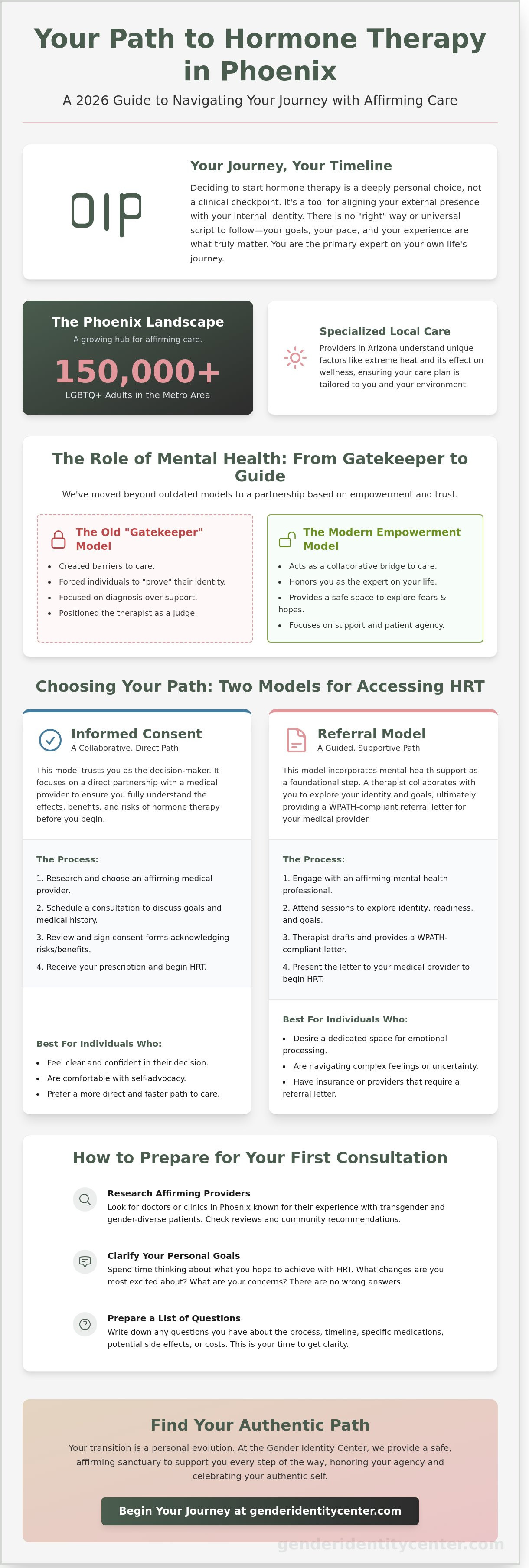
In the Phoenix valley, medical providers generally follow one of two frameworks. Some clinics operate on an informed consent basis, while many private endocrinologists and hospital systems require a referral letter following the World Professional Association for Transgender Health (WPATH) standards. While the 2022 WPATH Standards of Care Version 8 have moved toward more flexibility, a 2023 survey of local specialists showed that many still rely on these letters to coordinate your care effectively. This preference isn't about creating hurdles, but rather about ensuring you have a steady guiding hand as you navigate these changes.
The Informed Consent Pathway
The informed consent model prioritizes your autonomy and your right to make decisions about your own body. In this setting, a clinician explains the effects, risks, and benefits of hormone therapy phoenix, and you sign a document confirming your understanding. You won't typically need a therapist's sign-off to begin. Clinics like Planned Parenthood or certain community health centers in Maricopa County often utilize this approach to reduce barriers and provide immediate care.
This path often feels faster, which can be a relief if you've waited a long time to start. However, some folks find that it lacks the therapeutic depth they desire. Without a dedicated mental health professional involved, you might miss out on having a structured space to process the emotional shifts that come with physical changes. It's a trade-off between speed and clinical support, and your choice may change as your journey evolves.
The WPATH Referral Model
The referral model is a collaborative effort between you, your therapist, and your medical doctor. Many providers require this because they want to ensure you have a robust support system in place. Working with a professional to secure a WPATH letter in Arizona provides a chance for a deep-dive into your readiness. It isn't about gatekeeping; it's about making sure you feel empowered and prepared for the road ahead.
Practical benefits exist here too. Most major insurance carriers in Arizona require a formal letter to approve coverage for your prescriptions and lab work. This assessment acts as a bridge, connecting your internal identity with the medical world. If you're looking for a partner to help you navigate this, our team of therapists is here to walk alongside you, ensuring you're heard and respected every step of the way. We see the referral as an invitation to explore your identity in a non-judgmental sanctuary before beginning medical intervention.
How to Prepare for Your Hormone Therapy Consultation in Phoenix
Preparing for your first medical appointment is a deeply personal step in your evolution. It is a time to gather your thoughts, feelings, and medical history as you move toward a more authentic version of yourself. We believe that your agency is the most vital part of this process. Taking the time to organize your goals ensures that your voice remains central to your care plan. This preparation helps you feel grounded as you begin your hormone therapy phoenix journey.
Finding the Right Provider in the Valley
Finding a medical professional who sees and respects your identity is essential. You can start by looking at local community resources or checking the WPATH provider directory. Many residents find that reading reviews on platforms like Zocdoc or searching for providers who specifically list "gender-affirming care" in their bios creates a sense of safety. It is also a practical step to call your insurance company and ask for their list of in-network endocrinologists who follow the WPATH Standards of Care Version 8. Many people choose to engage in gender identity therapy in Phoenix to explore their feelings and build confidence before their first medical visit.
During your first session, you might consider asking these questions:
- How many gender-diverse patients do you currently support in your practice?
- Do you follow an informed consent model for hormone therapy phoenix?
- How do you handle communication if I have concerns about my dosage or side effects?
- Can you explain the specific laboratory monitoring schedule you prefer?
Setting Realistic and Subjective Expectations
Transitioning is a unique pathway with no fixed destination. Hormones act as a slow-acting tool for long-term alignment, working with your body's natural processes over time. You might notice subtle changes in skin texture or mood within the first 12 weeks of treatment. However, more significant shifts like fat redistribution or changes in hair growth patterns often take 2 to 5 years to reach their full effect. This depends on each individual's experience and their unique genetic makeup. Your path will be entirely your own, and that subjectivity is a beautiful part of becoming who you are. To help manage the emotional aspects of these physical changes, Women’s Mental Health Specialist offers virtual, hormone-informed care tailored to your needs.
Before you arrive at the clinic, gather your personal health history. This includes any past surgeries, current medications, and any history of chronic conditions like hypertension or lipid disorders. Your doctor will likely conduct a physical exam and order baseline laboratory tests. These usually include a Comprehensive Metabolic Panel (CMP) and a Lipid Profile to ensure your journey begins from a place of physical stability. Knowing your numbers helps you and your provider make informed decisions together.
Finding Your Authentic Path with the Gender Identity Center
Your path toward self-actualization is a deeply personal process, and we're here to walk beside you. At the Gender Identity Center, we provide referral letters that adhere to the WPATH Standards of Care Version 8, which were published in September 2022. These documents are often a necessary step for those seeking hormone therapy phoenix, and we ensure the evaluation feels supportive rather than clinical. We understand that the medical side of transition can feel daunting. Our team works to ensure you have the documentation needed to access care while honoring your unique story.
We've refined our scheduling process to prioritize your safety and privacy, creating a space where you can speak freely. Our advocacy efforts extend across Arizona, focusing on intersectional support for every member of our LGBTQ+ community. We recognize that systemic barriers affect people differently, and we strive to lower those hurdles. Ultimately, your journey is valid, whether you choose a medical path, a social one, or something entirely your own. This depends on each individual's experience and what feels right for your spirit and your future.
Comprehensive Support for Your Transition
We believe in holistic care that looks at the whole person. Beyond referral letters, we offer specialized speech therapy to help you find a voice that matches your internal identity. For those processing past trauma, our EMDR services provide a path toward emotional healing. We also help families in Tucson and Phoenix understand the hormone therapy phoenix process, fostering environments of empathy at home. If you're looking for regional support, we offer transgender counseling in Tucson to ensure you're connected to local resources. Our goal is to provide a safety net that catches you at every stage of your evolution.
Next Steps: Your Journey, Your Pace
You don't have to rush any part of this. Reach out whenever you feel ready, even if you just have questions. We're here to listen and provide guidance, not to act as gatekeepers or decide your future for you. To help manage the emotional weight of these transitions, you can discover Women’s Mental Health Specialist for resources on meaningful self-care when you're overwhelmed. Every step you take is an act of bravery. Whether you're just starting to explore your identity or you've known your truth for years, your pace is the correct one. Seeking gender-affirming care is a significant milestone, and we're honored to support your courage as you move toward your most authentic self. You are the expert on your life; we're simply here to help you open the doors you choose to walk through.
Embracing Your Personal Path Toward Alignment
Your journey toward self-discovery is a unique process that unfolds at its own pace. Whether you're navigating the differences between informed consent and referral models or preparing for a medical consultation, the right approach often feels different for everyone. We recognize that there isn't a single "correct" way to navigate these choices; instead, this depends on each individual's experience and how they choose to define their own needs. In 2026, accessing hormone therapy phoenix involves a blend of clinical steps and emotional self-reflection. Our specialized therapists in Phoenix and Tucson provide WPATH-compliant referral letters to help you meet current medical standards, while our telehealth options ensure support is available throughout all of Arizona. You're the expert on your own life. We're here to offer a non-judgmental sanctuary where your voice is heard and your identity is celebrated. Every choice you make is a meaningful part of your evolving story, and we're honored to walk beside you as you move toward your most authentic future.
Ready to discuss your journey? Schedule a consultation with our affirming therapists today.
Frequently Asked Questions
How do I get a WPATH letter for hormone therapy in Phoenix?
You can obtain a WPATH letter by scheduling an assessment with a licensed mental health professional who follows the WPATH Standards of Care Version 8. In Phoenix, many therapists offer single-session assessments specifically for this purpose. This process depends on each individual's experience, as some may feel ready after one hour while others prefer more sessions to explore their journey. We're here to walk beside you as you navigate these clinical requirements.
Is hormone therapy covered by insurance in Arizona?
Insurance coverage for hormone therapy phoenix varies based on your specific provider and plan. Under Section 1557 of the Affordable Care Act, many private plans are prohibited from discriminating against gender-affirming care. Since every policy is unique, it's all very subjective and depends on each individual's experience with their employer's benefits package. You should call the member services number on your card to confirm your specific pharmacy and office visit benefits.
Can I start HRT in Phoenix without seeing a therapist first?
Yes, you can access care through the Informed Consent model at clinics like Planned Parenthood or specific private practices in the Valley. This model allows adults to start medical transition after a thorough discussion of risks and benefits with a medical provider. Whether this path feels right depends on each individual's experience and their personal comfort level with the medical process. It's a deeply personal choice that reflects your own autonomy and readiness.
What happens if I change my mind about hormone therapy?
If you decide to stop your treatment, you should consult your medical provider to create a safe tapering plan. Some changes, like voice deepening or breast development, are permanent after 3 to 6 months of use. Other effects, such as skin texture or fat redistribution, usually reverse over time. This transition is your own unique path, and it's all very subjective how someone might feel about their evolving identity.
How much does hormone therapy cost in the Phoenix area?
The cost of care typically includes laboratory work, office visits, and the medication itself. According to 2023 data from GoodRx, out of pocket costs for generic hormones can range from 20 to 90 dollars per month. These figures don't include lab fees, which can vary by hundreds of dollars depending on your lab provider. This financial aspect depends on each individual's experience with insurance and pharmacy discount programs.
Are there age restrictions for gender-affirming care in Arizona?
Arizona Senate Bill 1138, which took effect in 2023, currently restricts certain gender-affirming surgical procedures for individuals under 18. Medical treatments like hormone therapy for minors are subject to specific clinical guidelines and parental consent requirements. The way families navigate these regulations depends on each individual's experience and the specific advice of their medical team. We focus on providing a safe space for all ages to explore their authentic selves.
What is the difference between social and medical transition?
Social transition involves changing your name, pronouns, or appearance, while medical transition includes interventions like hormone therapy phoenix or surgeries. Some people choose one, both, or neither as part of their journey toward authenticity. There's no single correct way to be yourself, as it's all very subjective and depends on each individual's experience. We honor the pace you set for your own growth and self-discovery.
Medical transition can sometimes involve navigating changes in sexual health and function. If you are seeking specialized medical support in a confidential setting, even when researching international options or traveling, you can discover ED Health Clinic for expert care that helps you maintain wellness throughout your transition.
How long does it take to see changes from hormone therapy?
Most individuals begin to notice subtle emotional or physical shifts within 1 to 3 months of starting treatment. Significant physical changes, such as facial hair growth or fat redistribution, often take 6 months to 2 years to reach their full effect. The timeline for these developments depends on each individual's experience and their unique biological response to the medication. It's a gradual unfolding that requires patience and self-compassion.