
How to Talk to Your Child About Gender Identity in Phoenix

A child’s interests, clothes, or activities don’t necessarily determine their gender identity. If you’re wondering how to talk to your child about gender identity in Phoenix, one option is to start by listening with openness, asking what they want you to understand, and avoiding assumptions about who they are. You don’t need to have every answer ready; making room for an honest conversation at your child’s pace may work for some children and families.
It’s understandable to want the right words, especially when gender identity, gender expression, and sexual orientation can be easy to mix up. This guide explains what these terms can mean, how they may differ, and ways to respond with curiosity rather than assumptions. It also offers options for keeping conversations age-appropriate and affirming, while recognizing that this depends on each individual’s experience and that every child and family is different.
Key Takeaways
- Some families may find it helpful to make space for a child’s questions through calm, open listening, while letting the child set the pace of the conversation.
- It may be useful to consider how gender identity, sex assigned at birth, gender expression, and sexual orientation describe different aspects of a person’s experience.
- Families may explore how gender identity can develop during childhood without treating a child’s interests or activities as proof of who they are.
- Family or individual therapy may be one option for support with thoughtful conversations and understanding a child’s experience.
Should Parents Fear LGBTQ+ Identity Questions?
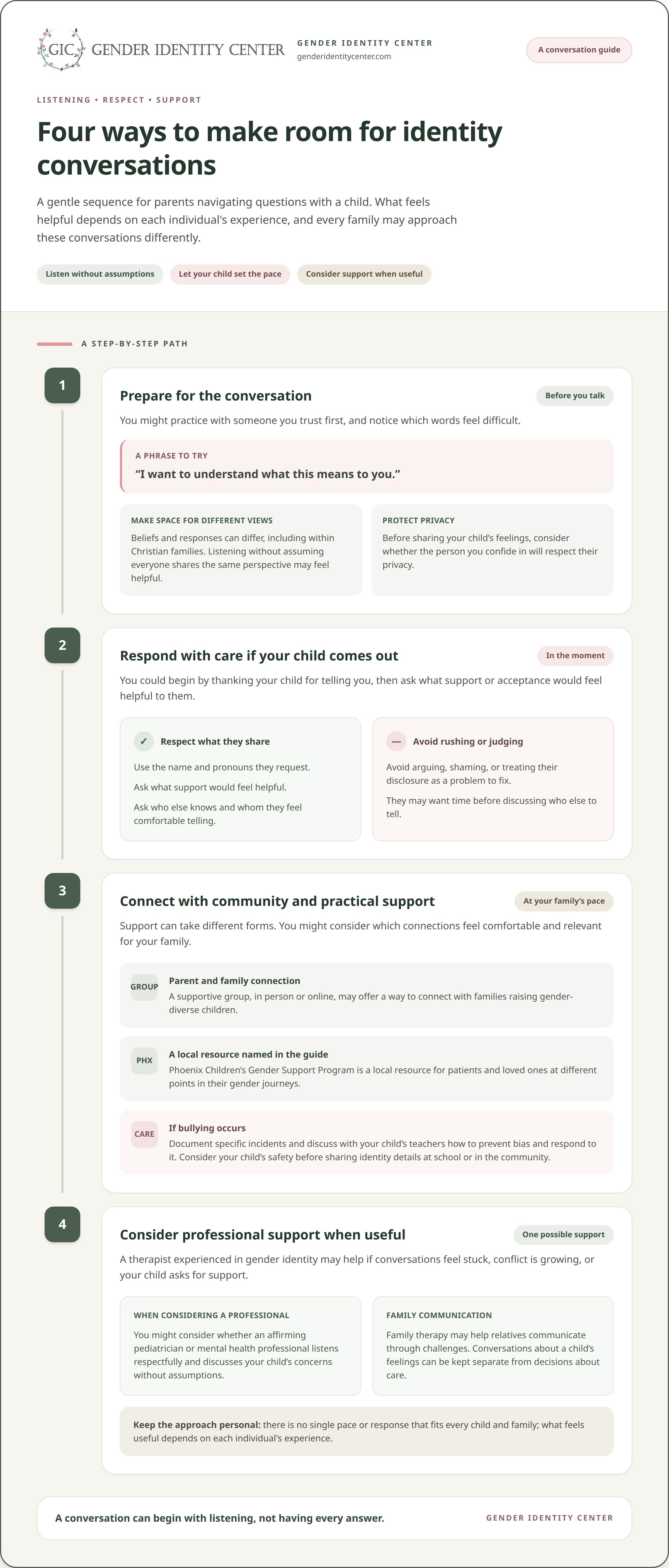
Questions about identity can leave parents feeling uncertain. Depending on each family’s experience, these steps may help make room for conversation, support, and practical planning.
-
Prepare for LGBTQ+ conversations
You might practice with someone you trust first. For example, rehearse saying, “I want to understand what this means to you,” and notice which words feel difficult. In Christian families, beliefs and responses can differ, so focusing on listening rather than assuming everyone shares the same perspective may feel helpful. Before sharing your child’s feelings, consider whether the person you confide in will respect their privacy.
-
Respond to a child coming out
You could start by thanking your child for telling you, then ask what support or acceptance would feel helpful to them. Using the name and pronouns they request, and avoiding arguing, shaming, or treating their disclosure as a problem to fix, may help. Ask who else knows and whom they feel comfortable telling. They may want time before discussing those next steps.
-
Connect with families and community resources
You might look for a supportive group where parents can connect with families raising gender-diverse children, in person or online. Phoenix Children’s Gender Support Program is a local resource for patients and loved ones at different points in their gender journeys. If bullying occurs, documenting specific incidents and discussing with your child’s teachers how to prevent bias and respond to it may be useful. Consider your child’s safety before sharing details about their identity at school or in the community.
-
Consider professional support when useful
Arizona’s current rules depend on the type of gender-affirming care involved; this guide does not set out legal requirements. Families may find it helpful to keep conversations about a child’s feelings separate from decisions about care. A therapist experienced in gender identity may help if conversations feel stuck, conflict is growing, or your child asks for support. When looking for an affirming pediatrician or mental health professional in Phoenix, you might consider whether they listen respectfully and discuss your child’s concerns without assumptions. Family Therapy may help relatives communicate through challenges.
Gender identity, sex assigned at birth, gender expression, and sexual orientation
You might find it helpful to discuss these ideas separately with your child, though the language that works best can vary. Clear language may help everyone discuss identity without assuming one aspect explains another.
-
Distinguish identity, expression, and assigned sex
You could describe gender identity as a person’s internal sense of their gender. Sex assigned at birth is the label recorded when someone is born, often based on physical traits. Gender expression is how someone presents themselves through clothing, hairstyle, voice, or behavior. For example, a child may enjoy clothes associated with another gender without that preference defining their identity; how this relates to identity depends on each individual’s experience.
Phoenix Children’s describes transgender youth as having a gender identity different from their sex assigned at birth. Gender-expansive youth may express a wider or more flexible range of identity or expression. Some gender-expansive children feel comfortable with their assigned sex. These descriptions may offer a starting point, and your child can share which words, if any, feel right to them.
-
Explore gender and sexuality in childhood and adolescence
You might ask what your child means by “questioning” rather than choosing a label for them. Questioning can involve exploring gender identity, sexual orientation, or both. A young person might be wondering what gender they are, whom they feel attracted to, or how they want to express themselves. These questions may reflect exploration, and what they mean can vary from person to person.
It may be useful to distinguish gender identity from sexual orientation: one concerns a person’s sense of their gender, while the other concerns whom they may be attracted to. A child’s feelings may develop or become clearer over time, though each person’s experience differs. Interests, friendships, or a single behavior may not tell you how a child understands their identity or orientation.
If your family would value a supportive space to explore these questions, therapists offering gender counseling may help you talk through them with care.
What Is Gender Identity?
Childhood milestones may offer context, rather than a deadline for understanding your child. Development differs from one person to another. If you’re in Phoenix and wondering how to talk to your child about gender identity, the approach that feels right may depend on your child and family.
- You might notice early patterns without treating them as a test. Children can begin developing a sense of gender as early as age 3. Most recognize and label stereotypical gender groups between 18 and 24 months, and most categorize their own gender by age 3 years. These milestones describe broad patterns, not a rule for how every child must feel or express themselves.
At ages 5 to 6 years, children may hold rigid ideas about gender stereotypes and preferences. For example, a child might insist that certain toys or clothes belong only to one gender. A caregiver might respond with simple concepts: people can enjoy different things, and those interests don’t decide who they are.
- You might meet an adolescent’s questions with curiosity rather than a prediction. Parents wondering how to talk with their child about gender identity in Phoenix may worry that an identity expressed at ages 16-19 will remain unchanged for life. Rather than asking whether a feeling is permanent, you might ask what feels comfortable now and what language the young person would like you to use.
Adolescents may revisit earlier ideas, find words that fit, or express their identity differently over time. None of these possibilities allows a parent to decide what a young person feels. Listening to how they describe themselves and giving them room to clarify their meaning may suit some families as they develop.
- Some families may find it helpful to keep talking in ways that leave room for change and self-discovery. You might ask, “What would you like me to understand?” or “Is there a name or way of expressing yourself that feels right?” These questions may invite your child to share without requiring an immediate label or explanation.
You might consider the difference between your child’s interests and their own words about identity. A preference for a hairstyle, game, or activity isn’t a verdict. Returning to the conversation as your child shares more may work for some families, with their account helping guide what support feels right for them.
Avoiding assumptions about a child's gender identity
Your child’s own words may help shape your understanding, though this depends on each individual's experience. These steps are possible ways to stay curious rather than draw conclusions from appearances or behavior.
- You might notice an interest without treating it as evidence. A child who enjoys clothes, toys, or activities associated with another gender isn’t thereby telling you they’re transgender. Interests can reflect preference, creativity, or many other things. Rather than interpreting a single choice, you could ask what your child enjoys about it and listen to their answer.
- If your child shares a feeling or idea, open questions may help. You might say, “What does that mean for you?” or “How would you like me to understand?” You could avoid leading questions that suggest a preferred answer, such as asking whether a particular hobby means they’re a boy or a girl. Starting with your child’s words rather than your interpretation may be one approach.
- It may be possible to consider influences outside your home while still taking what your child says seriously. An adolescent might mention a conversation, a character, or something they heard at school. You could ask what stood out, then explore the difference between what they encountered and how they feel about themselves. The discussion can continue over time; it doesn’t need to settle identity in one sitting.
- You might respond to changes in language or expression with steady attention. If your child asks you to use a different name or pronouns, you could ask how and where they want you to use them. A change might not necessarily be a trend, a final decision, or a sign of distress. If uncertainty or family tension makes communication difficult, a therapist may help you discuss it while keeping your child’s mental health and perspective central. Schedule gender counseling if support would help your family.
Gender Identity Center
Gender Identity Center offers a supportive place for children and families in Phoenix and Tucson to explore questions about gender identity together. Individual Therapy can give a child space to talk through their feelings, while Family Therapy can help relatives communicate and understand one another’s perspectives. Group Therapy and EMDR Therapy are also available when those approaches fit.
Consider reaching out when conversations feel difficult to begin, family members need help listening to each other, or your child wants support exploring their experience. The right next step depends on what feels useful to your family. Contact Gender Identity Center to discuss support in Phoenix or Tucson.
Let the Conversation Keep Growing
You don’t need perfect words before you begin. A meaningful next step can be small: make room for another conversation, notice what your child wants you to understand, and allow your response to develop alongside theirs. If something comes out awkwardly, you can acknowledge it and try again. A willingness to keep learning can matter more than having every answer ready.
If you’re still thinking about how to talk to your child about gender identity in Phoenix, consider what kind of support would make the next conversation more manageable for your family. You can take time to decide what feels right, guided by your child’s own experience.
Explore support with Gender Identity Center as you consider a next step. Your family can move forward at a pace that feels thoughtful and respectful.
Frequently Asked Questions
Are there any behaviors associated with sexual identity exploration that parents might want to pay attention to?
No single interest, friendship, or way of dressing proves a child’s identity or necessarily signals a problem. Depending on your child’s experience, you might pay attention to how they describe their feelings and whether they seem distressed, isolated, or unsafe. For example, you could ask what has been difficult lately and what support might help. If you’re concerned about their well-being, talking with a qualified mental health professional may be an option.
As parents and caregivers, how might you help?
Depending on your child’s needs, you might offer support through ordinary moments, not only serious conversations. You could say, “I’m here if you want to talk,” then give your child time to respond. Ask whether they’d like you to listen, help solve a problem, or simply stay nearby. Avoid pressing for details they aren’t ready to share, and consider continuing to offer support as their needs change.
How might you advocate for your child?
You might ask your child what kind of advocacy would feel supportive before speaking on their behalf. For example, you could agree on how to introduce them at a family gathering or who may know about their identity. If a school concern arises, you could help your child identify a trusted adult and decide what they want communicated. Depending on your child’s preferences, respecting privacy and involving them in decisions may help keep advocacy centered on their needs.
Is your child transgender?
You may not be able to determine a child’s identity from their appearance, hobbies, or one comment. Their own description can be a place to begin, and they may use different words as they learn what feels accurate. You might ask, “What does that word mean to you?” or “Is there a way you’d like me to refer to you?” Listen without requiring a label or timeline.
Should I worry if my son identifies as a woman, or my daughter identifies as a man?
A child sharing a gender identity that differs from expectations doesn’t, by itself, necessarily mean something is wrong. You might start by asking how they want you to address them and what they’d like you to understand. Taking time to learn the language they use, correcting yourself calmly if you make a mistake, and keeping the relationship open rather than turning the disclosure into an argument may feel helpful, depending on your family’s experience.
What might help kids when they are questioning?
Depending on the child, offering choices about how to talk may help. They may prefer a quiet check-in, a note, or a conversation while doing an activity together. You could ask what would make the next discussion easier, without expecting them to explain everything at once. If they don’t know an answer, you might let the question remain open. Regular, low-pressure opportunities to reconnect may make sharing feel more manageable for some children.