
Post-Op Depression Counseling for Trans Men in Phoenix

What if your feelings after surgery don’t match what you expected? Counseling for post-op depression in trans men in Phoenix can provide an affirming space to talk through low mood, anxiety, trauma, or changes in daily life. At Gender Identity Center, individual therapy can focus on the concerns and goals that matter most to you.
Feeling depressed after surgery doesn’t invalidate your identity or what your surgery means to you. You can explore support at your own pace, without needing to explain away or minimize what you’re feeling. This article covers counseling options, related mental health concerns, therapist specialties, and what appointments in Phoenix may involve. It also offers context for finding care that respects your identity and recognizes that recovery is personal. As you consider your next step, remember that your experience is your own, and support can make room for the full range of emotions you’re carrying.
Key Takeaways
- Consider how anxiety, trauma, depression, or life changes may shape the support you want from a therapist.
- Explore how low mood and other mental health concerns connect with your individual experience after surgery.
- Think about whether in-person or telehealth counseling feels more suitable for your circumstances.
- Learn what to expect from counseling appointments and how Gender Identity Center’s transgender counseling and therapy options may support your next step.
Therapist specialties including anxiety, depression, trauma, and life transitions
Phoenix therapists who provide gender-affirming counseling after surgery work with transgender health and concerns such as depression, anxiety, or trauma. Look for a licensed clinician whose psychology practice welcomes conversations about recovery without treating your identity as a problem. Phoenix therapist profiles can help you explore relevant specialties.
A gender-affirming therapist can listen to how surgery, mood, relationships, and daily routines connect in your experience. Sessions might explore anxiety about healing, low mood, or stress related to changing family roles. Trauma-informed care emphasizes choice and emotional safety, so you can discuss difficult experiences at a pace that feels manageable. Therapy can also help you identify coping skills suited to your needs.
There is no single timeline for seeking counseling after surgery. Consider contacting a therapist when depression, emotional distress, or anxiety begins affecting your routines, relationships, or wellbeing. If low mood makes it harder to sleep or connect with others, for example, that change is a concrete reason to discuss support. You don’t need to wait for a particular milestone.
If you’re looking for a Phoenix therapist who accepts Optum, start by contacting the insurer and therapist’s office. Share your member information and ask whether the therapist participates in your specific plan. Network participation can vary by plan and clinician, so confirm the details with both. Gender Identity Center does not bill insurance directly, but provides superbills you may submit to your plan for possible reimbursement.
To clarify coverage, providers can review plan information and explain how it relates to therapy options. Ask about the expected session format, whether individual or family sessions could fit your goals, and how appointments are arranged. For example, a first conversation might focus on depression after surgery, while later sessions address anxiety or a stressful life transition. The approach should reflect your priorities.
Therapy can draw on approaches suited to the concerns you bring, rather than assuming everyone needs the same plan. A therapist may help you notice patterns, name emotional needs, and practice coping skills for specific situations. Your goals can change, so ongoing conversations can adjust the focus as your recovery and circumstances evolve.
Depression and other mental health concerns
Depression after surgery can overlap with anxiety, trauma, stress, or other mental health concerns. Counseling for post-op depression in trans men in Phoenix can provide room to explore which concerns feel most pressing to you.
Depression Symptoms Needing Professional Help
Consider professional support if low mood, loss of interest, hopelessness, or emotional numbness disrupts daily routines. Changes in sleep, appetite, energy, or concentration may also be worth discussing when they affect work, relationships, or recovery. Difficulty keeping up with responsibilities, for example, can be a reason to talk with a mental health professional.
Treatment Approaches for Post-Surgery Depression
Treatment may begin with a conversation about your feelings, goals, and changes since surgery. Counseling for post-op depression in trans men in Phoenix can include affirming therapy to explore stress, build coping strategies, and discuss concerns such as anxiety or trauma. The focus can shift as your needs change, and a mental health professional can discuss whether additional clinical support may be appropriate.
In Phoenix, location can shape access to in-person counseling or psychiatric care. A Phoenix-area psychiatric practice serves clients who are 18 years and older. The Affordable Care Act requires mental and behavioral health treatment to be covered as essential health benefits. How coverage applies depends on the terms of your individual plan.
If you may harm yourself or cannot stay safe, contact emergency services or go to the nearest emergency department. For concerns that aren’t immediate, a Phoenix therapist can help you discuss possible next steps. Sharing your gender identity and post-surgery concerns can make the conversation more relevant to your needs.
Men’s mental health concerns can include depression, anxiety, isolation, or pressure to hide emotional distress. You may find it difficult to discuss low mood with friends or family. Therapy can offer space to explore these pressures without assuming every man experiences them in the same way.
If exploring support feels useful, consider a supportive next step at your own pace.
In-person and telehealth counseling
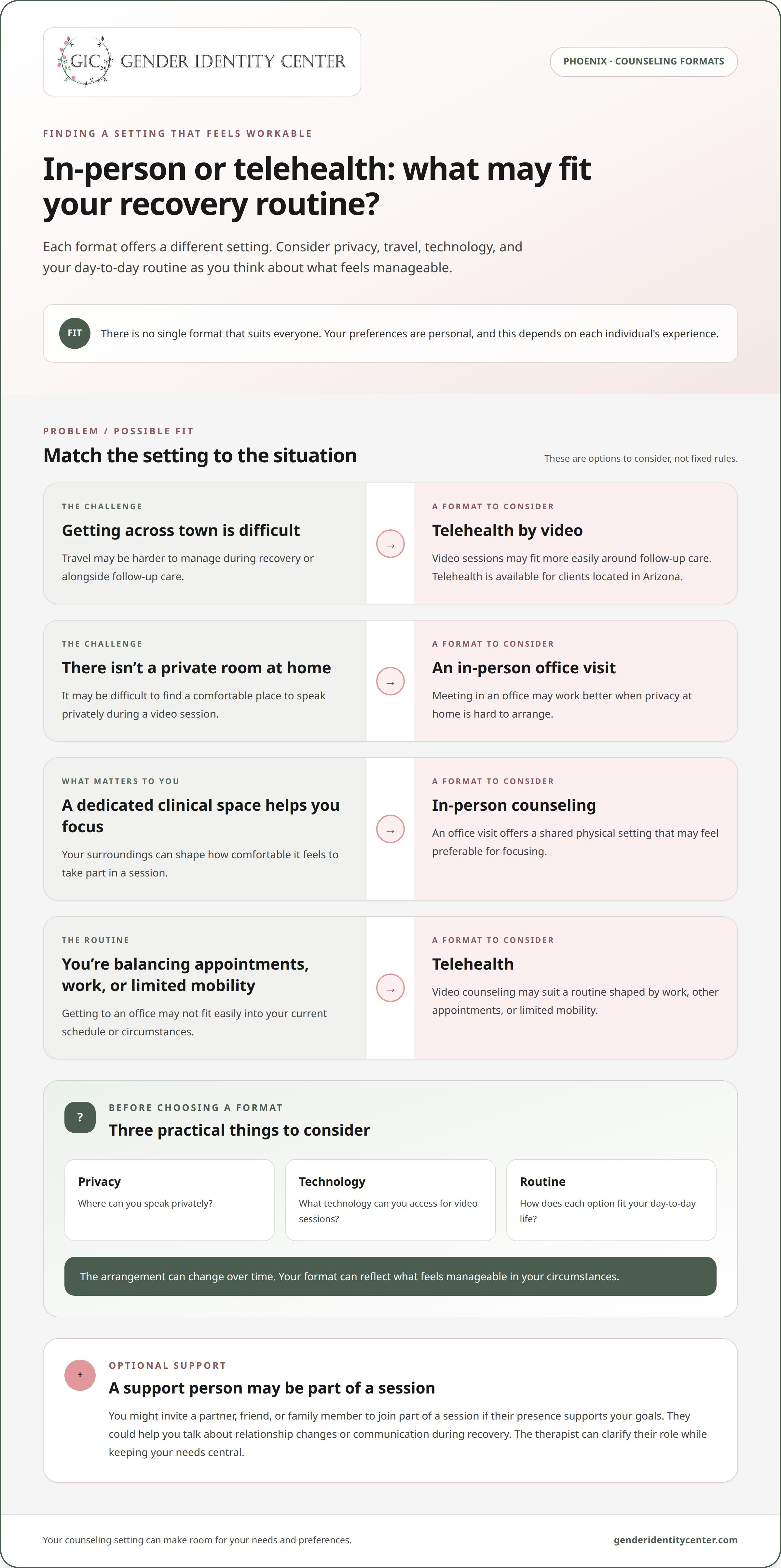
In Phoenix, in-person counseling offers a shared physical setting, while telehealth provides sessions by video for clients located in Arizona. The format can affect privacy, travel, and how easily you attend during recovery. If getting across town is difficult, for example, telehealth may fit more easily around follow-up care. If you can’t find a private room at home, an office visit may work better.
Before choosing a format, consider where you can speak privately, what technology you can access, and how each option fits your routine. Telehealth may suit someone balancing appointments, work, or limited mobility. In-person care may feel preferable if a dedicated clinical space helps you focus. Your preferences are personal, and the arrangement can change over time.
You can also discuss whether to involve a support person. You might invite a partner, friend, or family member to join part of a session if their presence supports your goals. They could help you talk about relationship changes or communication during recovery. The therapist can clarify their role while keeping your needs central.
Gender-affirming counseling can make room to discuss stigma, emotional strain, and health care experiences without assuming what matters most to you. You can also raise concerns such as substance use, isolation, or tension with a loved one. You decide what to share and what to work on. A therapist can help you consider whether individual sessions or involving a support person better suits your focus.
Before an appointment, consider whether you prefer in-person or telehealth care and whether you want someone involved. Share your preferences when arranging a session, and revisit them if your circumstances change. The format is one part of care, not a measure of how seriously you take your emotional health.
Counseling consultation and appointments
A first conversation can help you explain what has changed since surgery and what you want from treatment. You might describe low mood, anxiety, sleep changes, or difficulty returning to familiar routines. The therapist can use these details to understand your priorities and discuss whether ongoing counseling may fit. You can also share what would help you feel acknowledged in sessions.
Before an appointment, consider the main concerns you want to discuss. You might want support with emotional distress, coping skills, or communication with someone close to you. If substance use concerns you, raise them directly so the conversation reflects your needs. There is no single script; your experience can guide what you choose to share.
During a consultation, the therapist can explain the counseling approach, discuss your goals, and outline possible next steps. You can ask how sessions might address depression after surgery, what role coping strategies may play, and how progress could be reviewed. Treatment planning is a conversation, not a test. Your priorities can shape the focus as circumstances change.
Appointment logistics may include choosing in-person or telehealth sessions and finding a time that fits your routine. If you need to coordinate around work, recovery, or other health care, explain those constraints when arranging a visit. For example, you may prefer a session that avoids a conflict with a follow-up appointment. Review appointment scheduling to take a next step.
You can also ask about payment before starting. Gender Identity Center does not bill insurance directly, in order to protect confidentiality, but provides superbills you may submit to your plan for possible reimbursement. HSA and FSA cards are accepted. A superbill does not guarantee reimbursement, so review your plan’s terms to understand how it may apply.
After the first conversation, consider whether the therapist’s approach and communication style feel appropriate. Did you feel heard when describing your concerns? Did the proposed focus match your goals? Your next step may be to schedule another appointment or discuss a different treatment emphasis.
Gender Identity Center: Transgender Counseling
Gender Identity Center offers transgender counseling for trans men seeking space to discuss depression after surgery and related concerns. Individual therapy can focus on your goals and emotional experience, while family therapy can include conversations with people important to you. Group therapy offers another setting for shared discussion and connection. You can explore low mood, relationships, or changes in daily life according to what feels relevant. To discuss counseling, contact Gender Identity Center about an appointment and share what you hope to address.
Choose a next step that feels right for you
Your next step can begin with what you want more room for: steadier days, stronger connection, or a place to speak openly. If you’re considering counseling for post-op depression as a trans man in Phoenix, your goals and preferences can guide the conversation. There is no single emotional path after surgery, and the support that fits depends on your experience.
Gender Identity Center offers individual, family, and group therapy. Each provides a different setting for exploring what matters to you: one-to-one conversations, support that includes loved ones, or connection with a group. You can consider which format feels most comfortable as you decide what comes next.
When you’re ready, contact Gender Identity Center to discuss taking a next step. You can move at a pace that feels right for you, with your needs and your sense of self at the center.
Frequently Asked Questions
What mental health counselors in Phoenix specialize in post-operative depression for transgender men?
Gender Identity Center offers transgender counseling for people seeking support with depression after surgery and related concerns. In an initial conversation, you can describe what has been affecting you and what you hope to address. The focus may include mood, relationships, or adjustment after surgery. Your priorities can guide the discussion, since no single therapist or approach fits everyone.
Do Phoenix counseling providers offer in-person and telehealth appointments for post-op depression?
Yes. Gender Identity Center offers in-person sessions in Phoenix and Tucson, as well as telehealth for clients located in Arizona. You could choose an office appointment if travel is manageable, or telehealth if remote sessions better suit your circumstances. Discuss the format when arranging an appointment.
What are typical counseling costs in Phoenix, and which providers accept insurance?
Gender Identity Center does not bill insurance directly, but provides superbills that clients may submit for possible reimbursement. HSA and FSA cards are also accepted. Your plan determines whether reimbursement applies.
Does Arizona Medicaid or private insurance cover therapy for post-operative depression?
The Affordable Care Act requires mental and behavioral health treatment to be covered as essential health benefits. How Arizona Medicaid or a private plan applies coverage to therapy depends on its terms and provider arrangements. Gender Identity Center does not bill insurance directly, but can provide a superbill for you to submit. A superbill does not guarantee reimbursement; plan rules determine payment.