
Lgbtq Counseling in Arizona for Stress and Trauma

Affirming care involves more than a therapist saying they welcome LGBTQ+ clients. Therapists’ training and experience with LGBTQ+ identities and concerns can vary. When considering LGBTQ counseling in Arizona, it’s reasonable to ask how a therapist’s clinical experience informs the support they provide.
If you’re dealing with stress, anxiety, depression, or trauma, you deserve space to talk without having to defend who you are. Finding a counselor may also raise questions about whether they’ll understand your identity, relationships, or the pressures you’re carrying. Those concerns are valid, and supportive care looks different for each person.
This article explains what LGBTQ-affirmative care can involve, how to ask about a therapist’s experience, and how counseling may address stress, anxiety, depression, and trauma. It also covers what to consider when looking for care that respects your identity and leaves room for your goals and pace.
Key Takeaways
- Learn what LGBTQ-affirmative training may involve and how it can relate to support around coming out.
- Use focused questions to understand a therapist’s experience with LGBTQ-related concerns and your goals for counseling.
- Consider how affirming care can make space for your identity while addressing emotional and relationship needs.
- Explore how counseling approaches, including EMDR, may be part of support for depression, anxiety, stress, or trauma.
Do LGBTQ-affirmative therapists receive special training?
Some therapists pursue education focused on LGBTQ+ identities, gender, and emotional wellbeing. Training may include learning affirming language, understanding minority stress, and recognizing how stigma can affect anxiety. There isn’t one shared training path, so experience can differ between clinicians. You can ask what learning has shaped a therapist’s work and how they apply it in sessions. Therapist profiles can help you learn about clinicians’ areas of focus.
Coming-out support can help you explore what feels safe and meaningful to you. A therapist might discuss whom you want to tell, what you hope may change, and what concerns you have about their reactions. You can also consider whether to come out, or whether to tell different people at different times. For example, you might plan what to say to a sibling while keeping your privacy and emotional readiness at the center.
Protective factors can include affirming relationships, practical support, and spaces where your identity is respected. A therapist may help you identify supportive family members, friends, or community connections, then consider whether to involve them with your consent. Families can practice listening without judgment and responding to a young person’s stated needs. Support networks differ: one trusted person may feel safer than a larger group.
For LGBTQ+ teens and young adults, counseling can make room for school pressures, changing relationships, identity exploration, and family conversations. A therapist can invite the young person to set priorities for sessions while respecting their pace and privacy. If a teen is worried about telling a caregiver, they can discuss that concern before choosing a next step. The focus is on the young person’s experience, not on pushing a particular decision.
For crisis support, it can help to identify trusted adults, a counselor, and local support options before distress escalates. The Trevor Project engages in policy and legislative efforts to promote LGBTQ+ equality and mental health support. Advocacy and support services can also help families and community members understand challenges facing LGBTQ+ youth. A practical first step is to write down whom to contact and where the young person feels safe.
How can I inquire about a therapist’s experience with LGBTQ issues?
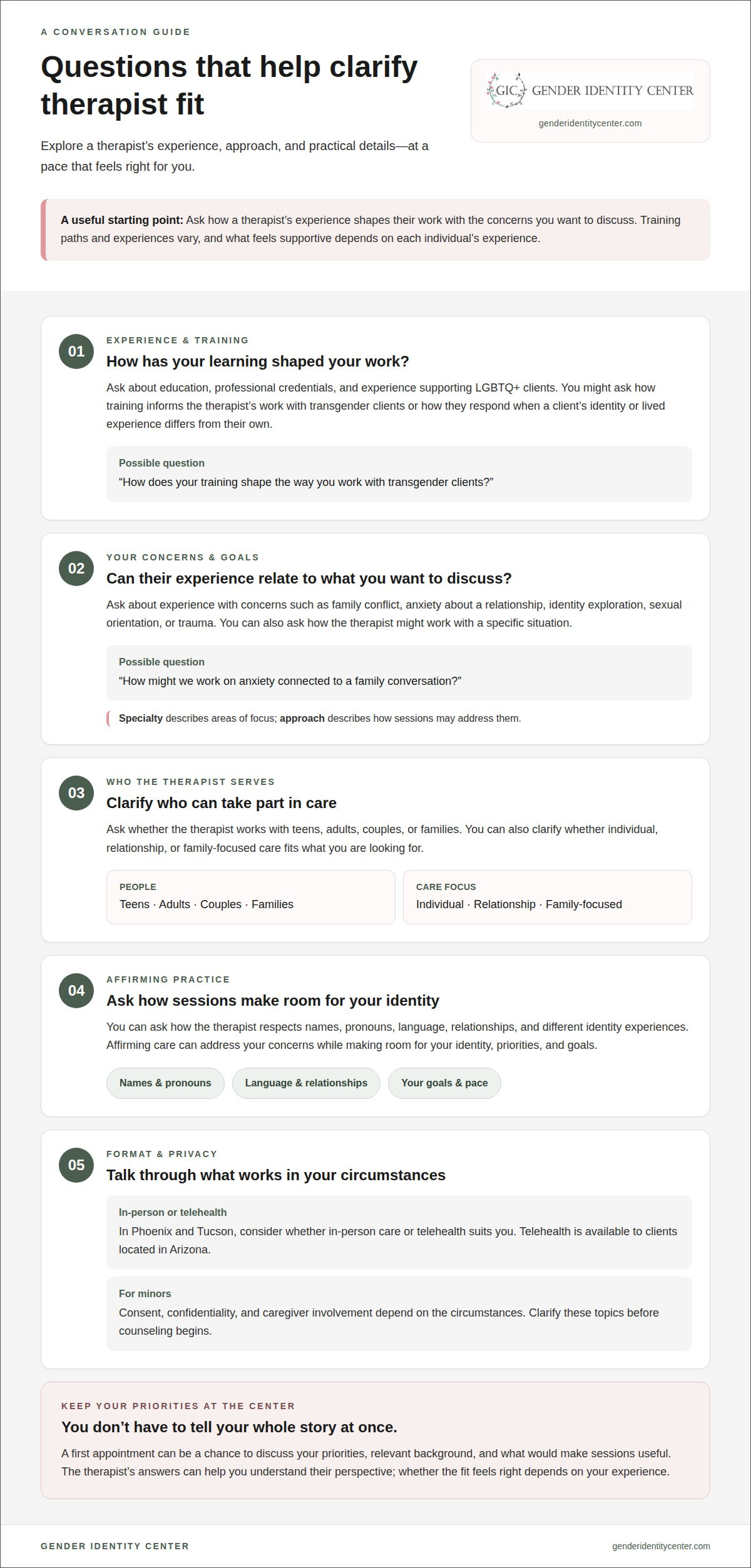
When seeking LGBTQ counseling in Arizona, ask about a therapist’s experience with LGBTQ+ clients and the concerns you want to discuss. For minors, consent, confidentiality, and caregiver involvement depend on the circumstances, so clarify these topics before counseling begins.
Finding an Experienced Therapist
Look for a therapist whose focus reflects your needs, then ask how that experience shapes their work. For example, ask how they support clients dealing with family conflict or anxiety about a relationship. Clarify whether they work with teens, adults, couples, or families. In Phoenix and Tucson, consider whether in-person care or telehealth suits you. Telehealth is available to clients located in Arizona.
Specialties and Treatment Approaches
A specialty describes a therapist’s areas of focus; an approach describes how sessions may address them. Ask whether their work includes identity exploration, sexual orientation, relationship concerns, or trauma. You could ask, “How might we work on anxiety connected to a family conversation?” Their answer can help you understand how therapy may relate to your goals, while recognizing that fit depends on your experience.
Qualifications and Experience
Ask about a therapist’s education, professional credentials, and experience supporting LGBTQ+ clients. A useful follow-up is, “How does your training shape the way you work with transgender clients?” You can also ask how they respond when a client’s identity or lived experience differs from their own. Their explanation can give you a sense of their perspective and how they work to create a nonjudgmental setting.
As you consider LGBTQ counseling in Arizona, clarify who the therapist serves and what sessions can address. Ask whether they work with teens or adults and whether individual, relationship, or family-focused care fits your needs. If you’re considering counseling, you can explore scheduling options as a next step.
LGBTQIA+-affirming mental health counseling
Affirming mental health care considers your identity alongside the concerns bringing you to counseling. At a first appointment with Gender Identity Center, expect to discuss your priorities, relevant background, and what would make sessions useful to you.
Affirming Support for Clients and Families
Affirming therapy makes room for a client’s language, relationships, and goals without treating identity as a problem to solve. For example, a client may want help managing work stress while discussing the impact of coming out to relatives. Family sessions can provide space to practice listening, discuss boundaries, and understand each person’s perspective. What feels supportive depends on the individual and their family context.
Therapists Across Arizona
In Arizona, location can shape whether in-person or telehealth sessions fit your routine. While our physical offices are located locally in Phoenix and Tucson, telehealth is readily available to clients located anywhere in Arizona. Someone in Phoenix or Tucson may prioritize travel time for in-person visits, while someone in a smaller community across the state may value remote access via telehealth. Ask whether a therapist works with LGBTQIA+ clients and whether their approach fits your needs. A behavioral health professional can explain how they make sessions affirming, including how they respect names, pronouns, and different identity experiences.
The First Counseling Appointment
Your first appointment can help establish what you want from counseling; you don’t have to tell your whole story at once. You might discuss anxiety, family communication, or questions about identity, then identify what feels most pressing. The therapist may ask about your support network and what has helped before. You can also raise practical preferences, such as telehealth, family involvement, or a focus on individual mental health goals.
When looking for LGBTQ+-affirming therapists through Gender Identity Center in Phoenix, Tucson, or elsewhere in Arizona, consider the setting and the support you want. Through our local offices and statewide telehealth options for lgbtq counseling arizona, LGBTQIA+-affirming care can address behavioral health concerns while recognizing the role of relationships, community, and identity. A family, for instance, may want help communicating, while an individual may want space to explore personal goals. The people involved and what they hope to work toward shape the focus and pace.
Depression, anxiety, stress, and trauma
Depression, anxiety, stress, and trauma can affect sleep, concentration, relationships, and daily routines. In LGBTQ counseling in Arizona, you can identify which concerns feel most urgent and how they show up in your life. For example, notice when anxiety rises, what was happening beforehand, and what helps you feel grounded. These observations can provide a practical starting point for sessions without reducing your experience to a label.
Anxiety counseling can focus on situations that trigger worry, avoidance, or physical tension. A counselor may help you notice patterns and explore responses that fit your life. Support for depression can include discussing low mood, isolation, or difficulty finding motivation. You might try a small step, such as reconnecting with a supportive friend, then reflect on how it felt. Priorities and experiences differ for everyone.
Stress related to identity, family expectations, or discrimination can be explored alongside other pressures. For instance, consider how tension at work affects your mood at home. Couples counseling can provide space to discuss communication, boundaries, and shared stress when both partners want support. An affirming approach makes room for behavioral and relationship concerns without assuming every LGBTQ+ person faces the same challenges.
Conversations about trauma can move at a pace shaped by your needs and sense of safety. You can name topics you’re ready to discuss and those you’d rather approach gradually. For some people, acceptance can involve making room for their responses without forcing a particular interpretation. If you’re experiencing burnout, you might explore demands, rest, and available support, then consider one manageable change. Counseling can help connect emotional concerns with everyday choices.
If you’re exploring LGBTQ counseling in Arizona for identity-related concerns alongside emotional wellbeing, learn about gender counseling and transgender counseling.
Gender Identity Center
Gender Identity Center offers therapy for LGBTQ+ people seeking support with emotional well-being, stress, or trauma. Individual Therapy provides space to explore personal concerns, while Family Therapy or Group Therapy offers a shared setting for support. EMDR Therapy is another option for working with difficult experiences. The right approach depends on your needs and goals.
If you’re considering LGBTQ+-affirming care, contact Gender Identity Center to explore a next step at your own pace.
Choose a next step that feels like yours
Starting LGBTQ counseling in Arizona can create space for what matters to you; you don’t need every answer before you begin. Take a moment to name what you want more of in daily life, such as steadier sleep, less tension in a relationship, or room to express yourself openly. That intention can guide your first conversations while leaving room for your priorities to change.
You can move at a pace that feels comfortable. A next step might be writing down what you hope a supportive counseling relationship will feel like, or noting questions you still want to explore. Your needs are personal, and the way forward can take shape as you go.
If you’re ready to explore that next step, connect with Gender Identity Center. Your experiences deserve care that makes room for your voice and the future you want to build.
Frequently Asked Questions
Do you offer telehealth or virtual sessions?
Yes, telehealth sessions are available to clients located in Arizona. Sessions use a confidential video platform, which may help if traveling to an office is difficult. In-person services are available in Phoenix and Tucson. If you’re considering virtual care, think about whether you can join from a private place with a reliable internet connection.
Do you see couples or families?
Yes, Gender Identity Center offers Family Therapy and Couples Therapy, including support for LGBTQ+ couples. Sessions can make room for shared concerns, communication patterns, and different perspectives. Before beginning, consider what you hope to discuss together, such as a recurring conflict or how to support a loved one. The focus can reflect the concerns and goals of the people attending.
Do you take insurance?
No, Gender Identity Center does not bill insurance directly or work directly with insurance; depending on the circumstances and applicable policies, this arrangement may help protect confidentiality. The practice provides superbills for clients who want to seek reimbursement from their insurer; reimbursement depends on the insurer’s process. HSA and FSA cards are accepted. Client information is generally treated as private, though disclosure practices may depend on applicable circumstances and policies; verbal and written, signed permission may be required.
Do you write gender-affirming care letters?
Yes, Gender Identity Center provides referral letters for gender-affirming medical care following WPATH standards. These letters support referrals; they are not medical treatment or prescriptions. If you’re considering a letter, discuss your goals and circumstances with a clinician, including what the letter is intended to support. This conversation can help clarify the process and how it relates to your care.
Not Sure Where to Start?
Start by choosing the concern you most want support with, such as anxiety, family stress, or questions about identity. Review therapist profiles to learn about clinicians’ areas of focus, then consider whether individual, family, or group support feels relevant. You don’t need to have every detail figured out before beginning. An initial conversation can help you describe what you hope to work toward.
Still Have Questions?
You can contact Gender Identity Center to ask about scheduling or the type of support that may fit your needs. Call 480-349-3671 or email info@genderidentitycenter.com. If you reach out, you can briefly share whether you’re asking about individual, family, or couples therapy. You can also ask a practical question first, then decide what next step feels comfortable for you.