
Managing Anxiety About Transitioning: Navigating Your Unique Journey

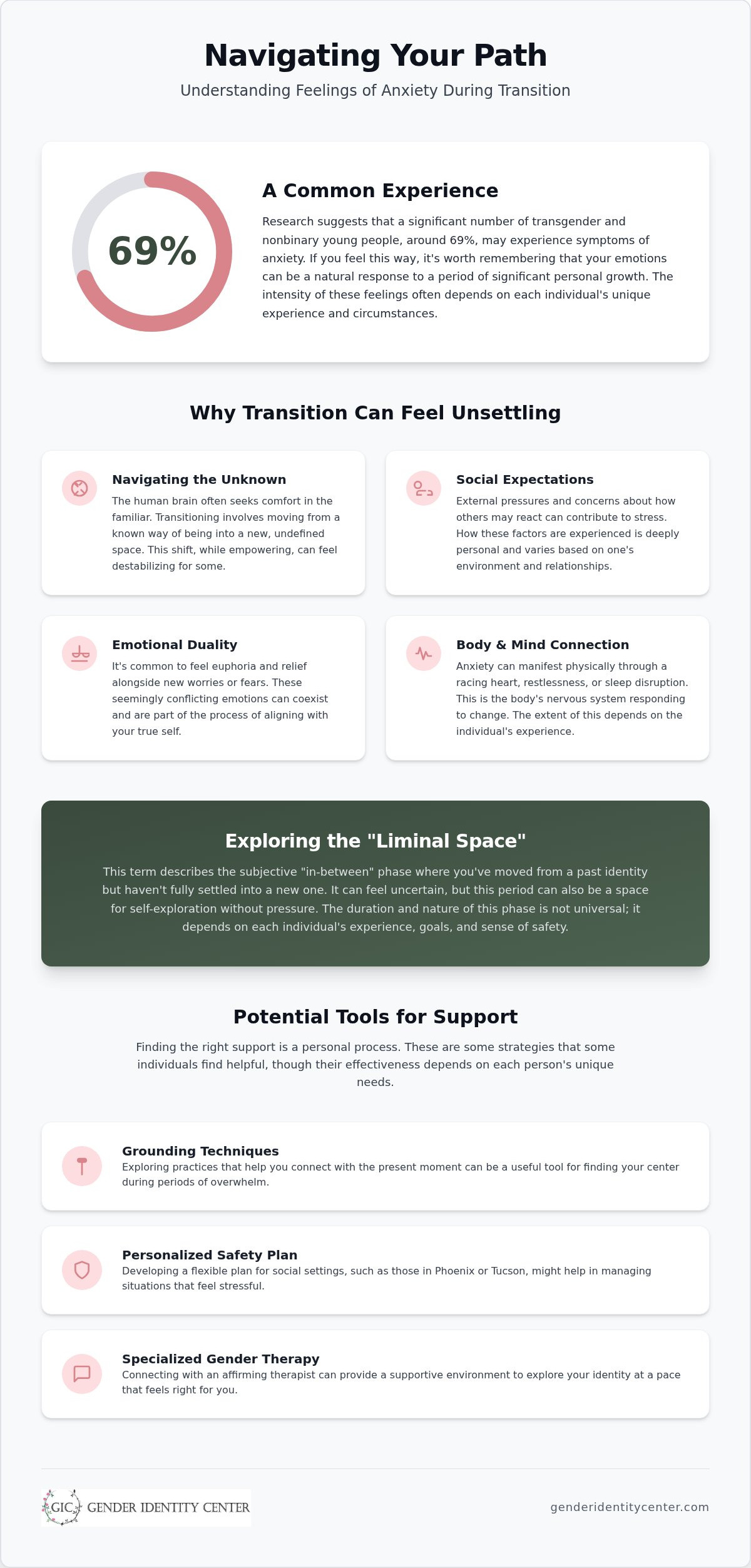
Recent research from The Trevor Project in 2026 indicates that 69% of transgender and nonbinary young people experience symptoms of anxiety. If you find yourself feeling overwhelmed, please know that your emotions are a normal response to a significant life shift. Managing anxiety about transitioning is a common part of the journey toward self-realization, though the intensity and focus of these feelings depends on each individual's experience. It's natural to feel a mix of anticipation and vulnerability as you step into your most authentic self.
It's understandable to feel apprehension regarding social shifts or the uncertainty of medical outcomes. You're navigating a path that's both brave and complex, and it's okay to look for a steady hand during the quieter, harder moments. This guide offers insights and strategies that might support your process, though the effectiveness of any tool depends on each individual's experience. We'll explore grounding techniques to help you find your center and discuss how connecting with an affirming therapist in Phoenix or Tucson can provide a supportive environment for your unique journey.
Key Takeaways
- Understand that anxiety is often a natural response to personal evolution, though the way it presents itself depends on each individual's experience.
- Explore the subjective nature of the "liminal space" and why feeling unsettled during this in-between phase is a normal part of your process.
- Gain flexible strategies for managing anxiety about transitioning, such as developing a personalized safety plan for social settings in Phoenix or Tucson.
- Discover how specialized gender therapy can provide a safe environment for you to explore your identity at a pace that feels right for you.
- Recognize that your journey is unique, and finding the right support tools is a personal process that varies based on your specific needs.
Why Transitioning Often Triggers Feelings of Anxiety and Uncertainty
Stepping into your authentic self is a profound act of courage. It's a journey of personal evolution that fundamentally changes how you move through the world. Because this process involves so much change, it's natural for your mind to respond with a sense of caution. Our brains are hardwired to seek safety in what is familiar, even if that familiarity has been uncomfortable or limiting. When you begin to shift your presentation or identity, you are moving away from a predictable "known" into a space that hasn't been defined yet. This shift can feel destabilizing, but it's helpful to remember that your feelings are a valid response to a major life transition.
The role of social expectations also plays a significant part in your internal peace. We live in a world that often demands clarity and binary choices, which can create pressure when you are still exploring what feels right for you. Whether you are worried about how friends will react or how you'll be perceived in public, these external factors can heighten your stress. However, the way these pressures affect you is not universal. The experience of managing anxiety about transitioning is deeply personal. How you navigate these feelings depends on each individual’s personal history and environment.
The Interplay of Gender Dysphoria and Transition Stress
It can feel confusing when the very steps you take to find relief also bring up new fears. You might feel a sense of euphoria when trying a new name or clothing, yet simultaneously feel a sharp spike in worry about being seen or judged. This duality is common. For some, public interactions become a primary trigger, while for others, the anxiety centers around medical milestones. These feelings don't mean you are making a mistake. Instead, they act as information, highlighting the areas where you might need more support or a slower pace. Your desire for alignment and your fear of change can exist in the same space without canceling each other out.
Biological and Emotional Responses to Change
Anxiety isn't just a mental state; it's a physical experience that lives in your body. You might notice restlessness, a racing heart, or disruptions in your sleep patterns. A foundational step in understanding anxiety is recognizing that your nervous system is reacting to newness. Social transition requires your brain to process a high volume of new social cues and internal shifts all at once. This can lead to a hodgepodge of conflicting emotions. You might feel excitement, grief, fear, and relief all in the span of a single afternoon. Normalizing this emotional variety can help lower your defenses and allow you to move forward with more self-compassion. This depends on each individual's experience, as some may feel these physical symptoms more acutely than others.
Exploring the Subjective Experience of the "Liminal Space"
The "liminal space" is a term often used to describe the subjective "in-between" phase of identity development. It's that period where you've moved away from a previous way of being but haven't yet fully landed in your new reality. For many, the lack of a "fixed" destination or a clear timeline can feel deeply destabilizing. You might feel like you're suspended in a neutral zone, which can trigger significant anticipatory anxiety during transitions. However, this space doesn't have to be viewed solely as a hurdle to overcome. It can also be seen as a fertile ground for exploration, allowing you to try on different aspects of yourself without the pressure of immediate permanence.
How long someone stays in this phase is not set in stone. The duration of this experience depends on each individual’s experience, their personal goals, and the level of safety they feel in their environment. There's no right or wrong way to exist in the "in-between." Some find comfort in staying in this space for an extended period, while others prefer to move through it more quickly. Both paths are valid.
Navigating Social Transition Anxiety
Social transition often brings a unique set of challenges, particularly when it comes to the process of "coming out" in different circles like work, family, or friend groups. The fear of being misgendered or misunderstood during this process can weigh heavily on your mind. Much of this social transition experience varies based on local community support and the specific dynamics of your relationships. In cities like Phoenix or Tucson, finding pockets of affirming community can make a significant difference in how you move through these public-facing shifts. If the weight of these social expectations feels heavy, speaking with a compassionate therapist can offer a safe space to process these changes.
Internal Identity Shifts and Self-Perception
As you move toward a more authentic identity, your internal sense of self-worth often goes through its own evolution. It's common to deal with "imposter syndrome" during the early stages, where you might question if you're "trans enough" or if you're truly entitled to the space you're taking up. These thoughts are frequently a byproduct of societal conditioning rather than a reflection of your truth. Patience is vital here. Your narrative is still unfolding, and allowing yourself the grace to grow into your identity is a central part of managing anxiety about transitioning. Every person's internal timeline is different, and your self-perception will likely continue to shift as you find more alignment with your true self.
Evaluating Different Approaches to Managing Transition-Related Stress
Finding the right path for managing anxiety about transitioning is a deeply personal endeavor. Some individuals find that self-guided strategies offer enough stability, while others prefer the structured safety of professional clinical support. Neither approach is inherently superior. Instead, the effectiveness of any tool depends on each individual's unique needs and current life context. We often find that a combination of these methods provides the most comprehensive sense of security. Integrating community support through peer networks or local groups in Arizona can also offer a vital sense of belonging, acting as a supportive mirror for your own experiences. This sense of partnership helps remind you that while your journey is unique, you aren't walking it alone.
Specialized Modalities: EMDR and Gender Counseling
Traditional talk therapy can be helpful, but specialized modalities often address the specific nuances of identity development more directly. Individual gender therapy focuses on creating an affirming partnership where your lived experience is the primary guide. For those who have faced past rejection or systemic exclusion, EMDR therapy can be a powerful tool to process gender-related trauma. It helps the nervous system move past "stuck" emotional responses that might be tied to previous hardships. Choosing professional consultation or counseling is a subjective choice. It's about personal readiness rather than following a rigid medical requirement. This decision depends on each individual's experience and their comfort level with exploring internal states.
Self-Care and Grounding Techniques
Daily life often requires immediate, accessible tools for managing transition-related stress. Mindfulness practices, when tailored for those experiencing gender dysphoria, allow you to observe internal states without judgment. If you feel a spike in panic, the "3-3-3 rule" is a simple grounding method. You identify three things you see, three sounds you hear, and move three parts of your body. This brings your focus back to the present moment and lowers the intensity of the physical response. Journaling also serves as a meaningful way to track the subtle shifts in your personal progression. It provides a private space to document your unfolding narrative and identify specific triggers. These self-care tools are flexible, and their impact varies based on the person using them.
Practical Tools for Navigating Day-to-Day Anxiety in Arizona
Living in Arizona offers a unique landscape for your personal progression. While cities like Phoenix and Tucson have local non-discrimination ordinances, the lack of a statewide law can sometimes add a layer of uncertainty to your daily interactions. Managing anxiety about transitioning in this environment often involves finding a delicate balance between your internal growth and your external surroundings. One way to foster stability is through the maintenance of small, daily routines. Whether it's a specific morning ritual or a weekly visit to a favorite affirming space, these rhythms provide a sense of predictability. This depends on each individual's experience, as what feels grounding for one person might not resonate with another.
Setting flexible goals is another practical way to lower the volume of stress. Instead of focusing solely on distant milestones, you might find relief in smaller, social objectives. This could include exploring new clothing styles, practicing voice modulation, or updating your name in specific circles. Breaking these steps down into manageable pieces allows you to move at a pace that feels secure. If you're feeling stuck, finding transgender counseling in Tucson or Phoenix can provide a dedicated partnership to help you refine these goals. A counselor can help you create a safety plan for social situations that feel particularly anxiety-inducing, ensuring you have a strategy for when you feel overwhelmed.
Building a Supportive Local Network
Isolation can often amplify feelings of worry. Identifying safe spaces and LGBTQ+ resources within Arizona is a vital step in mitigating this sense of being alone. Finding a "chosen family" can provide the emotional scaffolding necessary to navigate societal challenges. Local support groups in the Valley or Southern Arizona offer diverse perspectives on the transition experience, reminding you that your path is valid. These communities act as a mirror, reflecting your resilience back to you during difficult times. The value of these connections depends on each individual's experience, but they often serve as a bridge to a more confident self.
Self-Advocacy in Healthcare and Beyond
Navigating the Arizona healthcare system requires a blend of confidence and clear communication. It's helpful to understand your rights, especially since Arizona Medicaid (AHCCCS) currently excludes gender reassignment surgeries from coverage. Being prepared for medical appointments can help you feel more in control of your journey. This includes having access to WPATH referral letters when seeking affirming care. These documents act as a professional bridge, helping you access the services you need while ensuring your identity is respected by providers. If you're ready to explore these tools in a secure environment, you can schedule a consultation with our team today.
How Specialized Therapy Can Support Your Personal Progression
Professional support is often viewed through the lens of a clinical necessity, but we prefer to frame it as a collaborative partnership. In this space, you're the expert on your own life. A therapist doesn't dictate your path; instead, they act as a steady, guiding hand while you explore the nuances of your identity. This is particularly helpful when managing anxiety about transitioning, as the process involves navigating the complex "liminal space" we explored earlier. Working with specialized professionals like Ricardo Pérez Banega allows you to use cognitive-behavioral techniques to find stability during this in-between phase. Having a mentor to help you map out this journey can provide a sense of security when things feel uncertain, ensuring that your internal growth remains a dynamic and positive experience.
The decision to begin this work is deeply personal. Whether you feel ready to dive into deep emotional work or simply need a secure environment to process daily stressors, the choice depends on each individual's experience. At the Gender Identity Center, our commitment is to provide affirming, professional care that respects your pace. We offer offices in Phoenix and Tucson, ensuring that those in our local Arizona communities have access to specialized support that understands the specific challenges of our region. This partnership is designed to lower your defenses and allow for the quiet resilience needed to navigate societal pressures.
What to Expect in Gender-Affirming Counseling
Sessions are designed to center your agency. We prioritize validation and radical acceptance, creating a non-judgmental environment where you can speak your truth without fear of exclusion. Your goals are the primary focus, and the work is tailored to your specific needs. We use specialized vocabulary that reflects a deep understanding of identity, ensuring you feel seen and respected from the very first interaction. For those living outside of Phoenix or Tucson, or for anyone who prefers the comfort of their own home, we provide telehealth services across all of Arizona. This flexibility ensures that distance isn't a barrier to finding a partnership that honors your authentic self.
Taking the Next Step Toward Emotional Resilience
Beginning the process of scheduling a session is an act of self-advocacy. It's an investment in your authentic future and a way to build the emotional resilience needed for your continued progression. We invite you to explore your identity in a secure, non-judgmental environment where you're truly acknowledged. Your journey is yours alone, but you don't have to navigate the complexities of change without a supportive mirror to reflect your strength. This path of self-realization is a meaningful endeavor, and we're here to walk alongside you whenever you feel the time is right.
Embracing Your Path Toward Self-Realization
Your journey toward an authentic identity is a deeply personal endeavor that unfolds in its own time. We've explored how the "in-between" phase can feel uncertain, yet it also serves as a unique opportunity for self-discovery and growth. Whether you're utilizing daily grounding tools or seeking community support, the process of managing anxiety about transitioning depends on each individual's experience and unique environment. Acknowledging these feelings is a meaningful step toward finding the quiet resilience needed to move forward. It's helpful to remember that there is no single right way to navigate these shifts, as every person's narrative is valid.
Professional support can act as a bridge between your current reality and your future self. Our team offers specialized gender-affirming clinicians and WPATH-compliant assessments to support your personal progression. With telehealth available throughout Arizona, you can access a secure environment regardless of your location. Begin your journey with a supportive partner; schedule a session at the Gender Identity Center today. You deserve to feel seen and respected as you explore the fullness of who you are. Your future self is waiting to be met with kindness and patience.
Frequently Asked Questions
Is it normal to feel regret or doubt when I feel anxious about transitioning?
Feeling a sense of doubt or questioning your path is a very common part of the transition process. These emotions often stem from the magnitude of the change rather than a lack of authenticity in your identity. Managing anxiety about transitioning involves acknowledging that your mind is trying to navigate a significant life shift, and the way you interpret these feelings depends on each individual's experience.
How can I tell the difference between "transition anxiety" and "general anxiety"?
Transition anxiety typically centers on specific milestones like social coming out, medical changes, or identity development. General anxiety might involve broader concerns about work, health, or daily life that aren't directly tied to your gender journey. However, these states often overlap. Understanding the specific triggers of your distress is a subjective process that varies based on your personal history and current environment.
Can therapy help me if I am not sure what my end goal for transition is yet?
Therapy is a collaborative partnership designed to support you even when you don't have a fixed destination in mind. A therapist can act as a guide through the "liminal space," helping you explore different aspects of your identity without the pressure of making immediate, permanent decisions. This process allows you to find your own pace and define what alignment looks like for you personally.
What should I do if my anxiety is primarily about how others will react?
Building a supportive local network and a "chosen family" can help mitigate the fear of social rejection. You might find it helpful to create a safety plan for specific social situations in Phoenix or Tucson to help you feel more in control. The effectiveness of these strategies depends on each individual's experience and the specific dynamics of their social circles or workplace environments.
How long does transition-related anxiety usually last?
There is no universal timeline for how long these feelings persist. The duration of transition-related stress depends on each individual's experience, their access to support, and the level of safety they feel in their daily life. Some people notice a decrease in anxiety as they reach specific milestones, while others may experience shifts in worry throughout different phases of their personal progression.
Are there specific grounding techniques for when I feel dysphoric and anxious at the same time?
Using the "3-3-3 rule" or focusing on neutral physical sensations can help bring your focus back to the present moment. You might try identifying three things you see, three sounds you hear, and moving three parts of your body that feel comfortable. These tools are flexible. Their impact varies based on the person, so it's helpful to explore which methods feel most grounding for your unique body.
How do I find a therapist who understands the nuances of the transgender experience in Arizona?
Look for providers who specialize in gender therapy and maintain WPATH-compliant standards for care. The Gender Identity Center offers specialized counseling in Phoenix and Tucson, as well as telehealth for those across Arizona. Finding a professional who views therapy as a safe partnership ensures that you are seen and respected as the expert on your own life journey.
Can EMDR therapy specifically help with the stress of transitioning?
EMDR is a specialized modality that can help the nervous system process past rejection or gender-related trauma. It helps move past "stuck" emotional responses that may be contributing to your current levels of stress. Whether this approach is the right fit for managing anxiety about transitioning depends on each individual's experience and their personal readiness to explore these internal states with a professional guide.