
Non-Binary Peer Support in Tucson: 2026 Community Guide
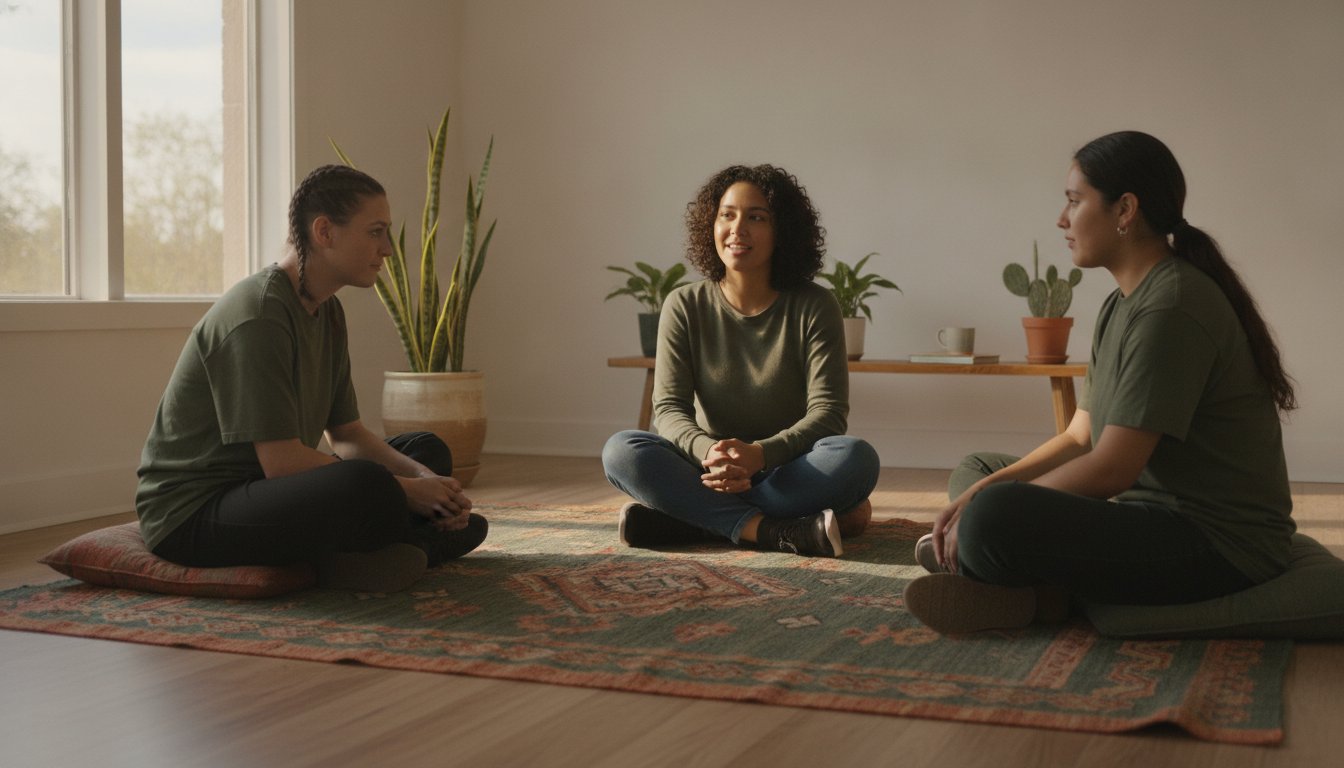
What if the persistent worry about not being "trans enough" isn't a sign that you don't belong, but rather a reflection of how beautifully diverse the non-binary experience actually is? It's natural to feel a sense of hesitation when you're searching for non-binary peer support in Tucson, especially if you've felt misunderstood by mainstream spaces in the past. We understand that finding a community where you feel seen and respected is a deeply personal process. Whether a specific group feels like a "fit" often depends on each individual's experience and what they need at that specific moment in their life.
You deserve to find a sense of belonging. This 2026 guide helps you explore the local landscape of peer-led groups and social spaces available through organizations like Fluxx and SAGA. We'll also discuss how these community connections can work alongside professional gender counseling to help you build a resilient support network in Southern Arizona. By looking at the various paths available, you can decide which environments offer the radical acceptance and shared lived experience you're seeking today. There are many ways to find your people, and your journey is entirely your own to define.
Key Takeaways
- Explore the landscape of non-binary peer support tucson to find a space where shared lived experience serves as a foundation for mutual understanding and validation.
- Learn to distinguish between peer-led circles and structured group therapy, as the choice often depends on each individual's experience and current emotional needs.
- Discover how to evaluate the atmosphere and inclusivity of local spaces to find a community environment that resonates with your unique path.
- Gain insights into navigating the vulnerability of your first meeting, acknowledging that feelings of anxiety are a valid part of the journey toward connection.
- Understand how clinical group therapy can serve as a supportive supplement for those who might prefer a more structured environment alongside informal peer groups.
Understanding Non-Binary Peer Support in Tucson
Finding a space where you feel genuinely seen involves more than just a clinical checklist. In Southern Arizona, non-binary peer support tucson is often defined by the shared lived experiences of its members rather than a formal medical diagnosis. This distinction is meaningful for many people. While clinical therapy offers structured tools, peer support provides a unique avenue for mutual validation. Whether a specific group feels helpful often depends on each individual's experience and what they hope to gain from the interaction.
Tucson has a distinct cultural rhythm that influences how these networks form. The local community often prioritizes grassroots connection over rigid hierarchies. Because identity is a fluid and personal journey, the word "support" itself remains subjective. For some, it might mean a quiet place to listen; for others, it's a vibrant social circle. Your own needs might change over time, and that's a natural part of the process.
The Role of Lived Experience in Southern Arizona
Living in the Sonoran Desert can sometimes feel geographically isolating, especially when you're exploring the nuances of gender. Connecting with other non-binary Tucsonans helps bridge that gap. These spaces offer a wealth of local knowledge that you won't find in a general search. You might hear about which local clinics have the most affirming front-desk staff or which coffee shops in the Fourth Avenue district feel safest for a weekend hangout. We view peer support as a collaborative journey where members walk alongside one another, rather than a top-down service provided by an expert. This lateral connection fosters a sense of resilience that is deeply rooted in our specific local context.
Why Non-Binary Specific Spaces Matter
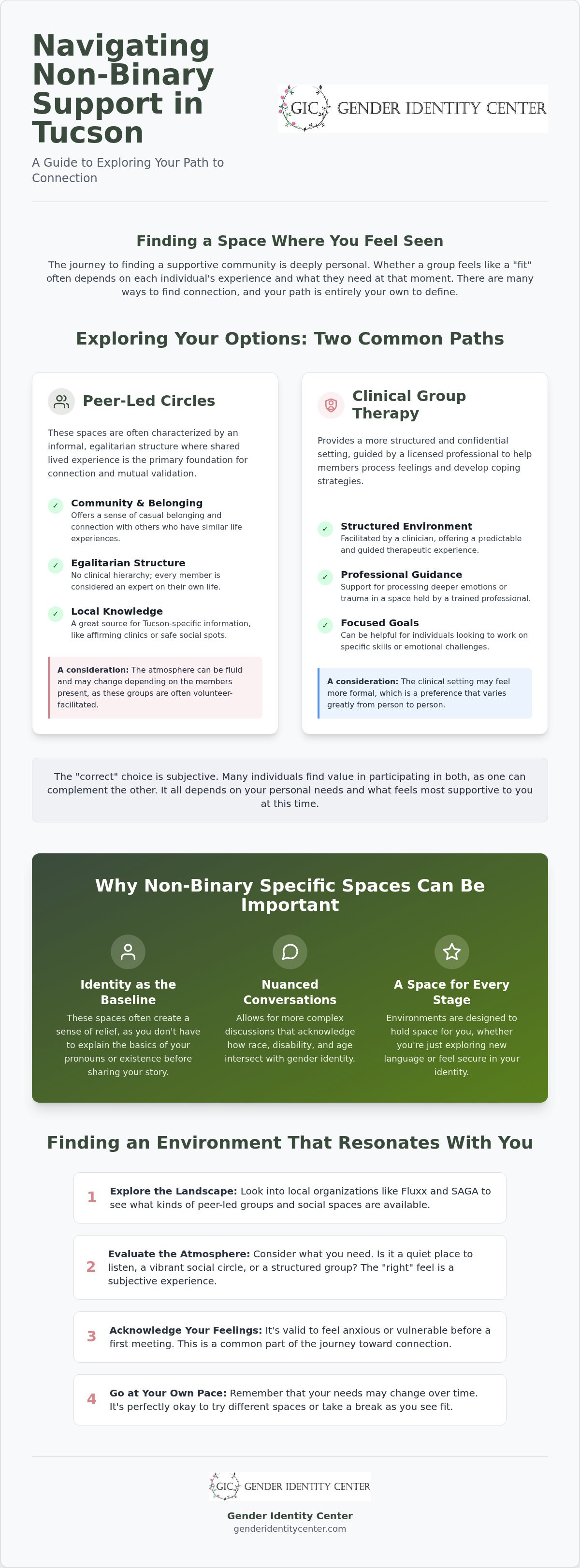
While the broader LGBTQ+ community offers many resources, non-binary specific spaces address the unique complexities of existing outside the gender binary. There is a specific kind of relief that comes when your pronouns and identity are treated as the baseline instead of the exception. This feeling of safety is highly subjective, but many find that it lowers their defenses. Seeking out non-binary peer support tucson often means looking for a community that understands the specific challenges and joys of our region. Tucson's groups frequently emphasize intersectionality, acknowledging how race, disability, and age intersect with gender. These spaces allow for a more nuanced conversation about identity, ensuring that you don't have to explain the basics of your existence before you can start sharing your story. Whether you feel "trans enough" or are just beginning to use new language for yourself, these environments are designed to hold space for every stage of your growth.
Peer Support vs. Group Therapy: Navigating Your Options
Choosing between peer-led circles and clinician-led groups is a personal decision. There isn't a "correct" choice, only the one that feels right for you right now. When exploring non-binary peer support tucson, you'll find that both peer-led groups and clinician-led therapy offer unique paths toward self-realization. Neither is inherently better than the other; instead, the choice usually depends on each individual's experience and what feels most supportive at a given time. Some people find that peer groups provide a sense of casual belonging, while others prefer the structured safety of a therapeutic environment.
Understanding your own readiness for different types of support is a subjective process. It's okay to feel that your needs shift as you move through different stages of your life. You might start in a peer group and later feel that you want to process deeper trauma with a professional. Conversely, you might use therapy to build a foundation before stepping into a larger community social circle. Flexibility is a vital part of this process, as many individuals choose to utilize both paths simultaneously to support their personal transition or exploration.
The Subjective Benefits of Peer-Led Circles
Peer-led meetings are typically characterized by an egalitarian structure. In these spaces, there isn't a clinical hierarchy; every person in the room is considered an expert on their own life. This informal nature may feel more comfortable if you've had difficult experiences with traditional medical systems. Many find that non-binary peer support tucson offers a vital sense of community that complements other forms of care. However, it's helpful to recognize that the effectiveness of these groups often relies on the current chemistry of the members present. Because these spaces are facilitated by volunteers, the "vibe" can vary from month to month, making each visit a unique experience.
When Clinician-Led Group Therapy May Be Preferred
For those navigating complex group dynamics or intense internal states, a clinician-led group provides an added layer of security. A professional facilitator is trained to maintain a secure environment, ensuring that everyone's voice is heard and that the conversation remains constructive. This structured approach can be particularly helpful when addressing specific mental health goals, such as managing gender dysphoria or processing systemic exclusion. Peer groups are wonderful for connection, but they may not always be equipped to handle deep-seated trauma in the same way a clinical setting can. If you find that you need more focused attention, accessing individual therapy alongside group work can provide a comprehensive support system. Our clinicians in Tucson are here to act as a steady hand, helping you integrate these experiences into your broader journey. If you're curious about how a more structured environment might feel, you can always explore our current group options to see what resonates with your needs today.
Finding the Right Support Space in Tucson
Finding a space that feels like home isn't always a linear process. When you're looking for non-binary peer support tucson, the "vibe" of a group is often the first thing you'll notice. Some spaces are quite formal, with specific agendas and ground rules, while others are casual social gatherings centered around a shared activity. Neither approach is objectively better; rather, the right choice often depends on each individual's experience and what they need in the moment. You might find that your goals for support shift as you grow, moving from a need for social connection to a desire for deeper emotional processing.
Diversity within a group also plays a significant role in how comfortable you feel. Tucson's community is a tapestry of different backgrounds, ages, and intersecting identities. It's helpful to consider whether a group's current makeup feels inclusive of your specific perspective. This sense of belonging is deeply subjective. What feels like a "safe space" for one person might feel restrictive to another, so we encourage you to trust your own intuition as you explore different environments. Your comfort is the primary compass here.
Questions to Ask Yourself Before Joining
Before you walk through the door, taking a moment for self-reflection can help clarify your path. We invite you to consider these questions as you evaluate your options:
- Am I looking for social connection, political advocacy, or a space for emotional processing?
- How much structure do I need to feel secure and acknowledged in a group setting?
- Does this group’s approach to gender identity align with my own subjective understanding of myself?
Answering these isn't about finding a "right" answer, but about understanding what will help you feel most seen. Your personal context is the most important factor in determining which non-binary peer support tucson will be most effective for you.
Exploring Tucson-Specific Resources
Tucson offers several hubs for connection, often centered around accessible areas like Broadway Boulevard or the downtown transit corridors. Utilizing local community centers and non-profit organizations can be a great starting point for your search. Many groups meet near familiar landmarks, making them easier to find if you're navigating the city via Sun Tran or other transit routes. For those who feel they might benefit from more specialized guidance, exploring transgender counseling in Tucson can provide a bridge between community peer support and professional mental health expertise. This local knowledge helps ensure that your support network is as resilient and multifaceted as you are.
Taking the First Step: Preparing for Your First Session
Showing up for non-binary peer support tucson for the first time is an act of quiet resilience. It requires a level of vulnerability that is both brave and entirely normal to feel anxious about. We recognize that the decision to enter a new space is a significant milestone in your gender journey. Whether you feel ready to dive in or prefer to observe from the sidelines, your presence is valid. The choice to attend is a meaningful endeavor in self-discovery, and there is no "right" way to feel as you approach the door.
The experience of "nerves" is highly subjective. For one person, it might manifest as a sense of excitement; for another, it could feel like a heavy weight of apprehension. This depends on each individual's experience and their history with community spaces. It's helpful to remember that one single meeting may not reflect the entire group experience. Groups have their own rhythms, and the atmosphere can shift based on who is in the room that day. Allowing yourself the grace to try a space more than once can be a helpful part of the process.
What a Typical Tucson Peer Circle Might Look Like
Most peer-led circles in Southern Arizona follow a gentle, predictable flow to help lower the defenses of new members. You'll often start with simple introductions and a review of community agreements. These ground rules are designed to maintain a secure environment where everyone feels acknowledged and respected. Check-ins are a common feature, allowing for a subjective expression of your current state without the pressure to perform or explain. This structure provides a sense of stability, helping you feel like you're on solid ground even when the internal work feels complex or unhurried.
Practical Tips for Your First Visit
Preparation can help you feel more in control of your experience. You might consider arriving a few minutes early to get settled or bringing a trusted friend for moral support if the group allows. In many Tucson spaces, you'll have the opportunity to share your name and pronouns, but there is no requirement to have everything "figured out" before you arrive. If you're in a period of transition with your identity, it's perfectly acceptable to share that you're still exploring. Your level of participation is entirely up to your comfort and your personal needs at the time.
- Consider your personal boundaries for sharing before you arrive.
- Remember that "passing" on a question or discussion topic is always an option.
- Focus on listening if speaking feels like too much for the first night.
If you'd like professional guidance before stepping into a community space, you can schedule an initial session with our team to explore your options and build your confidence.
Support at the Gender Identity Center
While community-led non-binary peer support tucson provides a vital sense of belonging, some individuals find they also benefit from a more structured clinical environment. At the Gender Identity Center, we view our services as a partnership. We believe you are the ultimate expert on your own life. Our role isn't to define your identity but to offer a steady, guiding hand as you explore it. This collaborative approach allows you to integrate therapeutic support with your broader involvement in the Tucson community, creating a holistic network that honors your unique progression.
The choice to seek clinical support is a personal one. It often depends on each individual's experience and what they feel is necessary for their emotional well-being at a given time. Whether you're looking for group therapy to process specific challenges or individual sessions to deepen your self-understanding, we provide a secure environment where you can feel seen and respected. We act as a bridge, helping you navigate the transitions between your internal self-discovery and your external community life.
Our Approach to Non-Binary Affirmation
Our clinicians focus on the dynamic process of self-realization. We understand that gender identity is not a static destination but a subjective journey that evolves over time. In our sessions, we prioritize your agency, ensuring every interaction is framed around your personal goals and comfort. We navigate the nuances of identity with radical acceptance, avoiding clinical coldness in favor of heartfelt support. For those who decide that medical steps are a part of their path, we provide WPATH referral letters in Arizona. We approach this process with sensitivity, recognizing these documents are often a vital tool for the future self you're working toward.
Connecting with a Tucson Therapist
Taking the next step in your journey should feel manageable and unhurried. We've made the process of scheduling an online or in-person session straightforward, allowing you to choose the format that best fits your lifestyle. When you reach out for a consultation, you can expect a calm conversation about our group therapy options and how they might complement the non-binary peer support tucson you may already be receiving. Our Tucson offices are designed to be a permanent and dependable resource. We're committed to maintaining a non-judgmental environment where the rhythm of the conversation matches your own pace. By facilitating progress rather than restricting it, we help you build the resilience needed to navigate societal challenges while maintaining the gentleness required for your internal emotional work.
Embracing Your Unique Path to Connection
Finding a community that resonates with your identity is a deeply personal endeavor. We've explored how non-binary peer support tucson provides a vital space for shared lived experience, while clinician-led environments offer a different kind of structured safety. Whether you choose a casual social circle or a more formal therapeutic group often depends on each individual's experience and their current emotional needs. There is no single "correct" way to seek support; there is only the path that feels most affirming for you today.
Our team at the Gender Identity Center is here to walk alongside you. With clinicians specializing in non-binary and gender-diverse identities, we provide a safe, confidential, and affirming environment in both Tucson and Phoenix. We believe that you are the expert on your own life, and our role is to facilitate your progress at a pace that feels right for you. If you're ready to take the next step in your journey, we invite you to explore affirming support options and schedule a session in Tucson. Your future self is waiting to be acknowledged, and we're honored to support your self-realization.
Frequently Asked Questions
Is non-binary peer support the same as therapy?
Non-binary peer support is distinct from clinical therapy because it's led by community members rather than licensed professionals. While therapy focuses on clinical goals and mental health treatment, peer support emphasizes shared lived experience and mutual validation. This depends on each individual's experience and what they need to feel safe. Some people find that peer circles offer a unique sense of belonging that complements their professional work with a therapist in a holistic way.
Are there free non-binary support groups in Tucson?
Yes, Tucson offers several free options for community connection. Organizations like Fluxx Productions and SAGA host groups like Gender Outlawz, which typically meet at no cost to participants. These volunteer-led spaces focus on social support and mutual aid. Finding non-binary peer support tucson without a financial barrier allows for greater accessibility across the community. You can often check local non-profit calendars to verify the latest meeting times and locations near you.
Can I attend a support group if I am still questioning my identity?
You're absolutely welcome to attend even if you're still exploring your identity. Questioning is a natural part of the process, and you don't need a firm label to be acknowledged. Most groups are designed to be inclusive of all stages of self-realization. Whether you choose to share your story or simply listen, your presence is valid. The subjective nature of gender means that everyone's timeline is different, and these spaces respect that diversity.
What should I do if a support group doesn’t feel like the right fit?
If a group doesn't feel right, it's okay to trust your intuition and look elsewhere. Not every space will match your personal needs or comfort level. This depends on each individual's experience and the current chemistry of the group members. You might try a different organization or return on a different night to see if the atmosphere shifts. Your journey is your own, and finding a space where you feel seen is the ultimate goal.
How do I know if I need a therapist instead of a peer group?
Choosing between a therapist and a peer group is a subjective decision based on your current needs. If you're navigating deep trauma or require WPATH referral letters, a professional clinician is likely the better fit. Peer groups are excellent for social connection but aren't equipped for clinical support. Many people find that using both services provides a well-rounded support network. We view therapy as a partnership that can strengthen your resilience in community spaces.
Are Tucson support groups inclusive of non-binary people of color?
Many Tucson organizations focus on intersectional advocacy and provide specific spaces for people of color. For example, the TGNC BIPOC Support Group offers a dedicated environment for those with intersecting identities to connect. Whether a space feels genuinely inclusive often depends on the individual's personal context and the group's current leadership. Tucson's unique cultural landscape encourages the growth of affinity groups that acknowledge the specific challenges and joys of being a non-binary person of color.
Can I find online peer support if I can’t travel within Tucson?
Online options are available for those who face barriers to physical travel within the city. Many local organizations host hybrid meetings or virtual social hours to ensure everyone can participate. This flexibility allows you to connect from a secure environment that feels comfortable for you. While the experience of digital support is subjective, it can be a vital bridge for individuals who are geographically isolated or have specific accessibility needs in Southern Arizona.
What is the best way to find a non-binary support group for youth in Tucson?
Connecting with youth-focused organizations like SAAF or local community centers is a reliable way to find age-appropriate spaces. These groups often provide a mix of social activities and discussion circles tailored for younger non-binary individuals. Finding the right non-binary peer support tucson for youth involves looking for environments that prioritize safety and mentorship. It's helpful to ask about the group's facilitator training to ensure the space is prepared to support the specific needs of younger community members.