
Therapy for Adults Coming Out Later in Life in Arizona

Coming out later in life doesn’t mean your identity is new or less real; the timing can reflect what felt safe or possible in your circumstances. Therapy for adults who come out later in life in Arizona can provide space to understand your feelings, reflect on your path, and consider what comes next. Some people begin exploring their LGBTQIA+ identity in their 30s, 40s, or later, and this depends on each individual’s experience.
You may feel relief alongside grief, uncertainty, or concern about how loved ones will respond. These feelings can be especially complex when you’re married or in a long-term relationship. There’s no single right way to understand this transition, and you don’t have to answer every question at once.
This article explores why people come out later in life, the emotional challenges that may arise, and how affirming therapy can support self-understanding and conversations with loved ones. It also looks at ways therapy can help you move forward at a pace that feels right for you.
Key Takeaways
- Coming out later can bring mixed feelings; reflecting on your own pace and experiences can help make room for self-acceptance.
- Affirming therapy can offer a supportive space to explore identity and work through stress, anxiety, depression, or trauma.
- If you’re in a long-term relationship, conversations about coming out and what may change can unfold in ways that reflect both partners’ needs.
- An Arizona therapist can tailor support to your goals, including individual, family, or group therapy, and EMDR therapy when appropriate.
What Are the Mental Health Challenges of Coming Out as an Adult?
Coming out can bring relief, uncertainty, grief, or several feelings at once. Some people first recognize or share their LGBTQIA+ identity in their 30s, 40s, 50s, or even their 60s and 70s.
Identity Exploration and Self-Acceptance
Exploration may involve noticing patterns in attraction, relationships, or how you describe yourself. You might revisit past experiences and consider whether “lesbian,” “bisexual,” “transgender,” or another identity feels meaningful now. Labels can offer language, but you don’t have to choose one before you’re ready. Notice which words feel affirming and which feel limiting.
Finding community can make exploration feel less solitary. LGBTQ social groups for adults over 40 or 50 offer opportunities to meet people with varied experiences. In Phoenix, the Later In Life Lesbian group is for people new to the LGBTQ+ community who want to explore identity and sexuality more fully. If dating feels overwhelming, you can take time to consider what connection and confidence mean to you before pursuing a relationship.
Shame, Identity Questions, and Religious Trauma
Messages from family, culture, or faith communities can shape how you view your sexual identity. If you were taught that LGBTQIA+ identities were wrong, shame may persist even as your understanding changes. Someone raised in a religious community, for example, might feel attached to spiritual practices yet unsure where they belong. These responses depend on each person’s history.
Therapy for adults who come out later in life in Arizona can help you examine these experiences without pressure to choose a label, make a decision, or leave your faith. You might explore questions such as, “What do I want to believe now?” or “Which relationships feel safe?” You deserve room to consider your answers, including uncertainty, while working through distress connected to past messages.
What does LGBTQIA+ affirming care involve?
LGBTQIA+-affirming care makes room for your gender, sexual identity, and emotional needs without judgment. Therapy can help you understand how anxiety, depression, stress, or trauma relate to your experiences, while keeping your priorities at the center.
Arizona Medicaid and private insurance coverage don’t have one answer for every plan. Benefits, provider networks, and the type of service determine what coverage applies. Plan terms are the practical place to look for those details.
Low-cost or sliding-scale options depend on the provider or program, and eligibility can vary. Ask about the fee structure and any income-based adjustments when discussing care.
Minority stress is the added strain associated with belonging to a marginalized group. Anticipating judgment at work or in family settings, for example, may affect everyday life. A therapist can help you identify specific stressors and explore responses that fit your circumstances.
Depression and anxiety may affect sleep, concentration, relationships, or the energy you have for identity exploration. If low mood lasts more than a few weeks, consider seeking professional mental health support. Therapy can help you clarify what you’re experiencing and what support might be useful.
Past emotional experiences can also affect how safe it feels to speak openly. A therapist may explore earlier rejection, family conflict, or painful experiences connected to faith without assuming one event explains everything. You can decide what feels manageable and set the pace for these conversations.
Trauma-focused therapy may address distress linked to past events, including symptoms associated with PTSD. Approaches vary, but a therapist may help you understand triggers, build emotional steadiness, and choose goals together. For example, you might discuss a memory or family interaction that brings on sudden fear.
As you consider support in Phoenix or elsewhere in Arizona, therapist profiles can help you explore clinicians’ areas of focus and find a fit for your needs.
Coming out while married or in a long-term relationship
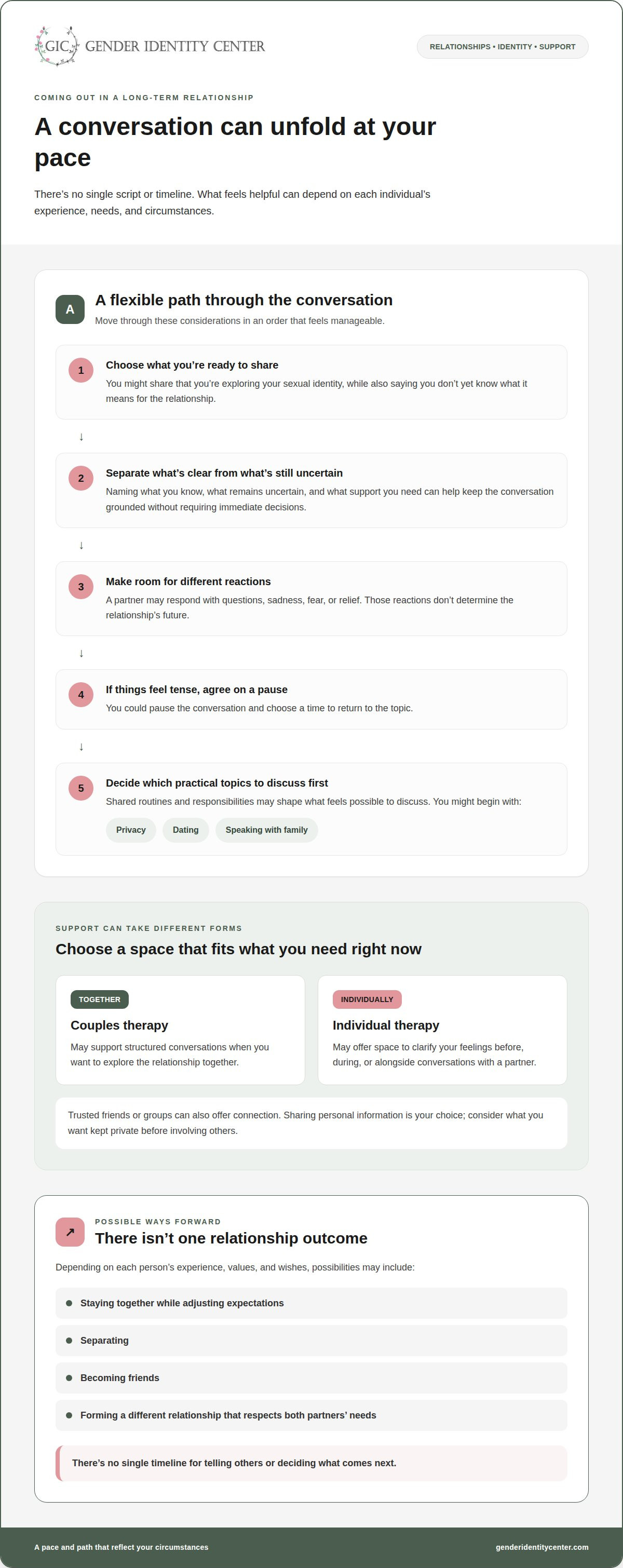
Coming out during a marriage or long-term partnership can bring new understanding and difficult questions. For some people, staying closeted was an adaptive response to their circumstances, not a deliberate choice to mislead a partner. In Arizona, partners may share routines, parenting responsibilities, finances, or community ties. These aspects of a shared life can shape what feels possible to discuss first.
A compassionate conversation can start with one clear point: what you’re ready to share now. You might explain that you’re exploring your sexual identity while acknowledging that you don’t yet know what it means for the relationship. Naming what you know, what remains uncertain, and what support you need can keep the conversation grounded without demanding immediate decisions.
Your partner may respond with questions, sadness, fear, or relief. Those reactions don’t determine the relationship’s future. Some couples stay together while adjusting expectations; others separate, become friends, or form a different relationship that respects both partners’ needs. The way forward depends on each person’s experience, values, and wishes.
When conversations become tense, agree on a pause and a time to return to the topic. You might also decide which changes need discussion first, such as privacy, dating, or how to speak with family. Couples therapy can support structured conversations, while individual therapy may be a better fit if you first need space to clarify your feelings.
Trusted friends or groups can offer connection, but sharing personal information is your choice. Consider what you want kept private before involving relatives, children, or community members. There’s no single timeline for telling others or deciding what comes next. Support can help you consider options without pushing you to stay together or separate.
How Arizona LGBTQ Therapists Support Late Coming Out
An affirming therapist can help you turn broad uncertainty into questions to explore at your own pace. In an early session, you might describe what prompted you to seek support, what feels difficult now, and what you hope will change. Your immediate goal might be understanding attraction, deciding whether to tell a friend, or managing stress during family conversations.
Therapy can connect present concerns with experiences that shaped them. A therapist may help you notice how past relationships, family expectations, or workplace dynamics affect your choices today. Together, you can identify patterns, such as avoiding honest conversations to prevent conflict, and discuss what might feel safer or more authentic. The focus is understanding your experience, not steering you toward a particular identity or decision.
Practical support may include preparing for a conversation, considering possible responses, and clarifying boundaries. If you’re thinking about telling a sibling, for example, you could explore what you want them to understand and what you’d prefer to keep private. A therapist can help you consider timing and emotional readiness without deciding for you.
Finding a therapist whose approach feels respectful can shape your experience. Notice whether the therapist listens without making assumptions about your age, gender, relationships, or past. You can discuss what language feels right, whether you want identity exploration or another concern to be the focus, and how you might review progress. Your preferences can change as your needs become clearer.
For adults seeking therapy in Arizona, support may focus on self-understanding, communication, or coping with changes in daily life. The work can shift as your priorities do. You may want space to explore privately or help discussing your identity with a partner. Your goals are a starting point, not a fixed route.
Gender Identity Center
Gender Identity Center provides affirming therapy in Phoenix and Tucson for adults exploring identity later in life, shaped around your concerns and priorities. Individual therapy offers space to reflect privately, while family therapy can include loved ones when you want that support. Group therapy offers a shared setting, and EMDR therapy may be relevant if you want to address distress connected to past experiences.
You might reach out when you’re ready to explore your identity, work through difficult feelings, or consider how coming out could affect close relationships. Start with the questions that matter most to you; you don’t need to have your path settled before seeking support.
Contact Gender Identity Center to discuss taking a next step.
Let Your Next Step Reflect Your Needs
You don’t need a complete plan before seeking support. A first step can be naming what you hope to understand, whether that’s your identity, a change in a relationship, or how to feel more at ease in daily life. Your priorities may shift as you learn more about yourself, and your path can make room for those changes.
Therapy for adults coming out later in life in Arizona can offer a place to explore those priorities with care and without pressure to reach a particular conclusion. You remain the expert on your experience, including what you share and when. If support feels like a helpful next step, you can contact Gender Identity Center to begin a conversation about your needs.
You deserve space to approach this process in a way that feels true to you. There’s no single timeline for finding greater clarity.
Frequently Asked Questions
What concerns can LGBTQIA+ mental health support help address?
Therapy can help you work through emotional distress and relationship or identity concerns. You might discuss anxiety affecting work, conflict with a family member, or uncertainty about how to describe yourself. Bring one concern at a time and identify what you’d like to understand or change. The focus can shift as your circumstances and priorities evolve.
When should you seek professional support?
Consider professional support when distress interferes with daily life or feels difficult to manage alone. If depression lasts more than a few weeks, seeking mental health support may help. You might also reach out when worry affects sleep, concentration, or important conversations. You don’t need to wait for a crisis; a specific concern is enough reason to begin.
Why is affirming mental health care important?
Affirming care can make room to discuss identity without pressure to choose a particular label or outcome. You can share which name and terms feel right, even if your preferences are changing. This keeps your perspective in view as you explore identity, relationships, culture, or faith in a way that feels right to you.
What therapy approaches help adults who come out later in life?
The approach depends on what you want help with. Individual therapy offers focused, private support; family therapy can include relatives when that suits your goals. Group therapy provides a setting to hear different perspectives, while EMDR therapy may be considered for distress connected to past experiences. A therapist can explain each approach and how it relates to the concerns you bring.
What should I expect in therapy when coming out later in life?
Expect to discuss what brought you to therapy and what you want from the process. You could begin with a practical goal, such as preparing to tell a trusted friend, or a broader question about identity. You can also say which subjects feel too personal to discuss yet. Sessions can make room for your priorities to develop rather than requiring a fixed plan from the start.
How can adults coming out later in life choose an affirming therapist and avoid conversion therapy or non-affirming counseling?
Look for a therapist who respects how you describe your identity and doesn’t treat changing it as a goal. You might ask how they support people exploring identity later in life and respond to uncertainty about labels or next steps. Their answers can help you decide whether their approach fits your needs. In Phoenix, Tucson, and elsewhere in Arizona, what feels affirming depends on your priorities and experience.