
Therapy for Transgender Youth in Tucson: Fees and Insurance

Virtual sessions can be part of therapy for transgender youth in Tucson, alongside in-person care. At Gender Identity Center, sessions are available in person in Tucson or by telehealth for clients located in Arizona. Knowing the format and payment options can help families decide what to do next.
It’s understandable to want clear answers about access, cost, and whether a therapist will affirm your young person’s identity. This guide explains what to expect from virtual sessions, how gender-affirming care letters fit into therapy, and what can affect coverage and fees. It also looks at therapists’ specialties and approaches, so you can consider which kind of support feels right for your family. Each young person’s experience is their own; care can make room for their needs, questions, and pace.
Key Takeaways
- Learn what gender-affirming care letters may document and how therapy can support transgender, non-binary, and gender-diverse youth.
- Explore how virtual and in-person therapy can offer different ways to access support in Arizona.
- Understand what can shape insurance coverage and self-pay costs, so you can plan for the practical side of care.
- Compare therapy approaches and consider whether individual, family, group, or EMDR therapy may fit your young person’s needs.
Do you write gender affirming care letters?
Arizona’s rules can affect minors’ access to gender-affirming medical interventions, while therapy can support emotional wellbeing and identity exploration. These are related but distinct forms of care. A young person’s gender identity does not need to be treated as a problem.
In the United States, access to hormone therapy or gender-affirming surgery often involves documentation from a licensed mental health professional. A care letter may describe an assessment, the person’s goals, and relevant treatment criteria. Assessments can include a biopsychosocial evaluation and review of diagnostic criteria related to gender incongruence. A letter supports communication about care; it is not itself a prescription or procedure.
Therapy for transgender youth in Tucson can include individual, family, or group sessions, alongside gender counseling. Support may address identity exploration, relationships, school experiences, or concerns such as depression and discrimination. A bisexual young person, for example, may want space to explore sexual orientation and gender separately or together. The focus depends on what the young person wants from therapy.
For a welcoming experience, look for a therapist trained to work with transgender, non-binary, and gender-diverse clients. Relevant experience may include using a young person’s stated name and pronouns, understanding varied paths of self-discovery, and making room for family questions without pressuring the youth toward a particular conclusion. LGBTQIA+-affirming care respects each person’s individual experience of gender and identity.
At a first appointment, expect conversation about what brings the young person to therapy, their goals, and what helps them feel safe. The therapist may explain privacy and family involvement, then invite the youth to share at their own pace. A parent or caregiver can ask how sessions will support the young person while respecting their voice and boundaries.
Do you offer telehealth or virtual sessions?
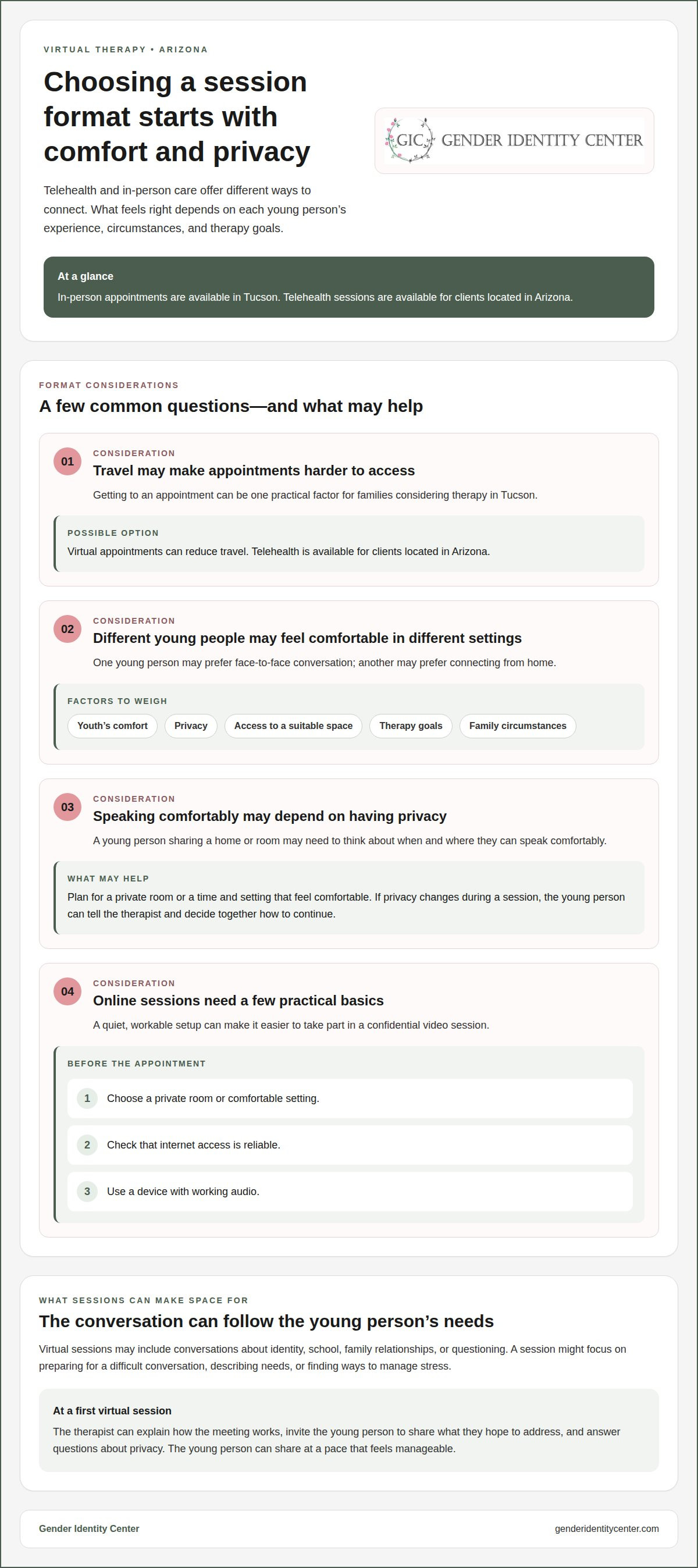
In Arizona, therapy may take place in person or through telehealth for clients located in the state. For families considering therapy for transgender youth in Tucson, virtual appointments can reduce travel, while an in-person meeting may suit a young person who prefers face-to-face conversation. The best fit depends on the youth’s comfort, privacy, access to a suitable space, and therapy goals.
Telehealth therapy for transgender youth in Tucson can make room for conversations about identity, school, family relationships, or questioning. A session might focus on preparing for a difficult conversation, describing a young person’s needs, or finding ways to manage stress. Sessions take place through a confidential video platform, and the young person can share at a pace that feels manageable.
Before an online appointment, plan for a private room, reliable internet, and a device with working audio. A young person who shares a home or room might choose a time and setting that allow them to speak comfortably. If privacy changes during a session, they can tell the therapist and decide together how to continue.
In-person care offers a different setting. A youth may find it easier to engage face to face, while another may prefer connecting from home. Comfort, accessibility, family circumstances, and the purpose of therapy can shape the choice. Families can also discuss whether individual sessions and family conversations should happen in the same format.
For a first virtual session, the therapist can explain how the meeting works, invite the young person to share what they hope to address, and answer questions about privacy. These practical details help create a steady starting point. If scheduling support is the next step, use the therapy scheduling page to begin arranging care.
Insurance coverage and self-pay fees
For families planning mental health care, the payment route can shape which affirming care feels manageable. Coverage and out-of-pocket arrangements depend on plan terms and the type of therapy.
Insurance Coverage
Gender Identity Center does not work directly with insurance companies, to protect client confidentiality. The practice provides superbills for clients to submit to their insurers, but reimbursement depends on the plan’s terms. HSA and FSA cards are also accepted. These payment details are separate from whether a therapist’s approach feels compassionate and affirming to your family.
Plan documents and member services can clarify how benefits apply to a specific service. Ask about telehealth coverage too, since session format may affect plan terms. A lesbian or transgender youth may seek therapy for emotional wellbeing, identity exploration, or family support; the clinical focus and billing category can influence how a plan processes a claim.
Insurance and Payment Filters
When comparing therapy options, consider the approach, appointment format, and payment method alongside your family’s budget. These practical factors can help guide a search, but they do not measure a therapist’s skill. Gender Identity Center offers gender-focused support in Tucson, with in-person appointments and telehealth for clients located in Arizona.
Before choosing a payment route, compare the plan’s deductible and copayment with any self-pay option. Ask the insurer how it classifies the service, whether the provider is in network, and what documents it needs. These details help members understand likely responsibility without confusing insurance approval with the quality of affirming care.
Self-pay fees are set case by case and provided after a quote request; relevant cost factors include appointment type and format. If insurance doesn’t fit your circumstances, ask about payment arrangements or financial assistance options available through your plan or community programs. The availability and eligibility rules for assistance depend on the program, so include them in your planning alongside therapy goals and session preferences.
Therapist specialties and treatment approaches
A therapist’s specialty shapes how they support a young person’s mental health. Gender-affirming work can include identity exploration, coping with stress, family communication, or the effects of trauma. For example, a youth facing discrimination at school may want help building coping strategies. Culturally inclusive care can also make room for the young person’s family, community, and values.
Some therapists focus on transgender and gender-diverse clients, while others address broader concerns alongside identity. Experience with LGBTQIA+ people can help a therapist discuss gender identity and sexual orientation without treating either as a problem. During an initial conversation, families can describe their goals, such as reducing conflict at home or managing anxiety around school.
Approaches differ in focus. Individual Therapy gives a young person space to reflect and practice skills. Family Therapy can support more open conversations between youth and caregivers. Group Therapy offers a setting for shared discussion. EMDR Therapy is another approach for working with distressing experiences; goals and pace are shaped around the therapeutic work.
A practical way to assess fit is to identify the main concern first. A youth overwhelmed by school stress may prioritize coping tools; a family struggling to communicate may value sessions together. Seeking a therapist with relevant training can help keep care focused on those goals. Ask about affirming language, confidentiality, trauma, and family participation.
Explore the therapist specialties and approaches to find support aligned with your family’s needs.
Gender Identity Center: Individual Therapy
Gender Identity Center offers Individual Therapy for transgender and gender-diverse youth in Tucson who want space to explore their experiences and goals. Sessions can focus on identity, emotional wellbeing, relationships, or other concerns the young person brings to therapy.
Family Therapy can help caregivers and youth build more supportive conversations, while Group Therapy offers a shared setting for connection. EMDR Therapy is another option for working with distressing experiences. The focus and approach depend on each person’s needs and preferences, so therapy can move at a pace that feels appropriate to them.
If your family is considering affirming mental health support in Tucson, contact Gender Identity Center to discuss therapy options and take the next step.
Choose a Next Step That Feels Right
Finding therapy for transgender youth in Tucson can be a gradual process. Start by naming what your young person hopes to feel or work through, then consider what kind of support may fit. Their priorities can change over time, and the path forward can reflect their own pace and perspective.
Gender Identity Center offers Individual Therapy, Family Therapy, and Group Therapy. These options can create different spaces for personal reflection, family conversations, or connection with others. If you’re ready to explore support, contact Gender Identity Center and share what your family is looking for. You don’t need to have every question answered before reaching out; a first conversation can help you consider a next step with care and intention.
Frequently Asked Questions
Do you see couples or families?
Yes, Family Therapy is available, and Couples Therapy supports LGBTQ+ couples. Family sessions can help caregivers and young people talk through communication, support, or changes in their relationships. For example, a family might practice listening without trying to settle every question in one conversation. The focus can reflect what each person hopes to understand or work on together.
Do you take insurance?
Gender Identity Center does not bill insurance directly or work directly with insurance companies, to protect client confidentiality. The practice provides a superbill, which you may submit to your insurer to ask about possible reimbursement. Coverage and reimbursement depend on your plan’s terms. HSA and FSA cards are accepted.
How can I recognize a good therapist for working with gender-diverse clients?
Look for a therapist who respects the young person’s stated name, pronouns, and language for their identity. Notice whether the therapist listens without assuming a label or directing the youth toward a particular outcome. Consider whether they can discuss practical concerns, such as school stress or family communication, with care and respect for the young person’s perspective.
How might I inquire about a therapist’s experience working with transgender clients?
You can ask how the therapist’s work with transgender and non-binary clients informs their approach. For example, ask how they support a young person who is questioning or include caregivers while respecting the youth’s privacy. Their response can help you understand their experience, training, and openness to feedback. The young person can also share what helps them feel heard.
Still Have Questions?
If you still have questions, contact Gender Identity Center and describe what you’re trying to understand. You might ask how therapy is structured, what information is private, or which type of session may fit your family’s goals. You don’t need to have everything figured out before reaching out. A conversation can help clarify what you’d like to explore next.
What if I cannot find a therapist who shares my gender identity?
A therapist doesn’t need to share your gender identity to offer respectful support. Their ability to listen, learn your language, and take your experiences seriously can matter more than identity matching alone. You can discuss what feels important in therapy, correct assumptions, and notice how the therapist responds. If you feel dismissed or pressured, that reaction can help you consider what support would feel safer.