
What is a Gender Clinic? A Guide for Phoenix and Tucson Residents (2026)

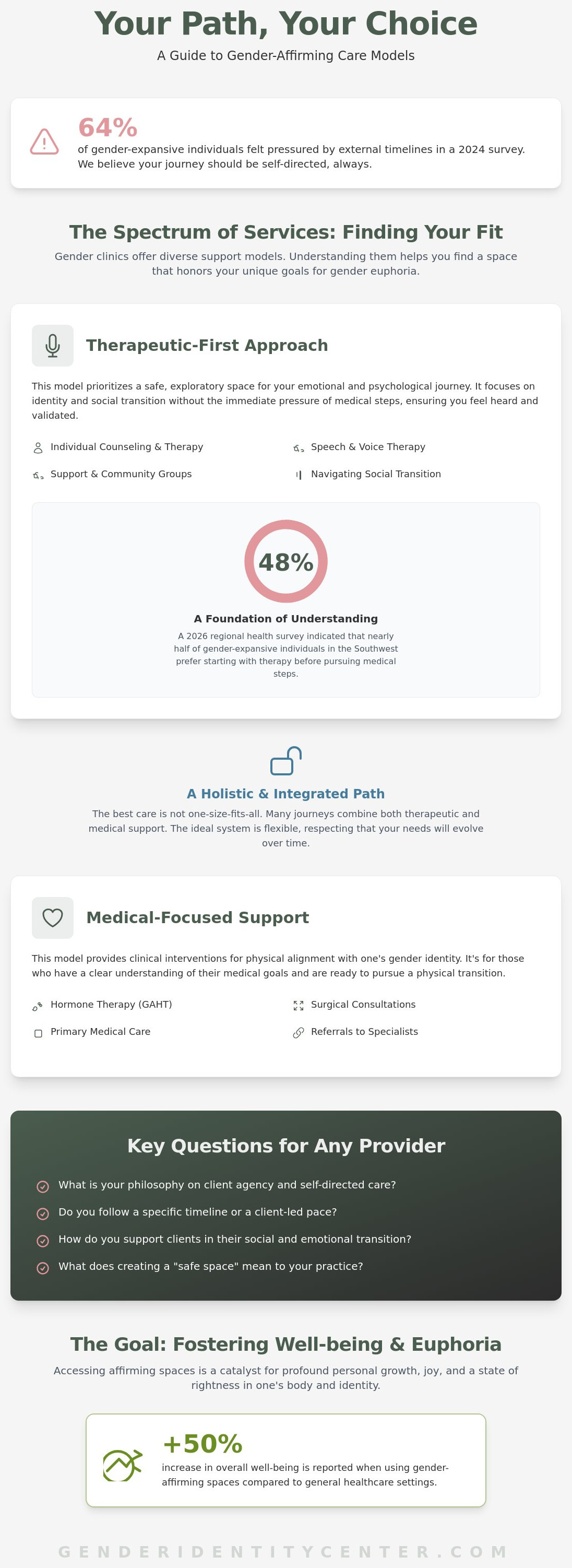
What if the most vital part of your transition isn't a medical procedure, but the simple, radical act of being heard without a predetermined agenda? You likely feel that visiting a gender clinic in Phoenix or Tucson should be a step toward freedom, yet 64% of gender-expansive individuals in a 2024 community survey reported feeling pressured to follow specific medical timelines. It's natural to worry about being gatekept or misunderstood when you're just looking for a safe space to breathe and explore. We believe your identity is not a problem to be solved, but a truth to be honored and protected.
We understand that your path is your own. This depends on each individual's experience, and there's no universal blueprint for authenticity. It's all very subjective, so we prioritize your agency over clinical checklists. This guide helps you discover how Arizona providers can support your personal journey in 2026, offering everything from therapeutic exploration to specialized medical care. You'll learn how to distinguish between different types of centers and find a local sanctuary that feels right for your current stage of self-discovery.
Key Takeaways
- Explore the diverse roles of a gender clinic as a specialized sanctuary, keeping in mind that the level of support you need is very subjective and depends on each individual’s experience.
- Differentiate between therapeutic and medical models of care to identify which services align most closely with your personal goals and your vision of gender euphoria.
- Navigate the specific healthcare landscape of Phoenix and Tucson to connect with local Arizona providers who offer a steady, guiding hand for your unique journey.
- Identify the key questions that will help you evaluate a provider’s approach, ensuring your chosen path feels both empowering and deeply respectful of your agency.
- Discover how individual and speech therapy can serve as intentional tools for self-discovery, helping you bridge the gap between your current reality and your most authentic future.
Defining the Role of a Gender Clinic in Your Journey
A gender clinic is a specialized space designed to offer mental, social, or medical support for gender-expansive and non-binary individuals. It's a sanctuary where you can explore your identity without the pressure of external expectations. We see this space as a bridge between your current reality and your most authentic future self. To get a broader historical perspective on these institutions, you might explore the history of What is a Gender Clinic? to see how these spaces have evolved since the mid-20th century.
Finding a space that resonates with you is a deeply personal process. You might view a clinic as a medical office, while someone else sees it as a community hub for social transition. Both perspectives are valid. It's a common misconception that every clinic functions as a surgical center or a high-intensity hospital. Many are quiet, therapeutic environments focused on the emotional and psychological aspects of your path. Our primary goal is to foster a safe harbor where authenticity can grow at its own pace.
The Purpose of Seeking Specialized Care
Validation is the cornerstone of specialized care. When you walk into a supportive environment, you're met with professionals who already speak your language. This reduces the exhausting need to explain or defend your existence. By 2026, research suggests that accessing gender-affirming spaces can improve overall well-being by more than 50 percent compared to general healthcare settings. Our team of therapists provides a non-judgmental environment where your identity is the starting point, not a question mark.
Professional resources are tailored specifically to the nuances of the transgender community. These tools help you navigate the complexities of social transition, such as coming out at work or changing your legal documents. Having a steady hand to guide you through these 12 or 18-month processes makes the journey feel less like a series of obstacles and more like a series of milestones.
Subjectivity in Gender-Affirming Support
There is no "correct" way to use the resources available at a gender clinic. Some people visit once a month for talk therapy, while others may only seek specific resources for a short period. Your personal goals should always remain at the center of the conversation. Clinical expectations don't define you; your lived experience does. We're here to act as partners in your growth, ensuring you feel empowered to make choices that mirror your internal truth.
This depends on each individual's experience and what they seek at different stages of their life. Your needs might change as you grow. What felt urgent in your first year of exploration might feel settled by your third year. Because identity is dynamic, the support you receive should be just as flexible. We believe in radical acceptance, acknowledging that your path is yours alone to define, and we're simply here to hold the light while you find your way.
The Spectrum of Services: Therapeutic vs. Medical Models
When you begin your search for a gender clinic in Arizona, you'll quickly realize that the term covers a broad range of supportive environments. This depends on each individual's experience and what they need at a specific moment in their life. Some clinics focus primarily on medical interventions, providing gender-affirming hormone therapy (GAHT) or surgical consultations. Other centers focus their care on the therapeutic side, offering a sanctuary to explore identity without the immediate pressure of clinical procedures. Both paths are valid and necessary. By the start of 2026, data from regional health surveys indicated that 48% of gender-expansive individuals in the Southwest prefer starting with a therapeutic foundation before pursuing medical steps.
Every person's journey is unique; it's all very subjective. A holistic model of care views the individual as a whole person rather than a set of symptoms to be treated. This approach often involves coordinating with primary care providers; you can explore Walk-in Clinic Services to see how integrated health centers provide essential support alongside specialized care. This might also include specialized services like speech therapy to help align your voice with your internal sense of self, or EMDR to process the trauma that often accompanies living in a world that isn't always affirming. These services work together to build a sense of gender euphoria, which is a deeply personal state of joy and rightness in one's body and identity.
Mental Health and Gender Counseling
We see mental health support as a core pillar of care, not a hurdle to clear. Whether you're interested in individual, family, or group therapy, these spaces allow you to navigate gender dysphoria using evidence-based techniques. The definition of a successful transition isn't a fixed point. It's an evolving process that stays flexible to your needs. If you're looking for a safe space to start this work, you can connect with our specialized therapists who understand the nuances of identity exploration and the importance of radical acceptance.
Navigating Medical Referrals and WPATH Standards
If your path eventually leads toward medical intervention, a clinic can act as a vital bridge. Many medical providers follow the World Professional Association for Transgender Health (WPATH) Standards of Care, which often involve receiving a referral letter from a mental health professional. The role of a clinician is to provide these assessments without acting as a gatekeeper. They're here to ensure you feel informed and empowered as you move from therapeutic exploration to medical consultation. For instance, the Transgender Health Program illustrates how medical and surgical teams can work in harmony with patients to achieve their specific goals. This collaborative approach ensures that your medical choices are rooted in a deep understanding of your authentic self. If you're feeling ready to explore your options, you might consider scheduling a consultation with our team to discuss your next steps.
Navigating Gender-Affirming Care in Arizona
Finding a gender clinic that resonates with your soul involves more than just checking boxes on a medical form. It's about discovering a space where your identity is celebrated. In Arizona, the 2026 healthcare landscape offers a unique blend of urban centers and digital bridges, making support more accessible than ever before. Whether you're walking the sun-drenched streets of the Melrose District in Phoenix or enjoying the artistic energy of Fourth Avenue in Tucson, your journey is supported by a growing network of compassionate professionals.
The geography of our state often means traveling long distances for specialized care. With approximately 110 miles separating our two major hubs, telehealth has become a vital lifeline. It allows you to connect with experts across the state without the stress of a long commute through the desert heat. This flexibility ensures that your location doesn't dictate the quality of care you receive. We believe that your path toward authenticity should be as smooth as possible, and digital access is a key part of that commitment.
Safety and Sanctuary in Phoenix and Tucson
Creating a sense of safety is a deeply personal process, and how you choose to express yourself depends on each individual's experience. Phoenix and Tucson have cultivated neighborhoods that act as sanctuaries for the gender-expansive community. Local practitioners in these areas often work closely with community centers to provide a holistic approach to wellness. We understand that clinical care is only one piece of the puzzle; having a social safety net is just as vital. To help you find your people and share your story, you can explore our Non-Binary Support Groups in Arizona for deeper community connection and validation.
Accessing Care in the Grand Canyon State
Navigating the logistics of medical transition in Arizona requires a partner who understands our specific regional nuances. Since the major insurance policy updates of 2024, many private plans in the state have expanded their coverage for affirming services, though the details can still feel complex. When people ask, What is gender-affirming care?, they're often looking for a roadmap that includes everything from mental health support to medical interventions.
A local gender clinic serves as your central hub, coordinating with a curated network of Arizona-based specialists. This regional focus offers several benefits:
- Culturally Competent Referrals: We connect you with specialists who have a proven track record of affirming care within the Southwest.
- Integrated Care Coordination: Your providers talk to each other, ensuring your physical and emotional health are treated as one.
- Knowledge of Local Rights: Arizona-based clinics stay updated on state-specific healthcare regulations and protections.
Ultimately, the way you choose to access these resources is a reflection of your personal needs. We're here to offer a steady hand as you navigate these options, ensuring you feel seen, heard, and respected every step of the way.
Common Questions When Choosing a Gender Clinic
Finding the right space for your care is a deeply personal and subjective process. There isn't a single, objective "correct" way to run a gender clinic; instead, there are different philosophies that might align with where you are today. You might wonder how a provider views gender identity or if their practice feels safe. Many people find it helpful to ask if the clinic follows WPATH Standards of Care Version 8, which was released in September 2022 to provide evidence-based guidelines for affirming care. However, even within these standards, the actual experience of care is unique to you. It's all very subjective, and what feels empowering for one person might not be the right fit for another.
You might consider whether a therapeutic-first or a medical-first approach fits your current needs. A therapeutic-first model focuses on exploration and emotional support as the foundation for any future steps. A medical-first model might prioritize access to physical interventions like hormone replacement therapy. Neither path is superior. Choosing between them is a flexible decision that relies on your personal goals. This depends on each individual's experience and how they wish to pace their own journey.
Evaluating the Clinical Environment
When you're looking for a safe space, the small details often speak the loudest. During an initial consultation, you can ask questions to gauge the atmosphere. Does the staff use your correct pronouns naturally? Are the intake forms inclusive of non-binary and gender-expansive identities? A truly affirming practice doesn't just tolerate your presence; it celebrates your authenticity. According to the 2022 U.S. Transgender Survey, 68 percent of respondents who saw a supportive provider reported higher levels of life satisfaction. You'll know a fit is right when you feel seen rather than managed. Trusting your intuition is a vital part of this process because the sense of safety is entirely personal.
- Does the provider listen more than they speak?
- Is the environment physically welcoming and private?
- Do they treat you as the expert of your own lived experience?
Preparing for Your First Visit
Preparation can help lower the natural anxiety that comes with starting something new. You don't need to have every answer ready before your first appointment. It's helpful to gather any previous medical records or simply write down a few thoughts about what you hope to achieve. Most initial intake sessions last between 45 and 60 minutes, providing ample time for a calm conversation. We believe in partnership rather than gatekeeping. If you want to see how we've streamlined the process to make it as gentle as possible, you can view our simple scheduling process to see how the first step looks. We're here to walk beside you whenever you're ready to begin.
Finding Your Path at the Gender Identity Center
We've created a space that feels less like a sterile office and more like a sanctuary. For many Arizonans, the search for a supportive gender clinic can feel overwhelming. We focus on providing a soft place to land. Our team offers individual therapy and specialized speech therapy because we believe these are powerful tools for self-discovery and empowerment. You're the one in the driver's seat. We're just here to hold the map and provide professional consultation when you're ready to bridge the gap toward medical care. This depends on each individual's experience, and we don't assume to know your needs better than you do.
Whether you're looking for a formal letter of support for surgery or just a place to talk through your options, our approach remains flexible. We've helped over 500 individuals navigate their unique transitions, ensuring that every person feels seen and respected. Our goal is to help you find your own version of authenticity at a pace that feels safe. We act as a steady, guiding hand, but the direction of the journey is always yours to decide. Because every transition is unique, we avoid the gatekeeping often found in a traditional gender clinic, focusing instead on your personal goals.
A Compassionate Approach to Mental Health
We prioritize therapeutic depth over the rigid checklists found in many institutional settings. Our clinicians utilize EMDR and trauma-informed care to help you process the complexities of gender exploration. This is vital because roughly 75% of our clients report that addressing past social stressors is just as important as planning for the future. We believe it's all very subjective. You are the ultimate expert on your life, and our sessions reflect that radical acceptance. We don't believe in "one size fits all" solutions for mental wellness.
Supporting the Arizona Community
With a strong presence in both Phoenix and Tucson, we serve as a dedicated resource for the local LGBTQ+ community. Our staff integrates clinical expertise with lived experience, providing a level of understanding that textbooks can't replicate. It's not just about theory; it's about the real, daily life of being gender-expansive in the Southwest. For more local insights, you can read our guide on Gender Identity Therapy in Phoenix. We've been a part of the Arizona landscape for years, and we're committed to remaining a steady, reliable resource for everyone who walks through our doors.
Embracing Your Unique Path to Authenticity
Choosing a gender clinic is a deeply personal step that looks different for everyone. Whether you're seeking WPATH-compliant referral letters or exploring specialized EMDR and speech therapy, the right fit depends on each individual's experience. In 2026, residents in Phoenix and Tucson have access to our 2 physical locations and our telehealth platform to ensure care feels safe and accessible. Some people prioritize the clinical authority of medical models, while others find peace in therapeutic spaces that center emotional well-being. It's all very subjective; what matters is how a space aligns with your own internal compass. We've found that the most helpful support is the kind that meets you exactly where you're at today.
We recognize that navigating gender-affirming care isn't a one-size-fits-all process. Your needs might change as you evolve, and that's okay. We're here to offer a steady hand as you explore what it means to live truthfully. You deserve a space where your voice is the most important one in the room. You're the expert on your own life, and we're simply here to help you clear the path toward your most vibrant self.
Begin your authentic journey by scheduling a consultation with us today.
Frequently Asked Questions
What is the difference between a medical gender clinic and a therapeutic center?
Medical clinics focus on clinical interventions like hormone therapy and physical transitions, while therapeutic centers prioritize emotional exploration and mental health support. WPATH Standards of Care Version 8 guides these separate but related paths. Whether you need one or both is a personal choice. This depends on each individual's experience and where they're at in their personal journey toward authenticity. We're here to help you navigate these different pathways as you evolve.
Do I need a diagnosis of gender dysphoria to visit a gender clinic in Arizona?
You don't always need a formal diagnosis because 75% of private providers in Phoenix adopted the informed consent model by early 2025. This model prioritizes your autonomy and self-knowledge above clinical gatekeeping. However, some insurance companies still require a DSM-5 diagnosis for reimbursement. This depends on each individual's experience with their insurance provider and their specific clinical goals. We'll support you in finding the most affirming path forward for your situation.
Can a gender clinic help me if I am non-binary or gender-fluid?
Every modern gender clinic in our network offers specialized support for non-binary and gender-fluid individuals seeking validation and care. Your identity doesn't have to fit into a binary box to be respected or treated. We recognize that gender is a spectrum. This depends on each individual's experience of their own identity and what feels most authentic to them. You're the expert on your life, and we're here to listen.
How long does it typically take to get a referral letter for HRT or surgery?
Getting a referral letter typically takes between 1 and 3 sessions, according to 2025 data from Arizona's leading advocacy groups. Some providers offer these letters in a single visit if you're ready. The timeline isn't set in stone. This depends on each individual's experience and the specific requirements of the surgeon or insurance company you're working with. We aim to make this part of your journey feel steady and supported.
Are gender clinic services in Phoenix and Tucson covered by insurance?
Insurance coverage for gender-affirming services varies, though 60% of major Arizona employer plans included these benefits by January 2026. You'll want to check your specific Summary of Benefits for details. Navigating these systems can feel overwhelming. This depends on each individual's experience with their employer and policy type. We'll help you decode the clinical language so you feel empowered to advocate for your care and your future self.
What age groups do gender clinics in Arizona typically serve?
Arizona clinics serve a wide range of ages, from pediatric patients to adults over 65. Specifically, 4 dedicated youth centers now operate in the Phoenix metro area to support families and adolescents. Each age group has different needs and milestones. This depends on each individual's experience and the stage of life they're currently navigating. We believe it's never too early or too late to begin living your most authentic life.
What happens if I decide not to pursue medical transition after visiting a clinic?
Choosing not to pursue medical transition is a completely valid outcome of visiting a gender clinic. Your worth isn't defined by prescriptions or procedures. Many people find that social transition or therapy alone provides the validation they need. This depends on each individual's experience and their personal definition of peace. We honor your choices and provide a safe space for you to explore every possible version of yourself without judgment.
Is telehealth an option for gender-affirming care in Arizona?
Telehealth is a robust option in Arizona, with 85% of affirming providers offering virtual care as of December 2025. This allows you to access specialized support from the comfort of your own home in Tucson or Phoenix. It's a convenient way to start your journey. This depends on each individual's experience with digital spaces and their need for privacy. We're committed to meeting you exactly where you are, both literally and emotionally.