
Blue Cross Blue Shield and Transgender Therapy in Tucson: A Coverage Guide

What if the first step toward transgender-affirming therapy in Tucson is separating two questions: what your plan may cover, and what kind of support feels right for you? If you’re looking into blue cross blue shield transgender therapy tucson, uncertainty about network status, behavioral health benefits, and possible out-of-pocket costs can make it harder to know where to begin. Wanting care where your identity is respected, without having to explain or defend it, matters too.
Coverage depends on the details of your individual Blue Cross Blue Shield plan, so one person’s experience may not predict yours. Before scheduling, it can help to review your plan’s behavioral health benefits, provider network information, deductible, copayment, and any relevant exclusions. These details can offer a clearer picture of possible costs, though they don’t guarantee a particular coverage outcome.
This guide will help you identify which plan details to look for and how to compare potential out-of-pocket responsibilities. It will also introduce gender-affirming individual therapy in Tucson, including telehealth as another possible path. Your goals and preferences are yours to define, and the next step can be one that feels comfortable for you.
Key Takeaways
- Blue Cross Blue Shield plan names don’t determine whether transgender-affirming therapy is covered or whether a provider is in network; your specific plan details matter.
- Review your deductible, copayment, coinsurance, and out-of-pocket maximum to better understand possible costs.
- Use a comparison table to track network status, telehealth benefits, authorization requirements, and details that still need clarification.
- For blue cross blue shield transgender therapy tucson coverage questions, use your insurer’s member portal or member-services channel to seek plan-specific answers and record what you learn.
- The Gender Identity Center offers individual therapy and gender-focused counseling in Tucson, as well as telehealth for Arizona residents; the right setting depends on your preferences and circumstances.
What Blue Cross Blue Shield transgender therapy coverage can mean in Tucson
Transgender-affirming therapy is mental health support shaped around your goals, identity, and circumstances. It may offer a space to explore questions, work through stress, or focus on relationships and wellbeing. The process doesn’t require you to pursue a particular transition or arrive with a fixed outcome in mind. Your priorities can guide the conversation, and the focus may shift over time.
For blue cross blue shield transgender therapy tucson, the plan name alone can’t establish whether a specific service is covered or whether a particular therapist is in network. Blue Cross Blue Shield plans can have different benefit terms, and coverage may depend on your plan, the provider, the service, and any applicable requirements. A general behavioral health benefit is useful context, but it isn’t confirmation that a specific claim will be paid.
Does Blue Cross Blue Shield cover transgender therapy?
There isn’t one answer that applies to every plan. Your plan documents or insurer can provide details about behavioral health benefits, but an overall benefit category doesn’t necessarily explain how a particular therapy service will be handled. Coverage, network status, and your share of costs each depend on the terms of your individual plan.
It can also help to distinguish therapy benefits from coverage rules for other forms of gender-affirming care. A plan may treat mental health services differently from medical or surgical services. Information about one type of care shouldn’t be taken as confirmation of coverage for another.
What counts as transgender-affirming individual therapy?
Individual therapy can be collaborative support, with goals set according to what matters to you. You might explore your identity, talk through stress, consider relationships, or focus on emotional wellbeing. You don’t need to justify your identity or choose a particular path before beginning. The pace and subject matter depend on each person’s experience.
Some resources discuss gender dysphoria as one concept related to gender-related distress. The Gender Dysphoria overview offers background on the term, but it doesn’t define every transgender person’s experience or determine an insurance benefit. Whether a plan uses specific clinical language or criteria is something to review in that plan’s own terms.
Benefits, costs, and experiences vary by individual plan and circumstance. A careful review can help you separate what your plan says about behavioral health from what remains uncertain for a specific service or provider. That distinction can make the next step clearer while leaving room for your own needs and preferences.
Which Blue Cross Blue Shield benefit details should you review?
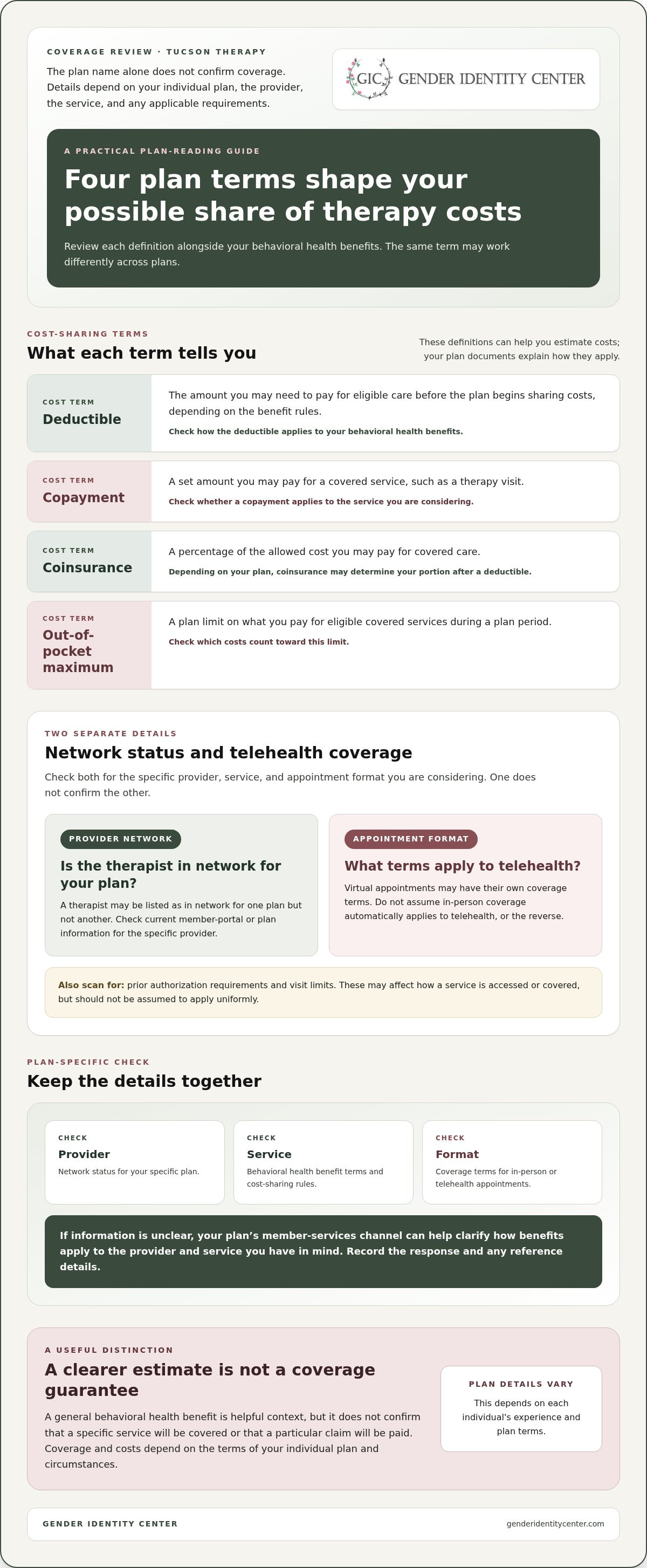
Once you’ve located your plan information, focus on how it describes outpatient behavioral health services. These terms can help you estimate your share of costs, but their effect depends on your plan and whether care is considered in network. The same benefit may work differently across plans, so read each definition alongside your own coverage details.
Deductible: The amount you may need to pay for eligible care before the plan begins sharing costs, depending on the benefit rules.
Copayment: A set amount you may pay for a covered service, such as a therapy visit.
Coinsurance: A percentage of the allowed cost you may pay for covered care.
Out-of-pocket maximum: A plan limit on what you pay for eligible covered services during a plan period. Check which costs count toward it.
How do deductibles, copayments, and coinsurance affect therapy?
A copayment may apply to a visit, or your plan may require you to meet a deductible before it contributes to eligible costs. After that, coinsurance may determine the portion you pay. Some plans use different cost-sharing rules for different services or network categories. The plan documents are the best place to see how these terms apply to your behavioral health benefits.
Also look for plan-specific details about prior authorization or visit limits. These may affect how a service is accessed or covered, but they shouldn’t be assumed to apply uniformly. For blue cross blue shield transgender therapy tucson, understanding the terms is a useful starting point, not confirmation of payment for a particular claim.
How can you understand network status and telehealth benefits?
Network status and telehealth coverage are separate details. A therapist may be listed as in network for one plan but not another, while virtual appointments may have their own coverage terms. Review your insurer’s current member portal or plan materials for the specific provider, service type, and appointment format you’re considering. Don’t assume that in-person coverage automatically applies to telehealth, or the reverse.
As you review, note the provider’s network status, the applicable cost-sharing terms, and any authorization or visit-limit language. If information is unclear, use your plan’s member-services channel to ask how the benefit applies to the service and provider you have in mind. Record the response and any reference details so you can compare information consistently.
If you’re also considering what affirming support could look like, you can explore the therapists and individual therapy options offered by the Gender Identity Center. Coverage and network status remain specific to your plan.
How to compare your coverage options before choosing Tucson therapy
A side-by-side comparison can help you see what your plan says and what still needs clarification. Keep confirmed details separate from open questions. An insurance label alone can’t establish your final cost: your responsibility may depend on plan terms, network status, and how a specific service is processed.
Use this comparison as a starting point:
| Plan detail | Confirmed information | Question to resolve |
|---|---|---|
| Network status | Provider listing and network category shown for your specific plan | Does the listing apply to this plan and service? |
| Deductible | Amount remaining, if shown in your benefits | Does the deductible apply to outpatient therapy? |
| Copayment | Visit copayment stated in the plan materials | Does it apply before or after meeting the deductible? |
| Authorization | Any stated prior-authorization requirement | Does it apply to the service you’re considering? |
| Telehealth | Virtual-care terms in your plan documents | Are the network and cost-sharing rules the same as for in-person visits? |
In-network versus out-of-network benefits: what is the difference?
These labels describe how a plan processes care, not the quality of therapy. In-network services may follow different cost-sharing rules from out-of-network services. Out-of-network benefits, if available under your plan, may involve different reimbursement terms or member responsibility. The details depend on your plan, the provider, and the service, so don’t assume a particular clinician’s status or reimbursement eligibility.
How can Tucson residents balance coverage and personal fit?
Coverage is one consideration, alongside whether you feel acknowledged, the therapy’s focus, appointment format, and practical access. You might compare a plan’s potential costs with your preference for in-person care or telehealth, and consider what would help you feel comfortable discussing identity, stress, or relationships. There’s no single combination that suits everyone; this depends on each individual’s experience and priorities.
For blue cross blue shield transgender therapy tucson, a comparison can clarify what you know without forcing a decision before you’re ready. You can also explore the Gender Identity Center’s therapists and counseling options as you consider what kind of affirming support may feel like a fit. Coverage and provider network status remain specific to your plan.
How to verify Blue Cross Blue Shield therapy benefits step by step
A short, organized benefits check can help you move from general plan information to details that may apply to the therapy you’re considering. Your insurer’s member portal or member-services channel can provide plan-specific answers. Keep in mind that a benefits response is an estimate of how the plan may handle care, not a guarantee that a future claim will be paid.
- Locate your current plan details. Use your member card or portal to note the exact plan name and coverage period. If you have more than one plan document, make sure you’re reviewing the one that applies now.
- Describe the service and provider clearly. Write down that you’re asking about outpatient individual mental health therapy, along with the clinician’s name and other identifying details available to you. Include whether you’re considering in-person or telehealth sessions.
- Review the plan materials. Look for behavioral health benefits, network information, cost-sharing terms, and any language about prior authorization or visit limits. Treat the documents as a starting point for questions, since wording and benefits can differ by plan.
- Contact the insurer for plan-specific answers. Use the member portal or member-services channel to clarify how your plan handles the service and provider you described.
- Record what you learn. Note the date, the response, and any reference number provided. Keep confirmed details separate from anything the representative couldn’t resolve.
Which questions can help clarify your plan?
Clear, specific questions can make the conversation easier to follow. You might ask: “How does my plan classify outpatient individual mental health therapy?” “How does this provider’s network status affect my costs and claim processing?” “Do telehealth appointments follow the same terms?” You can also ask whether authorization or visit limits apply to your plan and service.
For blue cross blue shield transgender therapy tucson, record the answers separately under service category, network status, deductible or other cost-sharing, telehealth, and authorization. If an answer is unclear, note that as unresolved rather than treating an assumption as confirmed. Benefits information may help you plan, but final claim processing can depend on the plan’s terms and the details submitted.
Once you’ve reviewed your benefits, you can consider what kind of affirming support may fit your goals and preferences. Explore individual therapy scheduling options with the Gender Identity Center as one possible next step.
Explore individual transgender therapy in Tucson at your own pace
After reviewing plan details, you can consider what kind of support feels useful to you. The Gender Identity Center provides individual therapy and gender-focused counseling for transgender and gender-diverse people in Tucson. Therapy can be a space to explore your identity, talk through stress, reflect on relationships, or focus on emotional wellbeing. You set the direction together with your therapist; there’s no required outcome or single transition pathway.
What can individual therapy support?
Your goals may be clear from the start, or they may take shape over time. You might want room to consider questions about identity, build ways to manage stress, strengthen relationships, or talk through changes in your life. The focus and pace depend on each person’s experience. If you’re learning about affirming support in the area, you can also read our guide to transgender therapy and counseling options.
The Gender Identity Center also offers telehealth for Arizona residents. For some people, meeting remotely may suit their preferences or practical circumstances; others may prefer in-person care in Tucson. Neither format is right for everyone, and your choice can depend on what helps you feel comfortable and supported.
How can you take a next step that feels right?
You don’t have to make every decision at once. You might start by exploring therapist information and considering what you’d like support with, what appointment format you prefer, and what you learned from your benefits review. If you’re still sorting through coverage questions, it’s reasonable to take time to clarify them before deciding what comes next.
For blue cross blue shield transgender therapy tucson, plan benefits and network details remain individual, just as therapy goals and preferences do. Exploring care doesn’t guarantee a particular insurance outcome, but it can help you identify the questions that matter to you. When you feel ready, view individual therapy scheduling options. You can move at a pace that feels right for you.
Take Your Next Step Toward Affirming Support
Your Blue Cross Blue Shield plan details can help clarify behavioral health benefits, network terms, and possible out-of-pocket responsibility, but they don’t guarantee how a specific claim will be handled. For blue cross blue shield transgender therapy tucson, checking your own plan information can help you make a more informed decision while leaving space for what feels personally right.
Individual therapy can be shaped around your goals, whether you want to explore identity, work through stress, or focus on relationships and wellbeing. The Gender Identity Center provides individual therapy and gender-focused counseling in Tucson, with telehealth as another option for Arizona residents. The right format and pace depend on your needs and preferences.
If you’d like to explore affirming therapy and support, learn about your options with the Gender Identity Center. You can take the next step when you feel ready, at a pace that respects your experience.
Frequently Asked Questions
Does Blue Cross Blue Shield cover transgender therapy in Tucson?
Coverage can vary by plan, provider, service, and benefit terms. For blue cross blue shield transgender therapy tucson coverage, review your specific plan’s behavioral health benefits, network rules, cost-sharing, and any exclusions or authorization requirements. A general mental health benefit doesn’t confirm that a particular service or claim will be covered. Your insurer’s member portal or member-services channel can provide plan-specific information, though a benefits response isn’t a guarantee of payment.
Is transgender therapy considered mental health therapy by Blue Cross Blue Shield?
Some plans may classify individual transgender-affirming therapy under outpatient mental health benefits, but terminology and coverage rules can differ. Review your plan documents for how outpatient individual therapy is categorized, and ask your insurer how that category applies to the service you’re considering. A mental health benefit category alone doesn’t establish coverage for a specific provider or claim. Your plan’s definitions and terms are the most relevant guide.
How can I check whether a therapist is in network with my Blue Cross Blue Shield plan?
Use your insurer’s current member portal or provider directory and select the exact plan you have, since network listings may differ across plans. You can also contact member services with the therapist’s name and ask whether the listing applies to your plan and the service you’re considering. Record the date and response. Network status can affect cost-sharing and claim processing, but a directory result isn’t a guarantee that a claim will be paid.
Can I use Blue Cross Blue Shield benefits for online transgender therapy in Arizona?
Possibly, depending on your plan’s telehealth terms, provider network rules, and any applicable service requirements. The Gender Identity Center offers telehealth for Arizona residents, including people in Tucson and Phoenix. Before scheduling, check whether your plan covers online outpatient mental health therapy, whether the provider is in network for your plan, and what cost-sharing or authorization rules may apply. In-person and telehealth benefits may be treated differently.
How much does transgender therapy cost with Blue Cross Blue Shield?
Your out-of-pocket responsibility depends on your plan’s deductible, copayment or coinsurance, network rules, and how the claim is processed. A plan’s insurance label by itself can’t tell you the final cost. Review your behavioral health benefits and ask member services how the terms apply to the provider, service, and appointment format you’re considering. Treat an estimate as helpful planning information, not a guarantee of the final amount.
Do I need prior authorization for transgender therapy?
Prior authorization requirements, if any, depend on your specific plan and the service. Check your behavioral health benefit documents or contact member services to ask whether outpatient individual mental health therapy requires authorization, and whether any visit limits apply. If you receive an answer, note the date and any reference number. A benefits inquiry can clarify plan terms, but it doesn’t guarantee that a future claim will be approved or paid.
Can therapy help if I am still exploring my gender identity?
Yes, therapy may offer a supportive space to explore your identity without requiring you to choose a specific label, transition path, or outcome. You might want to talk about questions, stress, relationships, or emotional wellbeing, and your goals can change over time. The focus and pace depend on your experience. The Gender Identity Center provides individual therapy and gender-focused counseling in Tucson and Phoenix, with telehealth also available to Arizona residents.