
How to Find a Gender Therapist in Arizona: A Step-by-Step Affirming Guide (2026)

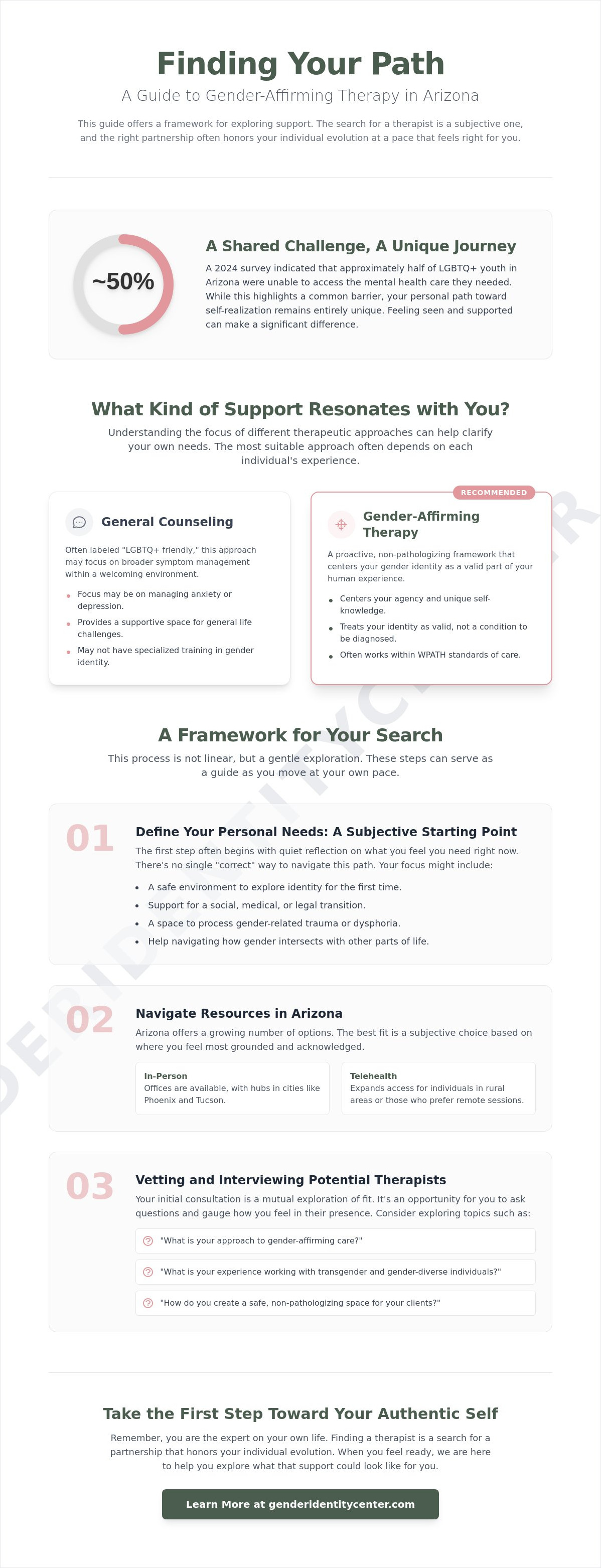
In a 2024 survey of LGBTQ+ youth in Arizona, approximately half reported they were unable to access the mental health care they needed. This statistic highlights a shared challenge, yet we know that your personal path toward self-realization remains entirely unique. If you've been wondering how to find a gender therapist in Arizona who understands the nuances of your identity without pathologizing your experience, you aren't alone. It's natural to feel a sense of anxiety about that first session or worry about whether a provider will truly respect your lived reality. We believe that finding a therapist is not a clinical transaction; it's a subjective search for a partnership that honors your individual evolution.
We're here to offer a compassionate, practical framework to help you find and vet gender-affirming support tailored to your journey. Whether you prefer the flexibility of telehealth or the presence of an in-person office in cities like Phoenix or Tucson, the right fit often depends on each individual's experience and comfort level. This guide provides a clear list of vetting questions, explains how to navigate Arizona insurance landscapes, and helps you feel empowered to make a choice that feels safe for you. Together, we'll explore how to bridge the gap between your current reality and the future self you're moving toward.
Key Takeaways
- Understand the difference between general support and specialized gender-affirming care, as the right level of competency often depends on each individual's experience.
- Explore a clear path for how to find a gender therapist in Arizona through local resources in Phoenix and Tucson that prioritize your sense of safety.
- Identify your specific goals for therapy, acknowledging that the focus of your journey may shift as you explore different aspects of your identity.
- Use a practical list of vetting questions to turn your first consultation into a mutual exploration of fit and shared understanding.
- Learn how to prepare for your initial session in a way that centers your agency and helps you feel more secure in your decision.
The Importance of Seeking Specialized Gender-Affirming Therapy in Arizona
Seeking mental health support is a deeply personal step toward self-realization. For many in our community, it isn't just about finding a counselor who is "LGBTQ+ friendly." While that label suggests a welcoming environment, it may not always signal the specific expertise required to support a complex gender journey. Gender-affirming therapy is a proactive, non-pathologizing framework. It treats your identity not as a condition to be diagnosed, but as a valid and central part of your human experience. When you are exploring how to find a gender therapist in Arizona, looking for someone who understands this distinction can make a significant difference in how seen and supported you feel.
A specialized therapist often works within the WPATH standards of care, which provide a clinical foundation for supporting gender-diverse individuals. You might find it helpful to review a broad overview of transgender healthcare to understand the various facets of support available. However, how these clinical standards are integrated into your sessions often depends on each individual's experience. A compassionate therapist acts as a steady, guiding hand, helping you move through the social and internal aspects of your growth at a pace that feels right for you.
The Difference Between General Counseling and Gender Counseling
General counseling often focuses on broad symptom management. In contrast, gender counseling centers your agency and your specific evolution. For many, this specialized support feels more resonant because it acknowledges how identity intersects with other parts of life. For example, if you are navigating neurodivergence or past trauma, an affirming therapist can help you explore these layers through a lens that respects your gender identity. Whether you're seeking individual therapy for personal exploration or specific support for a transition, the focus remains on your unique self-knowledge rather than a standardized medical outcome.
The Evolving Landscape of Affirming Care in Arizona
The social and clinical climate in Arizona is constantly shifting. With recent reports from 2025 and 2026 showing increased stress and mental health challenges among LGBTQ+ youth and adults in the state, finding a secure environment has never been more vital. While hubs like Phoenix and Tucson offer a growing number of specialized practices, your physical location doesn't have to limit your progress. The rise of telehealth has expanded how to find a gender therapist in Arizona, allowing individuals in rural areas to connect with experts who might otherwise be out of reach. Ultimately, the choice between in-person and online support is a subjective one, based on where you feel most grounded and acknowledged.
Defining Your Personal Needs: A Subjective Starting Point
Beginning the process of self-exploration is a brave act of self-care. When you are considering how to find a gender therapist in Arizona, the first step isn't usually external; it starts with a quiet reflection on what you need right now. There's no single "correct" way to navigate this path. For some, the priority is finding a space to process gender-related trauma. For others, the focus might be on practical transition support or simply having a safe environment to explore identity for the first time. This depends on each individual's experience and what feels most resonant to them at this stage of their life.
You may also find yourself weighing the value of clinical credentials against the importance of lived experience. While advanced degrees provide a foundation of psychological theory, many people feel a deeper sense of safety with a mentor who shares a similar background. Others may prioritize a therapist's specific training in age-specific care, especially when seeking support for children or teens. We believe that you are the expert on your own life, and your preference for a specific type of background is a valid part of your search.
Determining the Level of Support You Require
Therapy can take many forms, and your needs might change as you progress. Individual therapy offers a private space for deep personal work, while group therapy can provide a sense of community and shared resilience. If you are navigating the impact of systemic exclusion or personal hardship, specialized modalities like EMDR therapy may be a helpful tool for processing trauma. Additionally, some individuals find that speech therapy is a meaningful part of their holistic care, helping them align their external expression with their internal self. Each of these options is a different doorway to the same goal of self-realization.
Navigating Medical Referrals and WPATH Letters
Some individuals may decide that their journey includes medical interventions. If this is the case for you, it can be helpful to find a provider who is familiar with the necessary documentation. You might look for a therapist who has experience providing WPATH referral letters Arizona. While these letters are often a practical requirement for certain procedures, we view them as just one part of a larger, supportive relationship. Therapy is a journey of discovery, not just a means to an end. If you feel ready to explore these options, you might consider scheduling a time to talk about your unique goals and how we can support your evolution.
Navigating Resources: Where to Search for Arizona Providers
Searching for a supportive space often begins with exploring the resources already available in your community. When you are looking into how to find a gender therapist in Arizona, national directories can be a helpful starting point, especially when you use filters to narrow results to cities like Phoenix, Tucson, or Flagstaff. Some people find that community-led resources, such as local LGBTQ+ centers or support groups, offer a more personal perspective on which providers are truly gender-competent. This search process is highly subjective, and the right resource for you depends on each individual's experience and what feels most safe.
Accessibility varies across the state. For those in more rural parts of Arizona, physical distance can sometimes feel like a barrier. Telehealth has emerged as a meaningful way to bridge this gap, offering a sense of stability and reliability regardless of your zip code. Choosing between an in-person office and an online platform is a personal decision. Some value the physical presence of a therapist, while others find that the privacy of their own home facilitates a more open and unhurried conversation.
Comparing Private Practices vs. Large Medical Groups
A small, community-oriented practice might offer a level of personalized care that feels like a steady, guiding hand through your journey. These environments often prioritize the therapeutic relationship, ensuring you feel seen and respected from your first interaction. Conversely, a larger transgender clinic in Phoenix or Tucson might provide a wider array of integrated services, which some find helpful for coordinating different aspects of their care. Your preference for one over the other may depend on whether you value an intimate setting or the resources of a larger organization.
The Role of Insurance and Financial Accessibility
Navigating the financial side of care is a common source of anxiety. Many healthcare providers utilize specialized administrative support to streamline complex insurance and billing processes; for instance, you can learn more about HPC Healthcare Partners to understand how these systems support mental health practices. While Arizona law requires health insurance plans to provide mental health parity, the specifics of your coverage for gender-affirming services may depend on your individual plan. It’s often a good idea to call your insurance company or use an online portal to verify which providers are in-network. If a therapist you feel a strong connection with is out-of-network, you might explore whether they offer sliding scale fees or if your plan allows for out-of-network reimbursement. Community programs and group therapy options, which sometimes cost around $45 per session in Arizona, can also be a more affordable way to access the strength of community support.
Vetting and Interviewing Potential Therapists in Arizona
Finding a list of names is a significant milestone, but the next phase of how to find a gender therapist in Arizona involves discovering if a specific provider feels like a safe harbor for your unique journey. We often suggest viewing the initial consultation as a mutual exploration of fit rather than a traditional medical interview. It's a space where you can assess whether the therapist’s voice feels like a steady, guiding hand or if their approach resonates with your personal goals. This subjective sense of being acknowledged is a valid metric for success. If you don't feel seen, the clinical credentials may matter less than the emotional connection.
Trusting your intuition is a vital part of this process. Because the social and political climate in Arizona can sometimes feel heavy, your therapy session should be a secure environment where your defenses can finally lower. This feeling of safety depends on each individual's experience, and it's perfectly okay to speak with several providers before deciding who will walk alongside you. You are the expert on your own life. A good therapist will respect that agency from the very first interaction.
Key Questions for Your First Interaction
Preparing a few questions can help you feel more grounded during a consultation. You might consider asking about their specific clinical approach to gender identity or their history of providing referral letters for medical care. Some individuals find it helpful to clarify a therapist's stance on community involvement or lived experience. These answers provide a clearer picture of whether their practice aligns with your needs. There are no wrong questions; the goal is to find a partner who supports your self-realization with radical acceptance.
Evaluating Logistics for Arizona Residents
Practical details are just as important as the emotional fit. You may want to confirm their availability for gender identity therapy phoenix or Tucson locations, depending on where you feel most comfortable. Many providers offer flexibility with evening or weekend sessions to accommodate busy schedules. If you choose telehealth, ask about the platform they use to ensure your privacy and security are prioritized. If you're ready to take this step, scheduling an initial conversation can be a gentle way to begin exploring these logistics in a supportive setting.
Taking the First Step Toward Your Authentic Self
Deciding to reach out for support is a profound moment of quiet resilience. It takes significant courage to begin a journey of self-exploration, especially when the path ahead feels uncertain. The process of how to find a gender therapist in Arizona is often the first chapter in a much larger story of self-realization. We recognize that therapy is not a static destination but a dynamic process that evolves alongside you. As you grow and your needs shift, your therapeutic partnership should remain flexible and responsive to your internal changes. This depends on each individual's experience and the pace that feels most grounding for them.
Preparing for your first session can help lower your defenses and create a sense of stability. You don't need to have all the answers or a perfectly defined destination. Simply showing up as you are is enough. Many find it helpful to reflect on what they hope to feel after a session, rather than focusing on specific clinical outcomes. This shift in perspective allows you to remain the expert on your own life while inviting a supportive mentor to walk with you.
What to Expect in an Affirming First Session
In an affirming environment, the focus is on building a safe partnership rather than immediate "fixing." Your therapist will likely follow your lead on pronouns, identity markers, and the language you use to describe your internal states. The rhythm of the conversation is intentional and unhurried, mirroring the pace of your own self-discovery. You should feel a sense of radical acceptance from the very first interaction, ensuring that your lived experience is acknowledged without judgment. This initial meeting is an invitation to explore your reality in a secure environment that prioritizes your agency above all else.
Connecting with the Gender Identity Center Team
Our team of therapists provides a dedicated space for this work in both Phoenix and Tucson, as well as through secure telehealth options. We believe that every individual deserves to be heard and respected in a way that feels authentic to them. Whether you're seeking individual, family, or group therapy, we're here to act as a bridge between your current reality and your future self. You can take that first step by scheduling an initial consultation online whenever you feel ready. There is a subjective beauty in finding a therapist who truly hears you, and we would be honored to support your evolution.
Embracing Your Path Toward Self-Realization
Finding the right support is a deeply personal endeavor that honors your unique evolution. We've explored how to define your needs, utilize local resources, and vet providers to ensure they offer a secure environment for your growth. Ultimately, the process of how to find a gender therapist in Arizona is about centering your own agency and trusting your intuition. Whether you choose the flexibility of telehealth or an in-person setting in one of our major hubs, the "right" choice depends on each individual's experience and what feels most resonant to you right now.
Our team at the Gender Identity Center is here to act as a steady, guiding hand throughout your journey. With offices in Phoenix and Tucson available 7 days a week, our WPATH-compliant clinicians specialize in providing compassionate, advocate-led care that respects your lived reality. We invite you to Schedule your affirming consultation in Phoenix or Tucson today to explore a partnership that truly acknowledges your identity. You are the expert on your own life, and we're here to support the resilient and authentic self you are becoming.
Frequently Asked Questions
Do I need a diagnosis of gender dysphoria to see a gender therapist in Arizona?
You don't need a formal diagnosis of gender dysphoria to begin your journey with a therapist. While some insurance plans might require a diagnosis code for reimbursement purposes, the therapeutic process itself focuses on your personal exploration and self-realization. We believe you are the expert on your own life. Your sessions are a space to explore your identity at your own pace without the pressure of a clinical label.
How much does gender therapy typically cost in Phoenix and Tucson?
Industry data suggests that individual therapy sessions in Arizona typically cost between $100 and $160, though some specialists may charge more. Group therapy can be a more affordable alternative, with some sessions in the Phoenix area costing around $45. Because rates vary significantly, it's helpful to ask about sliding scales or insurance coverage when you're learning how to find a gender therapist in Arizona. This depends on each individual's experience and financial context.
Can I find a gender therapist in Arizona who offers telehealth sessions?
Telehealth is widely available across Arizona and has become a primary way for many to access affirming care. This option is particularly beneficial for individuals in rural communities or those who prefer the privacy of their own home. Most providers use secure, HIPAA-compliant platforms to ensure your conversations remain confidential. The choice between in-person and online sessions often depends on each individual's experience and comfort level.
How long does it usually take to get a WPATH referral letter for HRT or surgery?
The time required to receive a WPATH referral letter is not fixed and depends on each individual's experience and their specific therapist's approach. Some providers may offer letters after a brief consultation, while others prefer to establish a longer therapeutic relationship first. This unhurried pace ensures that the letter accurately reflects your goals and provides a steady, guiding hand for your medical transition if you choose that path.
What is the difference between a gender therapist and a regular counselor?
A gender therapist specializes in the nuances of identity, while a general counselor may lack specific training in affirming frameworks. Specialized therapists often follow WPATH standards and prioritize a non-pathologizing approach to mental health. This distinction is vital when you're researching how to find a gender therapist in Arizona, as it ensures your provider understands the unique social and internal challenges faced by gender-diverse individuals.
Is gender therapy in Arizona confidential, especially for minors?
Confidentiality is a cornerstone of the therapeutic relationship, though the specifics for minors can vary based on Arizona law and parental consent requirements. Generally, what you share in session stays between you and your therapist, except in cases where there is an immediate safety concern. Many therapists work to create a secure environment where minors feel safe to explore their identity while still navigating the legalities of family involvement.
How do I know if the "fit" with my new therapist is right for me?
Determining if a therapist is a good fit is a subjective process that relies on your intuition. You might feel a sense of quiet resilience or a lowering of your defenses when you've found the right partner. If you feel respected, acknowledged, and safe during your first few interactions, it's often a sign that the partnership will support your evolution. Trusting your sense of being "seen" is a valid way to measure success.
Are there gender-affirming support groups available in Arizona alongside individual therapy?
Arizona has a variety of gender-affirming support groups and group therapy options available in hubs like Phoenix and Tucson. These groups offer a sense of community and shared resilience that can be a meaningful addition to individual work. Whether these spaces are peer-led or clinician-guided, they provide a secure environment to connect with others who may be navigating similar paths of self-discovery and personal growth.